This is the latest installment of Study Hall, an occasional series that serves as a one-stop shop for must-know information on critical topics impacting schools. For previous installments, click here.
While microschools have been part of the U.S. educational system since the early one-room schoolhouses of the 19th century, the educational model gained momentum in the aftermath of the COVID-19 pandemic as families searched for alternatives to virtual schooling.
In 2026, there are an estimated 75,000 microschools serving about 1.5 million students nationwide, according to an analysis published in May by the National Microschooling Center, a nonprofit supporting microschools' development and operations.
But while microschools are growing in popularity, some say the model is challenged by a lack of federal and state definitions and standards, making it difficult to measure the sector's impact on students as a whole. Only a small number of states such as West Virginia, Georgia and Utah currently have statutory definitions for microschools, sometimes referred to as learning pods.
The microschool sector, like traditional public schools and private school models, also faces increased pressure to boost enrollment to stay financially healthy.
Here's what you need to know.
What are microschools?
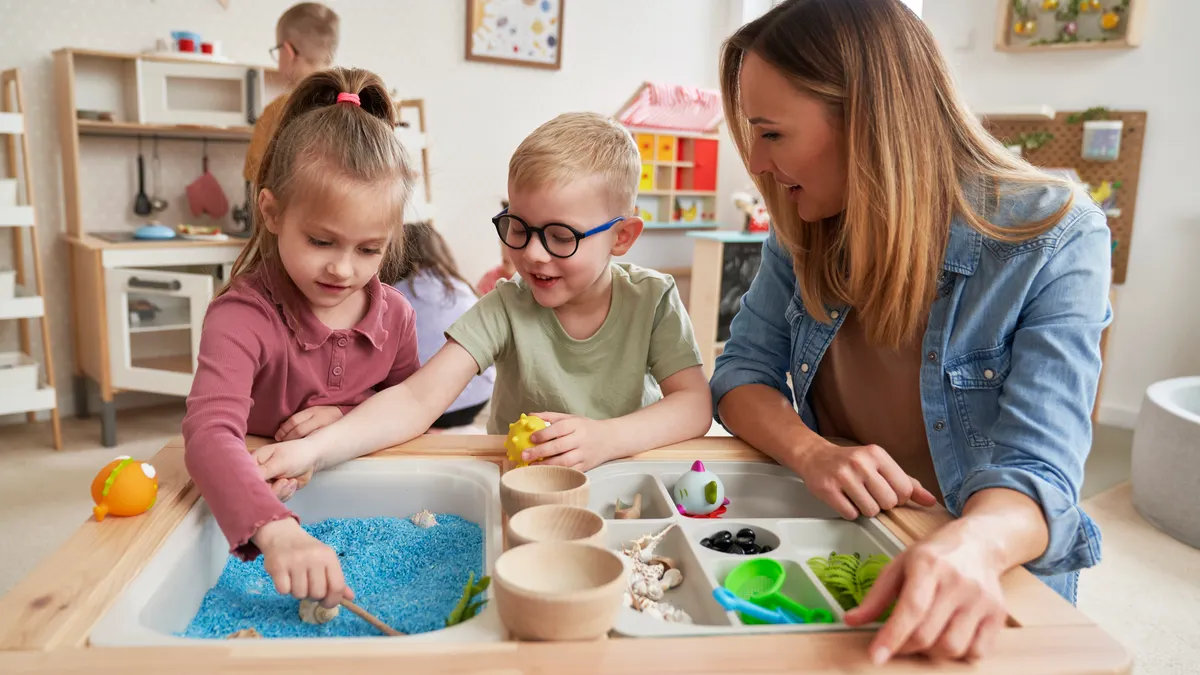
Microschools across the nation are highly diverse in size, operations and locations, but typically maintain a small enrollment.
The median size of nonpublic microschools, which typically charge tuition, is 20 students, while the number for public microschools is 30 students, according to a survey of 1,000 microschools conducted between October 2025 and January 2026 by the National Microschooling Center. The surveyed microschools were those that were operating at that time, in the planning stages or had closed.
Most microschools serve younger students, with 87% teaching students ages 5-11. About 67% of microschools serve students ages 12-14, and 38% serve students ages 15-18.
Where instruction takes place varies, too. The National Microschooling Center found that 38% of microschools operate in commercial business facilities, while 22% operate out of houses of worship and 17% operate in private homes.
Project-based learning is the most popular instructional approach, according to the survey results. Self-directed learning and social-emotional learning were other common academic approaches, as were instruction guided by the Montessori method, faith or religion, nature and classical education.
How are microschools funded?
Microschools have a range of funding models. Most of the National Microschooling Center survey respondents (63%) said they rely on tuition-based funding, where most of a school's families pay the majority of their child's tuition. Half of the polled schools said they receive funding from state-provided school choice programs, such as education savings accounts and taxpayer-funded scholarships.
Half of the microschools reported that their programs needed to increase tuition rates, and 44% said their tuition rates were "just right."
According to a 2025 report published by Rand Corp., the median monthly fee to attend microschools in 2023 was $650 — or about $6,500 for a typical 10-month school year.
Rand found that microschools affiliated with traditional public school districts likely charged little to no cost to families, but microschools operating as private schools likely charged families more than the median cost.
The Indiana Microschool Collaborative, for instance, supports the development of tuition-free public charter microschools across the state that are focused on small student grouping, multi-age learning, personalized pacing for instruction and strong relationships.
Another nonprofit, the Building Hope's Lending Lab, offers below-market loans to small, private and independent schools of 10 to 200 students.
Who's holding microschools accountable?
There's a lack of research on how the microschool model impacts traditional public schools. However, the expansion of school choice options has fueled competition for students among traditional and non-traditional schooling options, and a decline in the overall birth rate in the U.S. has put pressure on all school models to boost enrollment to stay financially viable.
Specific to microschools is the concern that ambiguous federal and state definitions have led to questions about how they can comply with standard education regulations, according to a 2025 report by the Center for American Progress. Some of those regulations include antidiscrimination statutes, accountability systems and local zoning laws to make sure students receive adequate educational opportunities.
On the other hand, some research has said that microschools’ broad definition helps encourage innovation and flexibility.
The National Microschooling Center survey found that 67% of microschools are not currently accredited by an official, government-recognized organization, but that most microschools (87%) would be interested in obtaining accreditation.
The survey also found that the most common methods microschools used to measure student performance and impact were observation-based reporting (68%), portfolios (62%), and assessment results embedded in digital learning tools (50%).
According to a 2025 survey by the National Microschooling Center, microschool founders said student growth in nonacademic learning was their most important desired student outcome. That was followed by children’s happiness in their current setting, strength in skills needed for future success and academic growth, academic proficiency or mastery, and faith or value-focused outcomes.
The Center for American Progress has raised accountability concerns about microschools, recommending that policymakers take these steps:
- Adopt a federal definition of microschools. Developing definitions and regulations will hold microschools accountable for providing students with safe, equitable and high-quality instruction. A federal definition issued by the U.S. Department of Education will give states a baseline standard that will guide them in determining what microschools must provide to meet students’ needs and comply with state and federal education laws.
- Implement state accountability measures. Accountability measures for teacher licensure, financial reporting and student performance, can help determine a microschool's effectiveness.
- Establish data collection and reporting standards. As the microschool sector expands, state and federal data collection and reporting requirements can help educators and policymakers better understand how these schools are operating. The data can also be used to inform future policy decisions.
- Protect students' civil rights. CAP recommends that microschools accepting public funds be held to the same federal and state antidiscrimination laws that govern public schools.