This is the third installment of a three-part series on the impact of private school choice on public school enrollment.
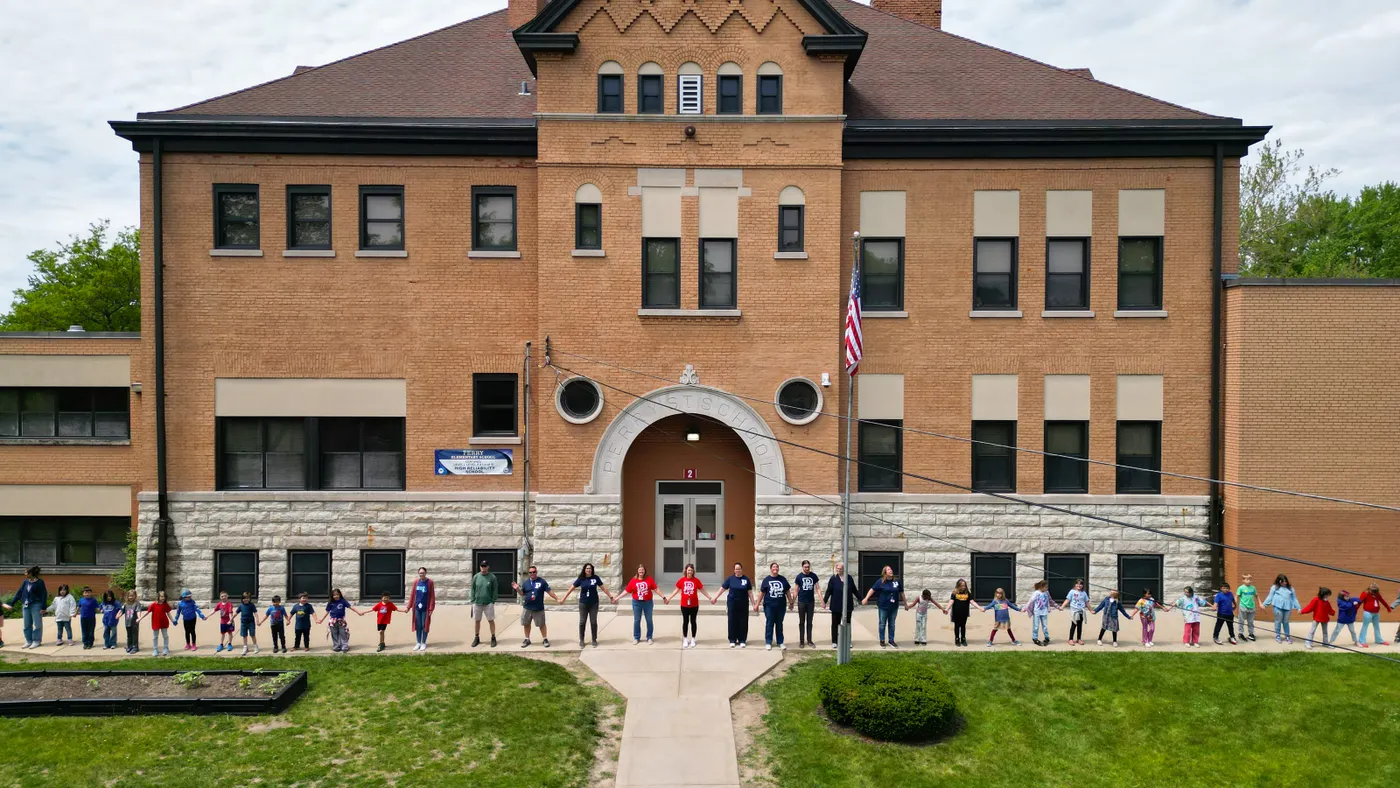
The decision to close 129-year-old Perry Elementary School in Belvidere, Ill., earlier this year devastated many community members who didn't want to see their historic building shuttered.
While scores of schools across the country are closing as enrollment declines empty their classrooms, that was not the case with Perry. The 174-student school, in the end, just got old. Its aging structure needed a prohibitive $14 million to $16 million in repairs, according to Cassandra Schug, superintendent of Belvidere Community Unit School District 100.
The district's enrollment has in fact remained relatively stable, with only a modest decline in recent years, Schug says. Enrollment stands at 7,348 students in 2026, down from 7,470 in 2021.
Still, the decision to close Perry and the reaction it engendered from the community offer constructive guidance for administrators everywhere who are staring down school closures brought on by shrinking student populations.
When Perry's closure became inevitable after a 6-1 school board vote in April, the community rallied to usher its beloved school out in style, Schug says. Longtime teacher Susan Thomas spearheaded a committee to honor the school’s legacy with a citywide celebration ultimately attended by hundreds of people in May.
Thomas, who taught 5th grade at Perry for 19 years, says the neighborhood school was “so much more” than just a building. The closure decision, she says, was nothing short of traumatic.
Perry “has been a cornerstone for Belvidere. It needed to be celebrated. It needed us to be able to show our appreciation for what it had meant for so many years, and I just wanted it to be done right,” Thomas says.
The celebration allowed people across the community to visit and view old yearbooks, photos, letters, newspaper articles and student projects — all organized by decade and displayed on tables and walls throughout the gym.
“So you could walk through and just see all of that Perry history and recognize how education had changed over the years, how the building had changed over the years, and again, just really spend time sort of saying goodbye,” Schug says.
The celebration “helped us all to process what had been a really difficult time," honor the school's legacy, "create that closure, and give us a chance to celebrate those positive memories that Perry had brought to the community.”
Beginning this school year, Perry's staff members and students dispersed to other schools in the district, with students transferring through a lottery system.
Though Belvidere enrollment is expected to stay steady, district officials are carefully watching enrollment numbers and projections, especially as more public schools nationwide experience declines, Schug says.
And, she adds, she hopes she never has to close another school in her career again.
***
As some school communities grieve shuttered schools, districts are proactively working to boost enrollments and stave off closures. Here are three examples of how school leaders are striving to stay competitive.
Employing communications firms to recruit students
The days of traditional public school systems having a monopoly on education and just worrying about teaching students are gone, says Brian Stephens, CEO of Caissa K12, a Memphis-based strategic communications firm.
In 2009, Stephens co-founded a public strategy firm that specialized in complex communication crisis management. But in 2017, as he saw more states adopt private school choice programs, the firm converted to focusing exclusively on student recruitment and retention for traditional public schools.
Currently, Caissa K12 — named for the mythical goddess of chess and strategy — works with nearly 100 districts in 26 states. The company says it has helped recruit about 55,000 students for its clients through research, communications, events and knocking on doors.
The firm is one of a growing number of players in this space.
Taking a page from the retail industry, one of Caissa K12's services for its district clients is performing "secret shopper" outreach. Caissa K12 employees or contractors act as families interested in enrolling their child and visit or connect with public and private schools to look for enrollment or communication barriers or other customer service problems.
The company works with school districts including Florida's Broward County Public Schools through performance contracts, meaning Caissa K12 only gets paid if the company meets an agreed-upon student recruitment goal.
When it comes to recruiting and retaining students, Stephens says, the greatest mistakes public schools make are not advocating for themselves and not being willing to improve flaws like hard-to-navigate websites.
Those steps may sound easy, but they are difficult for school systems with a lot on their plates, he says.
If the government and the people want public schools to "act like a business instead of a public good, then we have to act more like a business," Stephens says. "That means we need to advocate for ourselves."
Districts that are innovative and want to build trust with families "absolutely have to reach out and let people know that they exist and let people know how awesome they are," he says.
Stephens points to creative approaches public schools can take to help attract and keep students.
One district client, he notes, installed a washer and dryer at a school to support school attendance by making sure children could have clean clothes. Other schools have provided feminine hygiene products, which also boosted school attendance, Stephens says.
Eliminating outdated and abrasive policies can make a difference too. For instance, schools need to remove attendance policies that punish students for having overdue library books or unpaid fees for band uniforms, he says.
“Stepping up those things has really helped. You have to identify what the issue is that's stopping a child from attending.”
Tapping into the federal school choice program
A new federal school choice program launching next year has many public school communities wondering how their students might benefit from billions of dollars in expected donations for K-12 educational expenses.
Nevada's Clark County School District, for example, is considering a collaboration with its Public Education Foundation, which would serve as a scholarship-granting organization to direct donations to benefit the Las Vegas-area district's students. Those extra scholarship funds could be targeted toward career-connected learning opportunities, technology, tutoring and more, according to an Aug. 13 presentation to the district's board of trustees.
Elsewhere, public school advocates from Iowa to Denver are also making plans to direct some of these taxpayer contributions to public schools.
And at least one new national scholarship-granting organization has formed to funnel donations to services supporting public school students. The Future School Fund, founded by Deborah Gist, former Rhode Island commissioner of education and state education superintendent in the District of Columbia, intends to help schools identify programs where scholarship funds can be used.
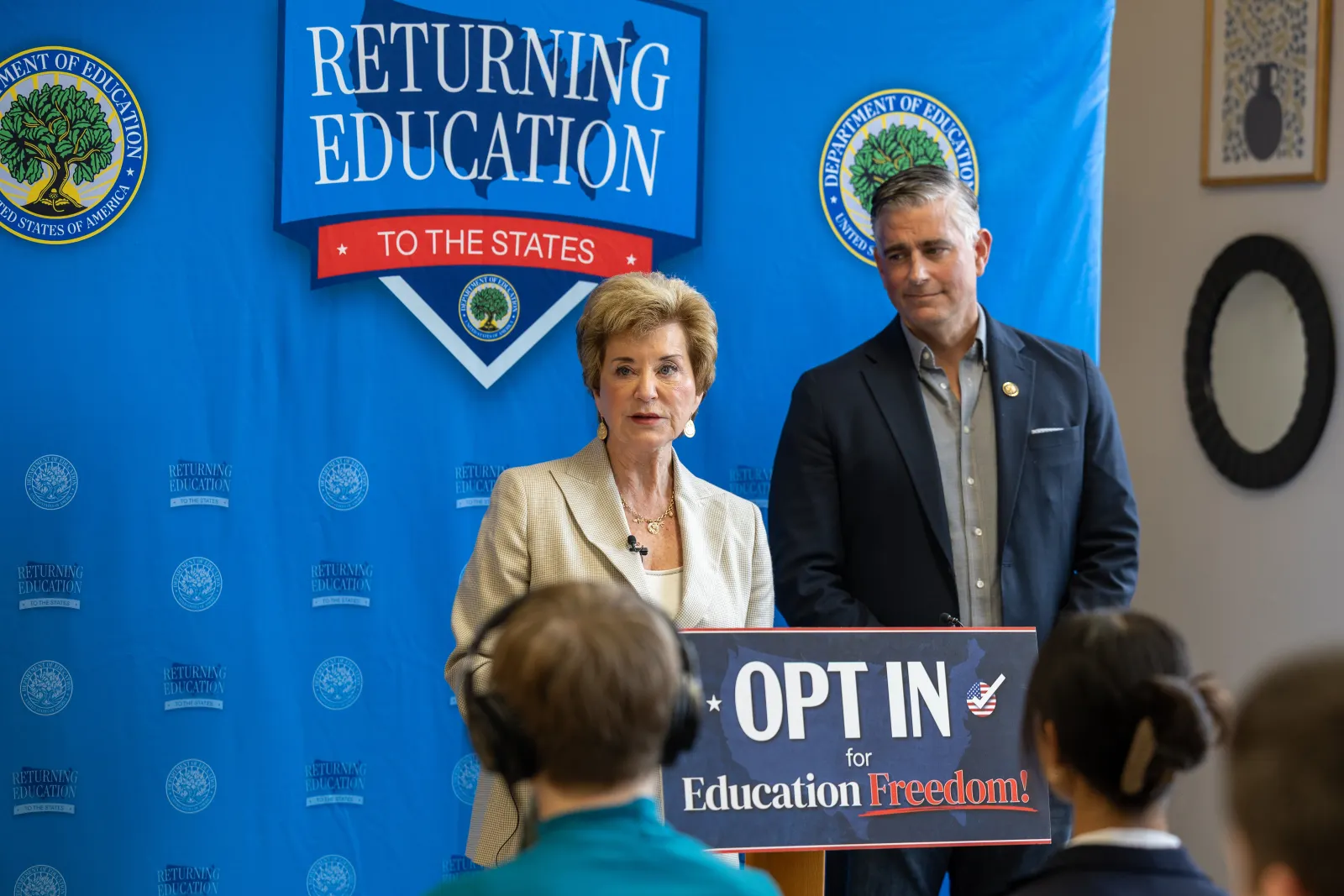
The federal Education Freedom Tax Credit program, which launches on Jan. 1, will guide taxpayer donations to students attending either public or private schools, who can then use the scholarships to pay for allowable educational expenses.
This first-ever nationwide school choice program is projected to raise nearly $26 billion annually for about 2.2 million scholarships by 2030, according to the administering agencies, the U.S. Department of the Treasury and the IRS.
This could overshadow the nation's current largest education program, Title I, which has an $18.4 billion budget for fiscal year 2026 budget to aid children at low-income schools. Title I serves about 26 million students in 90% of the country's school districts, according to the Bipartisan Policy Center.
Only students living in states that opt into the Education Freedom Tax Credit program would be eligible to receive scholarships. As of Oct. 22, 30 states have indicated that they will opt into the program, according to the IRS.
Participating states will approve scholarship-granting organizations to operate in their states, which will then direct taxpayer donations to families to use for education expenses.
ACE Scholarships is one such SGO. The Denver-based nonprofit is working with public and private school systems in several states interested in soliciting donations for the federal tax credit scholarships that can then be used at their schools, according to CEO Norton Rainey.
ACE Scholarships already has several charter school clients and is in talks with public school districts to manage and distribute their donation accounts, he says. The organization, he adds, will focus on directing scholarships to students with the greatest financial needs.
But while some are urging public school systems and supporters to embrace the federal scholarship program, critics have many concerns. They worry about a lack of accountability, a financial drain on public schools and potential inequities.
"Simply permitting some public school students to benefit does not ensure that resources are equitably distributed or that schools and students most in need are served by the program," according to a coalition of 16 civil rights advocacy organizations in a Sept. 28 letter to state governors.
Embracing a marketing mindset — without spending big
The rapid increase in school choice options is leading more public school leaders to consider creative ways to invest in marketing to keep their enrollment numbers up, says Mellissa Braham, associate director of the National School Public Relations Association.
But that doesn’t mean they necessarily have the budgets to do so, Braham says.
“Because districts nationwide are facing really tough times right now, a lot of them are having to reduce staff, and in that light, it's painful to put additional focus on marketing, even though ultimately it does help your budget,” she says.
One way districts are approaching enrollment marketing in a small yet impactful way is by having dedicated in-house staff solicit student and teacher testimonials and create videos to post on their communication channels.
Other low-cost marketing strategies include paying to boost social media posts or have their school or district website appear on search engines more frequently instead of relying on organic search, Braham says. Some districts are paying for targeted marketing emails, too.
She points to successful elements she's seen in school marketing campaigns, including firsthand testimonials from students and families, a focus on what makes a school and district unique, and targeted emails that feel specific to the person receiving it.
But districts in highly competitive areas may need to invest in more costly marketing efforts, she says. That could include buying billboard, television or streaming ads.
“If you're in a really competitive environment with a lot of different schools to choose from, it might be an investment you have to make with the ultimate return of enrollment, which brings in funds, which allows you to support staff programs and services,” Braham says.
In districts where school choice options are fairly new, Braham says, sometimes the biggest challenge for school leaders is to understand that families are now customers and that neighborhood public schools are not the only option.
Shifting to a marketing mindset is different from sending out regular school communications, which aim to share information and build relationships, she says. And that change is “new for a lot of public schools.”