Most-clicked story of the week:
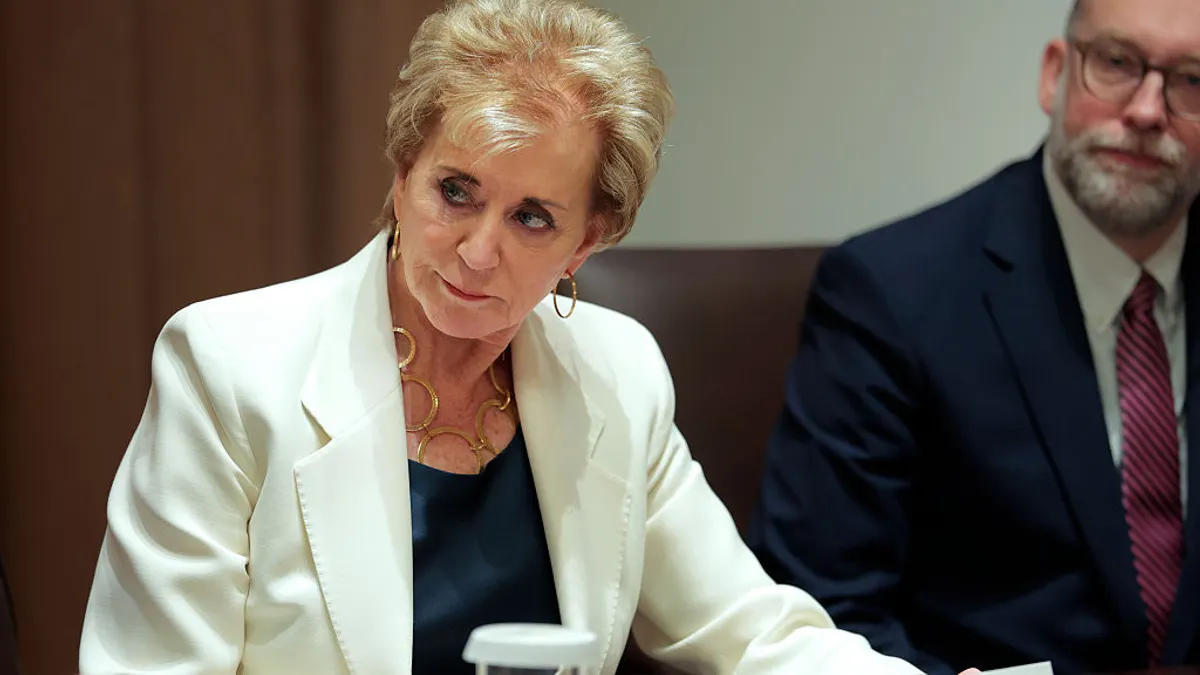
In an Aug. 4 address to special education project directors and staff, U.S. Education Secretary Linda McMahon touted the U.S. Department of Education’s controversial June interagency agreement to transfer some of its special education responsibilities to the U.S. Department of Health and Human Services.
McMahon defended the Education Department’s interagency agreement — one of 14 agreements it has with six other federal agencies — and said that “none of the rights guaranteed to individuals with disabilities under federal law will change.” She added that the changes are the “start of a brighter future” for individuals with disabilities.
The number of state bills signed into law since 2021 related to Ten Commandment displays or student instruction in public school classrooms, according to a legislative analysis by the Education Commission of the States. Despite several legal efforts to prevent these displays in classrooms, some schools across the nation will reopen for the 2026-27 school year with the religious display on their walls.
HHS attempts sweeping changes
- Under a proposed rule announced by HHS on Aug. 6, Head Start programs would face significant changes, including the removal of federal regulations for class ratios and sizes, curricula expectations and certain staffing mandates. The reforms to the 61-year-old early childhood education program are projected to add 236,000 Head Start slots for children and save $2.2 billion, a senior HHS official said.
- Earlier this summer, HHS also abruptly canceled 53 of the 66 current grants issued under the bipartisan Teen Pregnancy Prevention Program, which awards $101 million annually to nonprofit, community and school-based partnerships nationwide. The program aims to help teens reduce risky sexual behaviors and, ultimately, decrease sexually transmitted infections and unintended pregnancy. A lawsuit has since been filed against HHS, asking for the agency to administer the existing grants as required by federal law.
Efforts exploring safeguards, effective use of tech
- As pressures mount to pass federal online safety laws for young people, the Senate Committee on Commerce, Science and Transportation on Aug. 5 greenlit the bipartisan Kids Online Safety Act along with three other bills seeking youth protections for artificial intelligence use. The four bills approved during the markup session now head to the Senate floor for a full vote. KOSA, which also previously passed the full Senate in 2024, would require online platforms, including social media, to implement tools and safeguards for children and teens.
- While schools grapple with their own use of technology in the classroom, a new study by WestEd found that implementing outcomes-based contracting in some schools for tutoring and ed tech interventions led to positive effects on academic achievement. This new type of procurement process allows districts to tie a portion of their compensation to an ed tech provider based on a product’s ability to produce measurable results for a certain group of students.
- Google’s AI-generated summaries appearing at the top of the search engine’s results have become the norm. But many school districts are skeptical of the tool. Amanda Kordeliski, president of the American Association of School Librarians, said she’s noticed that many schools nationwide are prohibiting students from conversing with Google’s AI summary chatbot on district devices.
Quote of the week:
“Parents should get their children vaccinated for measles.”

Robert F. Kennedy, Jr.
Secretary of the U.S. Department of Health and Human Services
In a CNN interview on Aug. 2, Kennedy said the measles vaccine is effective. The comment was notable given Kennedy’s history expressing antipathy to vaccines and as measles cases reported this year have already reached a 35-year high nationally, as of July 30, at 2,371. With this trend in measles rates, health experts are advising schools to prepare for potential outbreaks of the highly contagious virus.