Dive Brief:
- With measles rates for the first half of 2026 surpassing all of 2025's rates, health experts say schools need to be prepared to respond to any outbreaks of the highly contagious virus.
- The 2,371 cases reported to the U.S. Centers for Disease Control and Prevention through July 30 of this year is a 35-year high nationally. In 2025, the nation recorded 2,289 cases.
- Measles, which can cause serious health issues or even death, can spread quickly in schools and as a consequence lead to lost instructional time.
Dive Insight:
While the CDC considers the vaccine for measles, mumps and rubella safe and effective, the vaccination rate among school-aged children has fallen in recent years in the face of political division. Among kindergartners, the MMR vaccination rate dropped from 95.2% during the 2019-20 school year to 92.5% in the 2024-25 school year. That meant about 286,000 kindergartners were not vaccinated for MMR in 2024-25.
As students and school staff return from summer break this month and next, health experts are encouraging parents to ensure their children are vaccinated and advising schools to prepare and respond to measles cases.
On Sunday, U.S. Health and Human Services Secretary Robert F. Kennedy, Jr. told CNN that parents should have their children vaccinated for measles. This was notable given Kennedy's past antipathy to vaccines.
All states and the District of Columbia required school-aged children to have the MMR vaccine in 2025, but they all also allow exemptions for medical reasons. Some 45 states and D.C. permit exemptions for religious and/or personal belief reasons, according to KFF, a nonprofit health policy research, polling and news organization. The five states that allowed no exemptions for religious and/or personal belief reasons were California, Connecticut, Maine, New York and West Virginia, KFF data shows.
In Florida, the state surgeon general aimed last year to end all vaccine mandates, including those required for schoolchildren, but KFF Health News reported last month that those efforts have stalled. KFF Health News is a program of KFF that produces news about health issues.
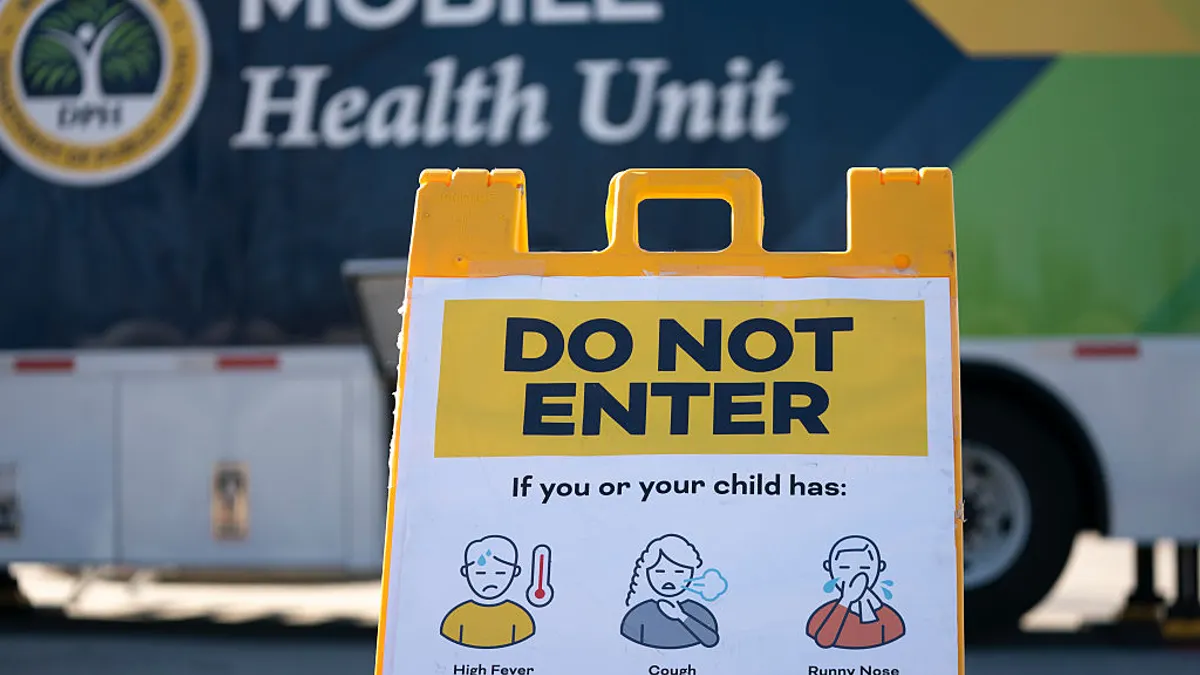
As measles cases climb, several national, state and local organizations and health departments are providing guidance for schools. The CDC offers a checklist for how K-12 schools can respond when a student or employee exhibits measles symptoms.
And in North Carolina, the state's Department of Health and Human Services recommends these best practices for K-12 schools:
- Assign a point person who will be responsible for contacting the local health department of suspected or confirmed cases.
- Isolate any child or adult suspected of having measles until they can receive healthcare or be picked up by a parent.
- Raise awareness of respiratory hygiene and cough etiquette.
- Help families and staff understand the signs of measles and what to do if symptoms develop.