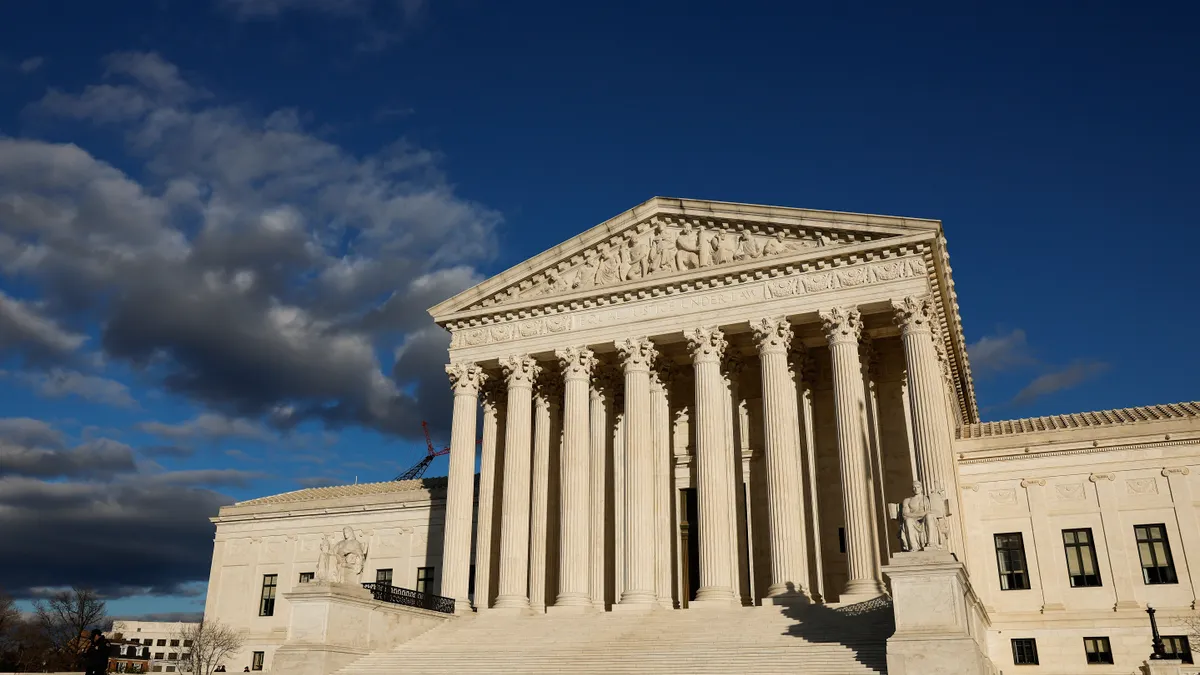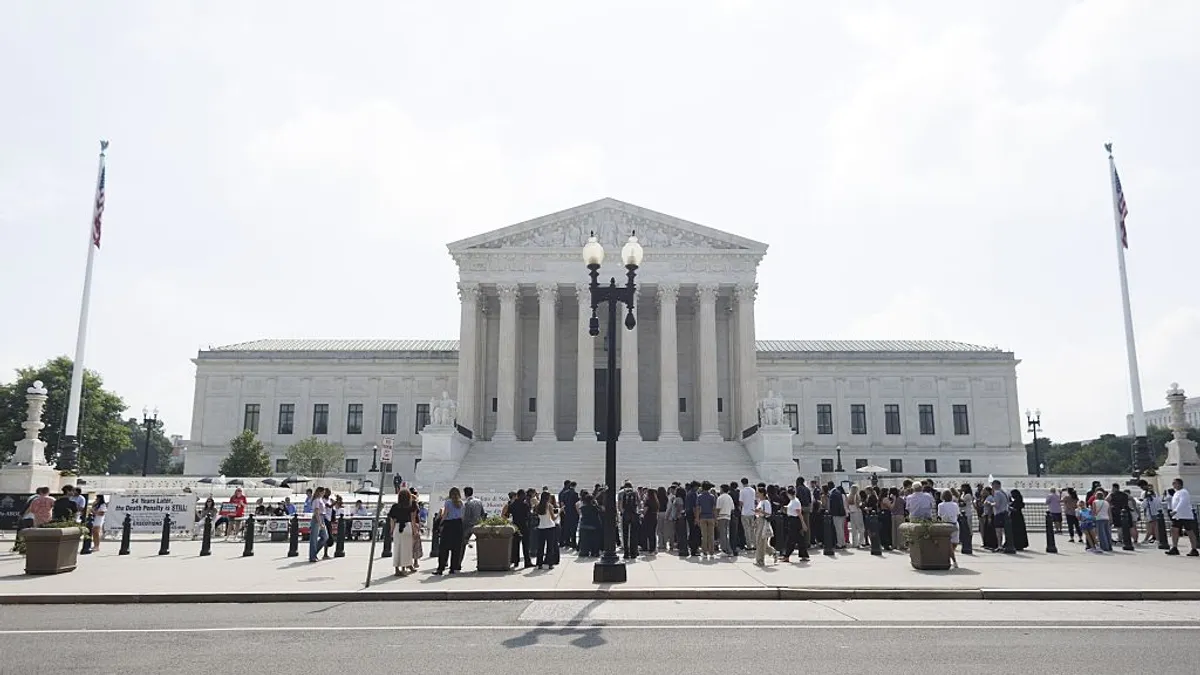
School districts could get a hint of how the U.S. Supreme Court will rule on a case that could change how teachers and other school employees bring sex discrimination claims when the justices hear oral arguments next week.
In Thomas Crowther v. Board of Regents of the University System of Georgia, the 11th U.S. Court of Appeals ruled in 2024 that Title IX’s right to sue doesn’t apply to employees, diverging from at least eight other appeals courts. At odds is whether school employees have the right to sue privately under Title IX outside of protections under Title VII.
Title IX protects anyone who interacts with a school — including students, employees and parents — from sex-based discrimination in federally funded education programs and is often invoked by students who are harassed, assaulted or bullied due to their sex. Title IX protections for school employees include, for instance, prohibiting discrimination against teachers due to pregnancy or pregnancy-related conditions, among other things.
Meanwhile, Title VII prohibits employment discrimination based on race, color, religion, sex and national origin.
In Crowther, two University System of Georgia employees — a basketball coach at Georgia Tech and an art professor at Augusta University — said the university system discriminated against them on the basis of sex when it fired them.
Georgia Tech women’s basketball coach MaChelle Joseph was fired in 2019 shortly after she filed an internal complaint that alleged the university was discriminating against her and her program by not providing the same resources as the men’s program.
At Augusta University, art professor Thomas Crowther was told his contract would not be renewed in 2021 after several students reported allegedly inappropriate conduct in his class — including sexual harassment — which triggered a Title IX investigation. That investigation process and ensuing negative performance reviews, he said, discriminated against him on the basis of him being male.
Joseph and Crowther both reported the alleged discrimination to the U.S. Equal Employment Opportunity Commission, but also sued in the U.S. District Court for the Northern District of Georgia under Title IX.
The two cases were combined before the 11th Circuit, which said in its 2024 decision that schools may not understand when accepting federal funds that they accept potential liability for damages of Title IX claims by employees, when those types of claims are typically filed under Title VII.
The Association of Title IX Administrators called the Supreme Court case "one of the most consequential decisions impacting the intersection of Title IX and employment law in decades."
Teacher pipeline, equality concerns
Multiple major education and legal organizations have filed briefs in the case, including the National Education Association and the National Women's Law Center.
"The American education system faces a severe and worsening crisis in educator recruitment and retention," said NEA's brief that was filed earlier this year in favor of the former University System of Georgia employees. "Anti-discrimination protections affect whether talented professionals enter, remain in, or depart from careers."
The NEA said that a court decision implicates "a nationwide educator workforce crisis, the professional environment in which recruitment and retention decisions are made, and ultimately the quality of education available to students across the country."
"When sex discrimination drives talented educators from the profession, the consequences extend beyond individual career harm and cause systemic degradation of educational quality," the teachers union said.
Granting teachers the right to sue privately under Title IX would help improve an environment where sex discrimination "has remained pervasive," the NWLC said in its own brief. The center cited teachers' high rates of sexual harassment from their colleagues and students, unequal pay for female teachers despite their overrepresentation in the profession, a lack of leadership opportunities, and pregnancy discrimination, such as a lack of accommodations and supportive school policies.
Such a decision would also help address lower investments in girls' school sports and barriers to STEM in education programs, NWLC said.
Title IX "can only be meaningful for women who work in education if they can enforce their right to be free from sex discrimination, including in court," the organization argued.
However, the Board of Regents of the University System of Georgia maintained in its opposing brief filed in October 2025 that Title IX does not include a private right to sue and that petitioners "had every chance to prove their claims for employment-based sex discrimination under Title VII."
"Had Congress desired that employees of educational institutions have a bonus remedy for employment discrimination under Title IX, unburdened by Title VII’s exhaustion requirements and damage caps, it could have provided as much," the respondents said. "It has not."
A related Title IX decision resurfaces
The case invokes another — Jackson v. Birmingham Board of Education, a 2005 Title IX case that was decided 5-4 in favor of the plaintiff.
That case was brought by Roderick Jackson, a high school girls’ basketball coach who spoke out to his supervisors after he noticed that his team was not receiving equal funding and equal access to athletic equipment and facilities. Following his complaints, he received negative work reviews and was ultimately removed from his position.
His lawsuit reached the high court, which decided that Title IX's private right to sue included retaliation claims for complaining about sex discrimination.
"Reporting incidents of discrimination is integral to Title IX enforcement and would be discouraged if retaliation against those who report went unpunished," the Supreme Court said in its decision. "Indeed, if retaliation were not prohibited, Title IX’s enforcement scheme would unravel.”
However, more than two decades later, Crowther will be heard by a much different bench, given the justices in the majority on the Jackson opinion have long since retired or died.