Dive Brief:
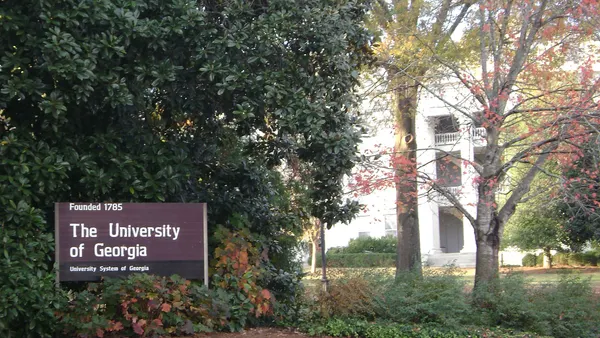
- Despite declines in public school enrollment since the COVID-19 pandemic, the number of operating public schools nationwide was slightly higher in fall 2024 than in fall 2019 by an additional 143 schools, according to a recent analysis of federal data by Stanford University researchers.
- The study’s findings also suggest that staffing levels in public schools rose during the pandemic even as enrollment continued to drop, causing student-to-teacher ratios to decrease by 4% between fall 2019 and 2024. That means U.S. public schools currently have the most teachers per student than any other period within the last 15 years, the analysis said.
- While public school closure conversations are becoming increasingly common among districts, the study said, the most currently available federal data shows districts are mostly not responding to the financial pressures of enrollment loss.
Dive Insight:
The study does not include national data from the 2025-26 and 2026-27 school years, when school districts have finalized more school closure and consolidation decisions.
Still, the Stanford researchers said the misalignment between enrollment, the number of operating schools and staffing seen so far since the pandemic is likely due to the local political environments in which districts are making their decisions.
“The prospect of school closures and layoffs constitutes a highly visible and consequential threat to parents and teachers who can readily lobby school-board members and district leadership,” the study authors said. “That pressure, coupled with the often brief and provisional nature of superintendent tenures, can forestall confronting difficult decisions.”
A separate report released Tuesday by the Reason Foundation, a libertarian think tank, found that among nine of the nation’s 12 largest public school systems, there were almost 938,000 empty seats during the 2025-26 school year. Those nine districts, on average, only filled about 71% of their student capacity.
The district with the most underutilized capacity was the Los Angeles Unified School District, which had 365,410 empty seats with a 49% utilization rate, according to the Reason Foundation.
LAUSD leadership has hinted that closures and consolidations could be considered in the near future given the district’s drastic enrollment declines over the past two decades.
This fall, LAUSD Superintendent Andrés Chait addressed the district’s enrollment trends in a video shared with school community members. Chait noted that enrollment is nearly half of what it used to be 20 years ago. Even so, he said, LAUSD currently operates almost the same number of school campuses.
Similar to the Stanford analysis, the Reason Foundation report acknowledged that school closures can be difficult decisions for students and local communities. “But public school enrollment declines and districts’ financial situations are unlikely to improve, so these challenges must be addressed,” the Reason report said.
If districts cannot properly “right-size” the number of schools they operate, the Stanford analysis said, consequential spending cuts will occur elsewhere, such as building maintenance or support services for student mental health and instruction. And if districts continue to struggle with properly managing their finances, they may be more likely to face a state takeover, the Stanford researchers said.