“It’s not just the presidents and the politicians and the tycoons. What makes up American history are families and people who experience everyday events, and how they react.”
So says Kristen Crews, who teaches AP U.S. History and women’s studies at Ronald Wilson Reagan High School in Pfafftown, North Carolina. According to Crews, that takeaway was strengthened for her after participating in a professional learning program hosted by New York City’s Tenement Museum.
The museum in July hosted its second annual Summer Teacher Institute, where educators could discuss teaching about immigrant history and how curricular materials can overlap with students' own family stories.
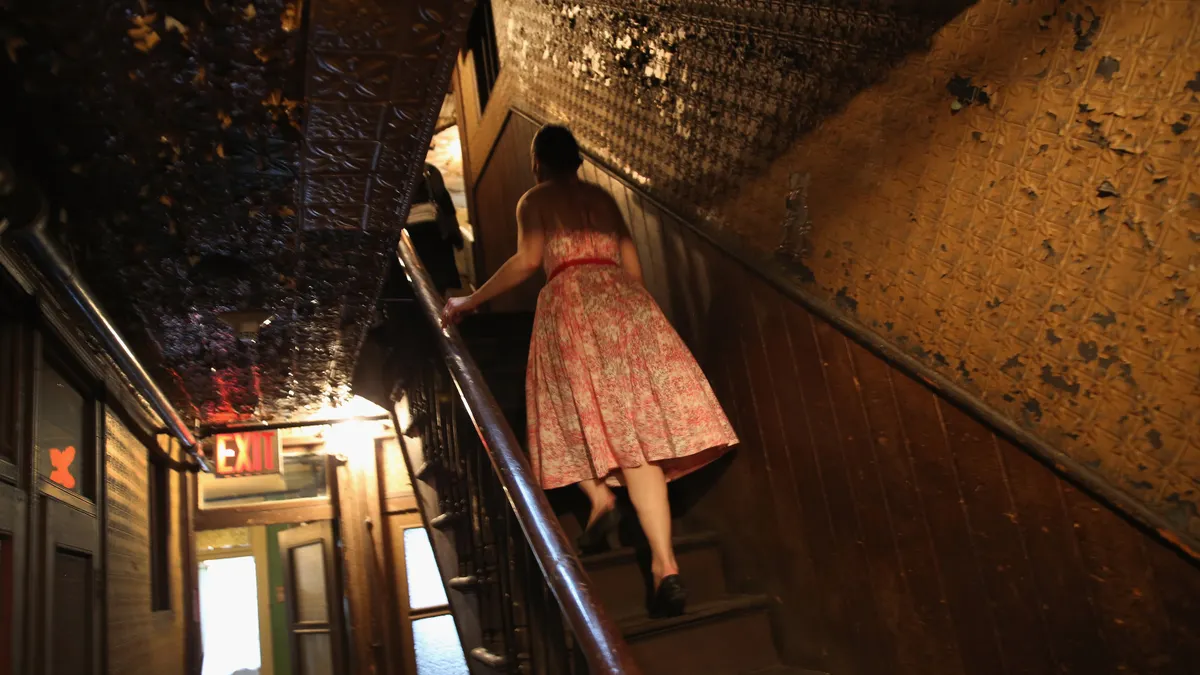
Educators toured the museum’s replicas of immigrant homes, heard from historians, and talked about the experiences of a different immigrant group each day during the July 20-25 program.
The summer institute is an example of how schools can work with museums and other historical resources in their areas and beyond to enhance professional development.
The Tenement Museum programming is "nuanced, but not graduate-level,” said Mike Agovino, who teaches geography, world history and AP Seminar at Queens Gateway to Health Sciences Secondary School in New York City's Queens borough, and participated in the museum’s 2025 cohort. “It’s applicable to a 15- or 16-year-old."
For Crews, who participated in the program’s 2025 cohort, the program imparted valuable insights about teaching American history through the lens of families and individuals that make the lessons applicable to today's students’ lives.
Both Agovino and Crews have used the museum’s “Your Story, Our Story” publishing portal to inspire students to write personal stories that illustrate who they are, whether it’s an immigration-related story or something else about them.
The institute "helped us to turnkey this to our students across the nation,” Agovino said. “I used it as an icebreaker to get to know students in an authentic way. They ate it up. They were excited to be published on a museum website and also to share their stories.”
Crews modified the assignment by asking students to focus on a family heirloom or other object that illuminated elements of their own family history or culture. One student brought in a tobacco stick and talked about the agricultural history of the Winston-Salem, North Carolina, area. Another brought in a Beach Boys album and reminisced about listening to the band’s music with their grandparents.
This helped students get to know one another and “in understanding what it means to be an American, and how all those pieces worked together,” Crews said.
Throughout the last school year, Crews said, her students were more receptive to history lessons given the focus this approach placed on average people.
“They paid attention a little bit more,” she said. During a unit on urbanization and how the Industrial Revolution affected immigration, "we were teaching kids how to look at different perspectives and be able to understand. They realized they were from different cultures and backgrounds and wealth, but they also had similarities.”
The Tenement Museum does a thoughtful job of “chunking” content about immigration into themes and time periods so that teachers can easily infuse it into their existing curricula, Agovino said.
He drew upon the museum’s “Flags of Hope” unit focused on the 13th, 14th and 15th amendments and how immigration groups reacted to them. The unit segues into the present day, exploring how "immigrant groups view themselves, legally and emotionally,” in a transformative period in American history, Agovino said. This prompted students to ponder “what they love about the United States, and what they would like to see changed.”
Agovino was able to bring about 200 students to tour the museum. “A lot of these students are first-generation immigrants,” he said. “For them to have this experience, I was very moved and touched by it.”
Crews and her students, being located several states away, made a virtual visit instead. “Being able to walk the halls of the tenements virtually really helped my students … to think about their lives, what they value, and how they become better citizens and better members of their community,” she said. “It helped me think about what’s important and what I should be doing in my classroom.”