Paige Shoemaker DeMio is a senior policy analyst for K-12 Education Policy at the Center for American Progress.
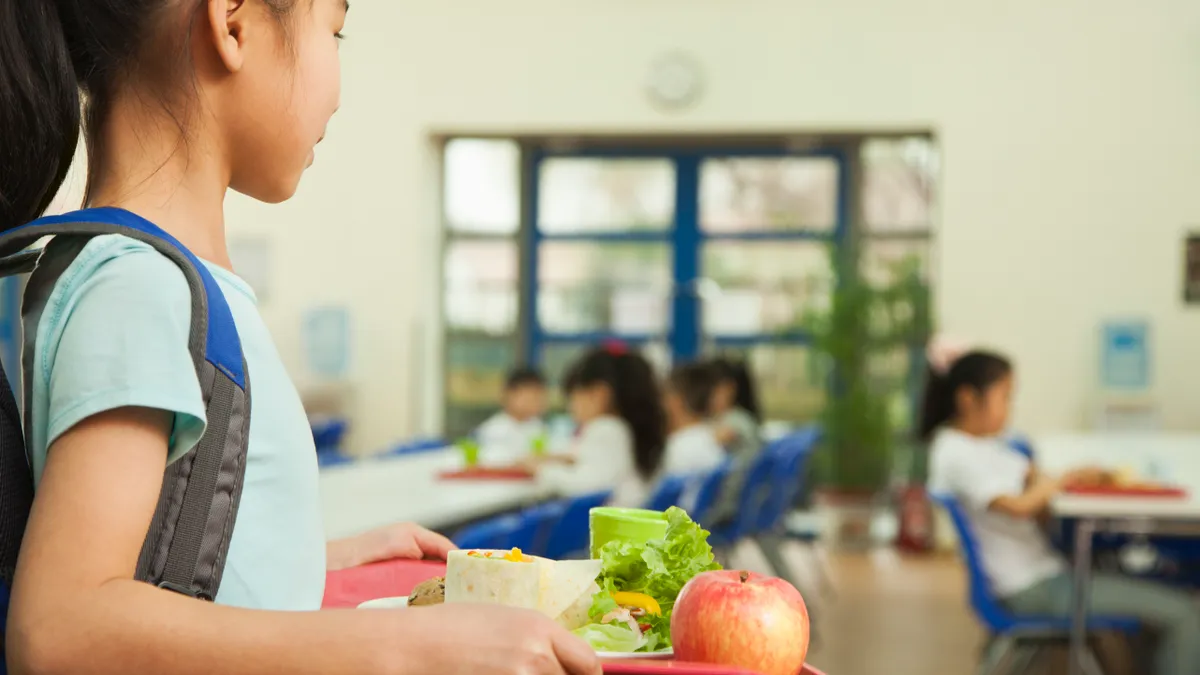
School cafeterias are now being hit by the domino effect of President Donald Trump’s cuts to basic needs programs.
Starting this August, Miami-Dade County Public Schools — the third-largest district in the country, serving over 330,000 students — will end its district-wide participation in the Community Eligibility Provision, or CEP. The devastating decision stems from the historic cuts to the Supplemental Nutrition Assistance Program and Medicaid under Trump’s One Big Beautiful Bill Act — and unless we change course fast, this Florida district won’t be alone in navigating the unfolding disaster.
CEP is a federal provision that allows high-poverty schools and districts to provide free meals to all students. It is a vital lifeline for families who are food insecure but earn just above the rigid federal income limits for traditional free and reduced-price meals.

The program relies heavily on “direct certification” data — the number of students automatically enrolled in free school meals because their families participate in programs like SNAP or Medicaid. When the OBBBA slashed those safety nets, it systematically dismantled school meal eligibility via CEP as families who lose SNAP or Medicaid also lose their direct certification.
The financial mechanics behind CEP are nuanced. While a 25% direct certification rate makes a school or district eligible to participate, the federal government only provides full reimbursements for every student if 62.5% of its student body are directly certified. For schools and districts falling between 25% and 62.5%, local budgets have to cover a portion of the balance. This budget conundrum keeps many eligible schools and districts from participating.
From the July 2025 passage of OBBBA — backed by all Republicans in Florida’s congressional delegation — through July 2026, Miami-Dade County saw a staggering 23% decline in SNAP participation. Now the district falls below the threshold for full federal reimbursement.
As a result, Miami-Dade is rescinding district-wide free meals for the 2026-27 school year. While 121 individual schools will manage to maintain CEP participation, 218 schools will lose access entirely. Building off my own research on free school meals for the Center for American Progress, I’ve calculated that over 173,000 Miami-Dade students relied solely on CEP for free school meals last year, many of whom will now face a barrier to eating at school.
The financial impact of losing free school meal access is staggering to parents. Nationally, a family with two children can expect to spend an additional $1,890 each school year to buy school breakfast and lunch. In high-cost districts like Miami-Dade, I’ve calculated that the bill jumps as high as $2,412. At a time when roughly half of Americans report they can’t afford the cost of living, and 1 in 5 children lives in a food-insecure household, this sudden expense will be unaffordable for thousands of Miami-Dade families, whose children will go hungry as a result.
As a former public school teacher, I’ve seen firsthand how empty bellies can sabotage a child’s day. It affects everything: their ability to learn, control their behavior, show up to school, and regulate their emotions. It’s not hard to understand the challenges children face trying to learn while their stomachs growl.
While individual schools and districts desperately try to find creative ways to maintain food access, their local budgets are already strained to the breaking point. They rely on federal stability. But instead, the Trump Administration’s policies — specifically the OBBBA — are actively taking hot meals away from kids, straining state budgets, and draining families’ wallets in the middle of a compounding affordability crisis.
Children are legally required to be in school up to seven hours a day, five days a week. They shouldn’t be forced to spend that time hungry. Schools routinely provide books, pencils, and laptops to ensure kids are equipped to learn. Nutrition is no different; it is a foundational ingredient for student success.
To ensure every child has the opportunity to thrive, we can’t strip food from the mouths of the most vulnerable people in our society. But that’s exactly what the OBBBA does. Miami-Dade may be one of the first districts forced to cut universal free meals, but unless these cruel federal cuts are reversed, they will certainly not be the last.