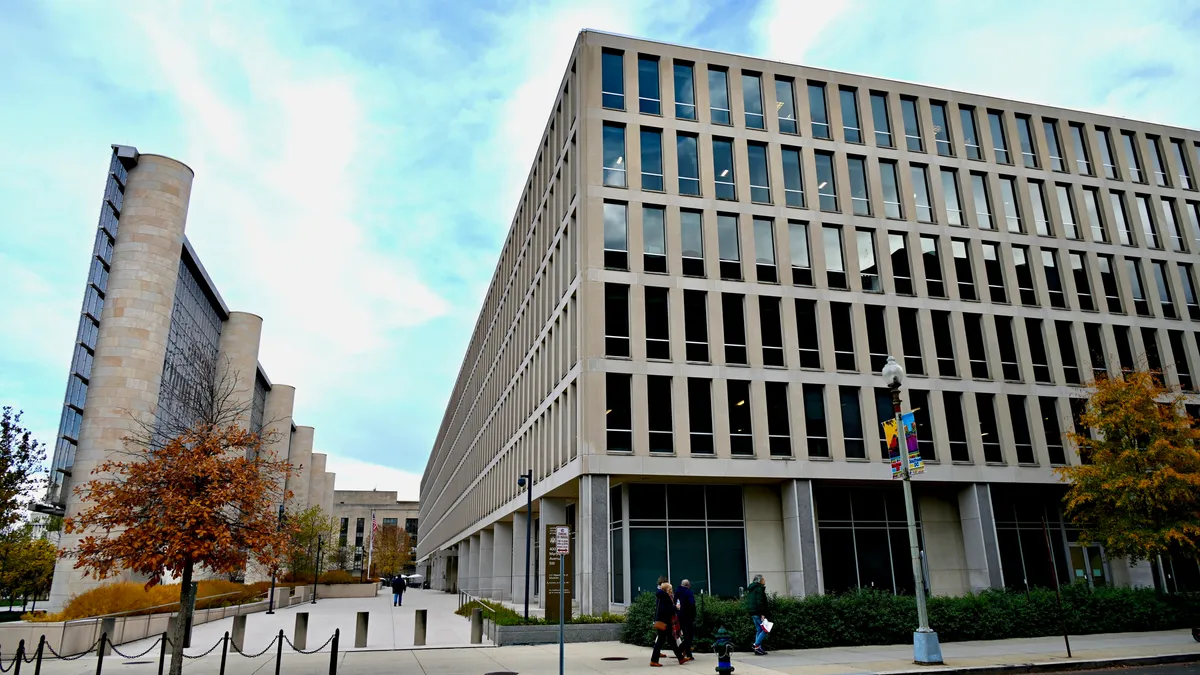
The U.S. Department of Education is investigating three California school districts over activities related to required ethnic studies courses, according to a Monday announcement by the department's Student Privacy Policy Office. The agency opened investigations into North Monterey County Unified School District, Palo Alto Unified School District and San Francisco Unified School District.
The curriculum at all three districts included "Wheel of Power/Privilege" or "Mapping My Identities" activities — or both, according to the department, which described the curriculum as "invasive questionnaires" and therefore subject to the Protection of Pupil Rights Amendment. The law requires schools to notify parents and obtain their written consent before surveying students on topics that would reveal protected information.
Under the second Trump administration, student privacy laws including PPRA have been increasingly used to crack down on activities related to supporting LGBTQ+ students, like mental health screenings asking about sexual orientation or gender identity.
In its Monday announcement, the Education Department said that the ethnic studies course activities "require students to identify personal information such as their sexual orientations, gender identities, mental and physical health conditions, family economic status, race, and more."
“Schools in California seem to be collecting a myriad of protected and private information on students without involving parents, raising serious concerns that they deliberately keep parents in the dark about the most sensitive information pertaining to their children,” said Frank Miller, director of the Education Department's Student Privacy Policy Office, in an Oct. 26 statement. “Students should not be pressured into identifying intimate details about themselves and their families without parental awareness and consent."
Parents also allege that the California districts did not respond to their requests to review the ethnic studies curriculum or they only allowed parents to examine parts of it, the federal agency said.
Out of the three districts under investigation, Palo Alto Unified School District immediately responded to K-12 Dive's request for comment.
"We will cooperate fully and respond to the Department. Parents have a right to know what their children are learning and to make decisions about sensitive personal matters," said Jason Glass, superintendent of Palo Alto Unified School District, in an Oct. 26 email. "We take that seriously, along with our responsibility to teach Ethnic Studies well. Those commitments are not in conflict."
Glass said the district is reviewing the lessons identified by the federal agency and how they were taught across classrooms, including whether any personal disclosure was required, and how parent requests to review materials were handled.
"If we find something that should be done differently, we will fix it," Glass said.
A review of the 9th-grade course and its materials, which are available on the district website, include the "Wheel of Privilege" as a reference underpinning student reflection prompts. The activity, which teachers could opt to include in their lessons, depicts a wheel including gender, citizenship, skin color, education level, ability, body size, housing and wealth status, among other things that it says can influence privilege. It's noted on the document that the wheel is a "teacher example used for class reference" and that "students are not asked to complete this activity" of identifying where they land on the wheel.
However, in the district's course description, it says students may use the wheel to write a reflection "on the degree of privilege you've experienced, areas in your life where you experience privilege versus marginalization, etc."
"Reflect on one area of your identity where you experience privilege. How does this privilege manifest in your life?" the section continues. "Reflect on one area of your identity where you might not experience privilege. How can this potentially affect your experiences or opportunities?"
In a further update to K-12 Dive on Oct. 26, Glass said both of the district's high schools confirmed that students are not asked to complete the "Wheel of Power/Privilege" or "Mapping My Identities" activities named in the agency's letter. The wheel is included in the syllabus "only as a teacher example used for class reference, and it is labeled that way," Glass said.
Administration crackdown under privacy laws
The Trump administration's investigation into classroom curriculum materials comes after it sent a Dear Colleague letter in August saying even optional mental health screenings and surveys for students will be considered "required" under the law and subject to parental notification and consent procedures.
The letter said that "parental access to certain instructional materials, including ones used as part of a student’s educational curriculum," also fall under student privacy laws.
Students’ decisions to fill out surveys on sensitive topics can be influenced by peer pressure, fear of not participating, or wanting to please a teacher or authority figure, Miller wrote in the Dear Colleague letter.
As a result, districts will be required to provide parents a chance to review "survey" materials and obtain their written consent for student participation. Providing parents opt-outs would not fulfill the requirement of securing parental consent in this scenario, Miller said.
In early October, the administration reiterated its warning to state attorneys general, saying that "many superintendents and school officials continue patterns of noncompliance." That warning said that in addition to forms and surveys, "anything else that can be used to evaluate a student's mental health" will need written parental consent.