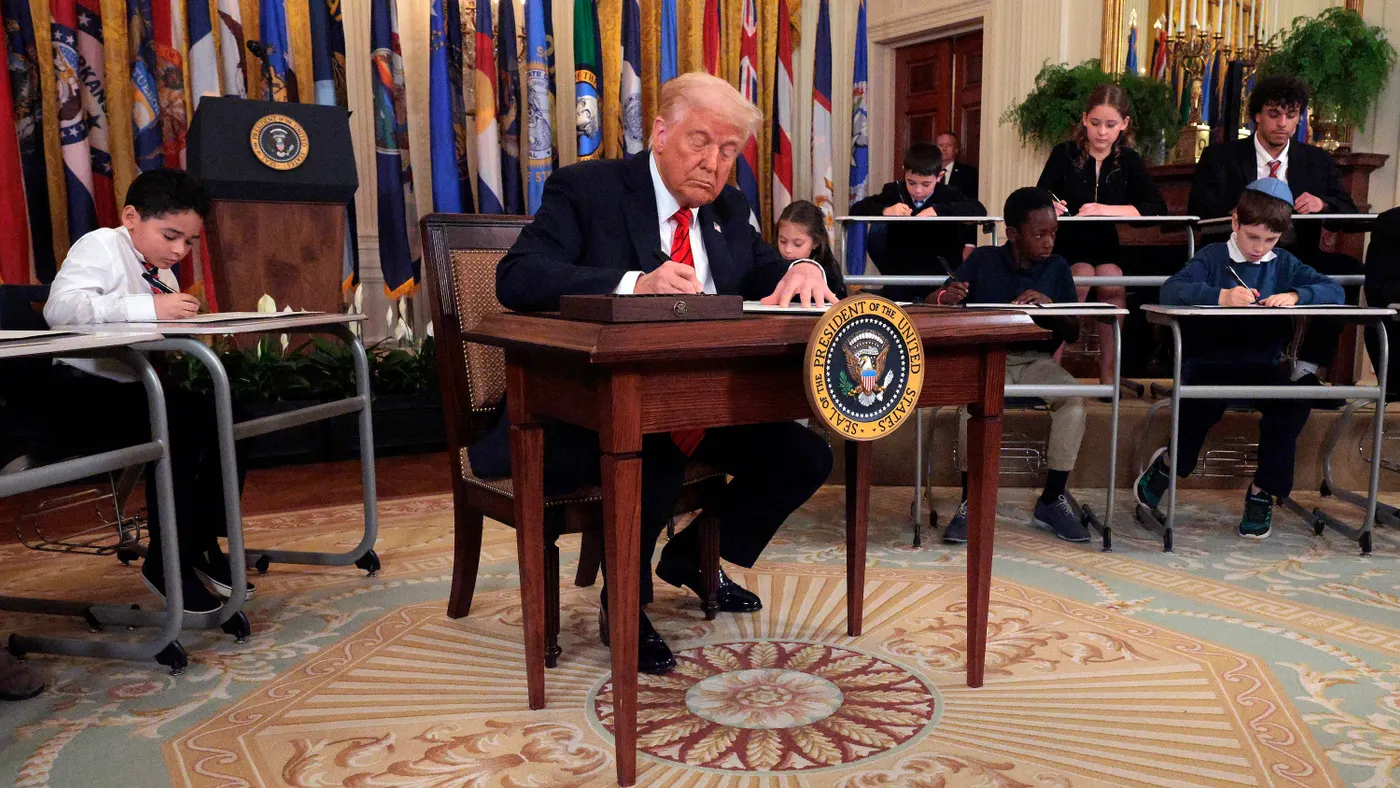
To say the first year of the second Trump administration brought a sea change for federal education policy would be an understatement. From efforts to shutter the U.S. Department of Education to legal battles on issues including staffing cuts, immigration enforcement, and transgender students’ athletic participation, few areas of the K-12 sector have been untouched.
To take a look back at key K-12 developments of President Donald Trump’s first year back in the White House, follow along with us below.
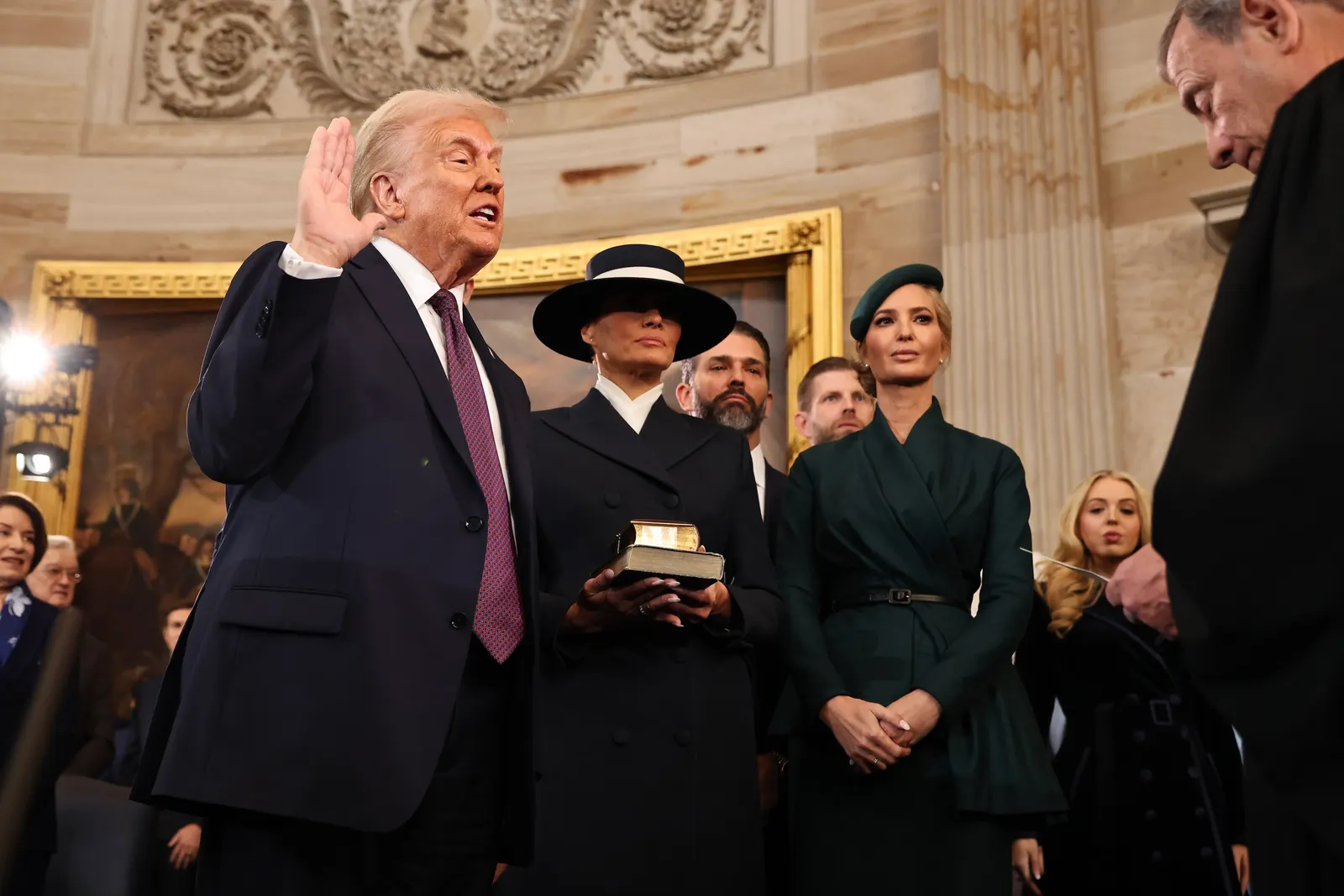
U.S. President-elect Donald Trump takes the oath of office from Chief Justice John Roberts as Trump's family members look on during inauguration ceremonies at the U.S. Capitol on Jan. 20, 2025, in Washington, D.C.
Chip Somodevilla via Getty Images
January
- On the first day of Trump's second term in office — Jan. 20, 2025 — his administration rescinded Biden-era guidance discouraging immigration enforcement near schools and other "sensitive areas" like hospitals and churches. The move sparked fear among school communities that enforcement activities would happen on their campuses. That led to districts and community partners informing immigrant families of their constitutional rights and issuing guidance to school staff about protocols to take during any such enforcement actions.
- On Jan. 23, Trump's U.S. Department of Education eliminated diversity, equity and inclusion efforts within the agency. The agency said at the time that it “removed or archived” hundreds of outward-facing documents — including guidance, reports and training materials — that mention DEI. That included links to resources encouraging educators to incorporate DEI in their classrooms.
- Quick to make an imprint on K-12 policy, the Trump administration on Jan. 24 rescinded Biden-era guidance that said implementing book bans could put school districts in violation of civil rights law.
- Trump on Jan. 29 signed an executive order encouraging the expansion of school choice in states. The order directed the department to develop plans for using its discretionary grant programs “to expand education freedom for America’s families and teachers.”
- Another executive order signed the same day prohibited the use of federal funding for "illegal and discriminatory treatment and indoctrination in K-12 schools, including based on gender ideology and discriminatory equity ideology.”
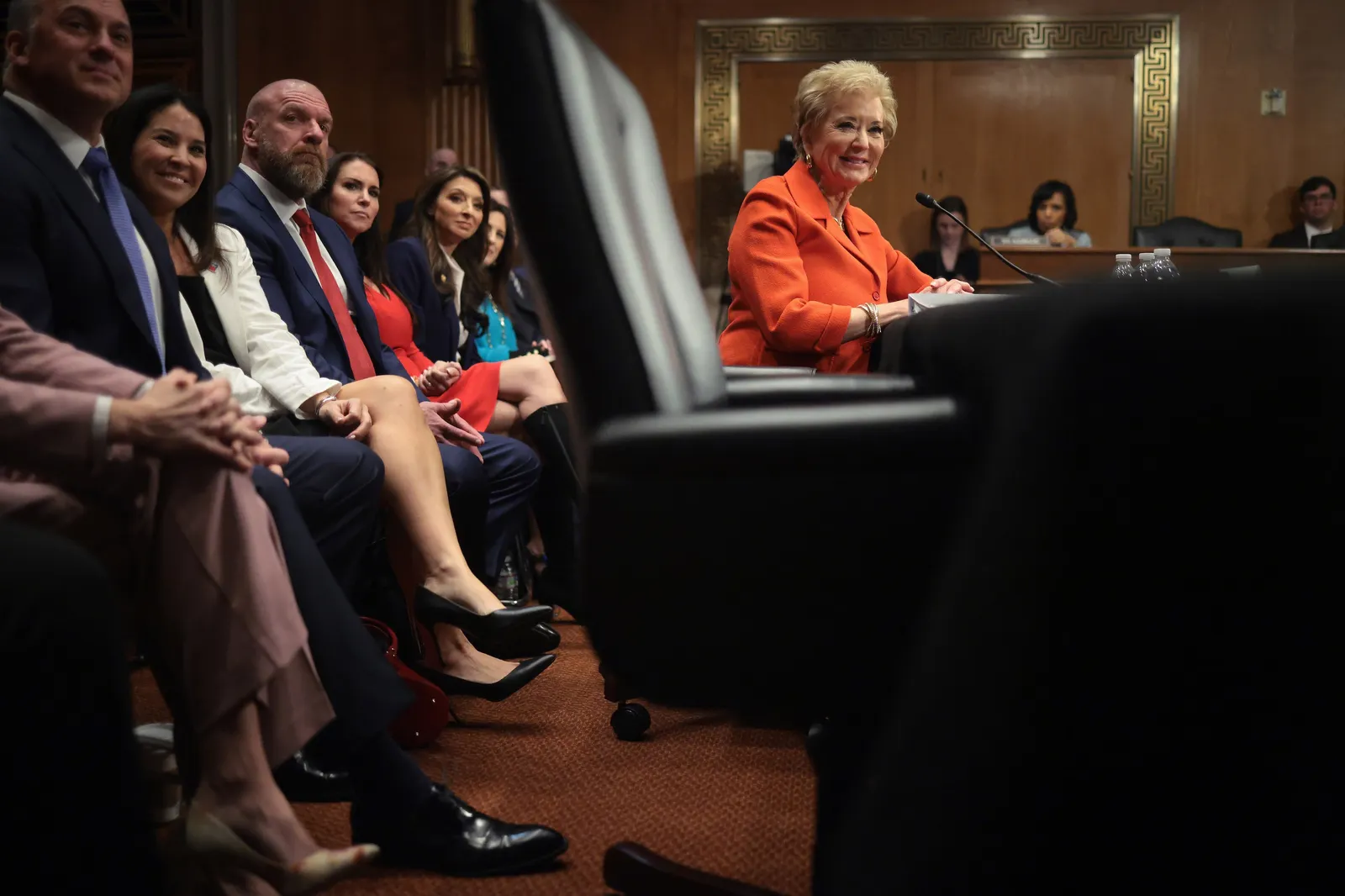
Linda McMahon, President Donald Trump’s nominee to be Secretary of Education, testifies during her Senate Health, Education, Labor and Pensions Committee confirmation hearing in the Dirksen Senate Office Building on Feb. 13, 2025, in Washington, D.C.
Win McNamee via Getty Images
February
- Trump signed an executive order on Feb. 4 saying the federal government would rescind all funds from educational programs that allowed transgender girls and women to participate on sports teams that align with their gender identity. LGBTQ+ advocates condemned the action as discriminatory.
- The anti-DEI stance led the newly formed Department of Government Efficiency to cancel about $881 million in multiyear research contracts at the Education Department on Feb. 10. This brought concerns from education researchers about future impact, including data that would be missing to measure chronic absenteeism, student achievement, teacher shortages and other metrics.
- Anti-DEI efforts continued as the Education Department on Feb. 27 announced the launch of an “end DEI” portal for people to report "illegal discriminatory practices.” While the website is no longer live, a lawsuit brought by the American Federation of Teachers and other plaintiffs challenged the agency's prohibition on considering race in education programs. That case is still pending.
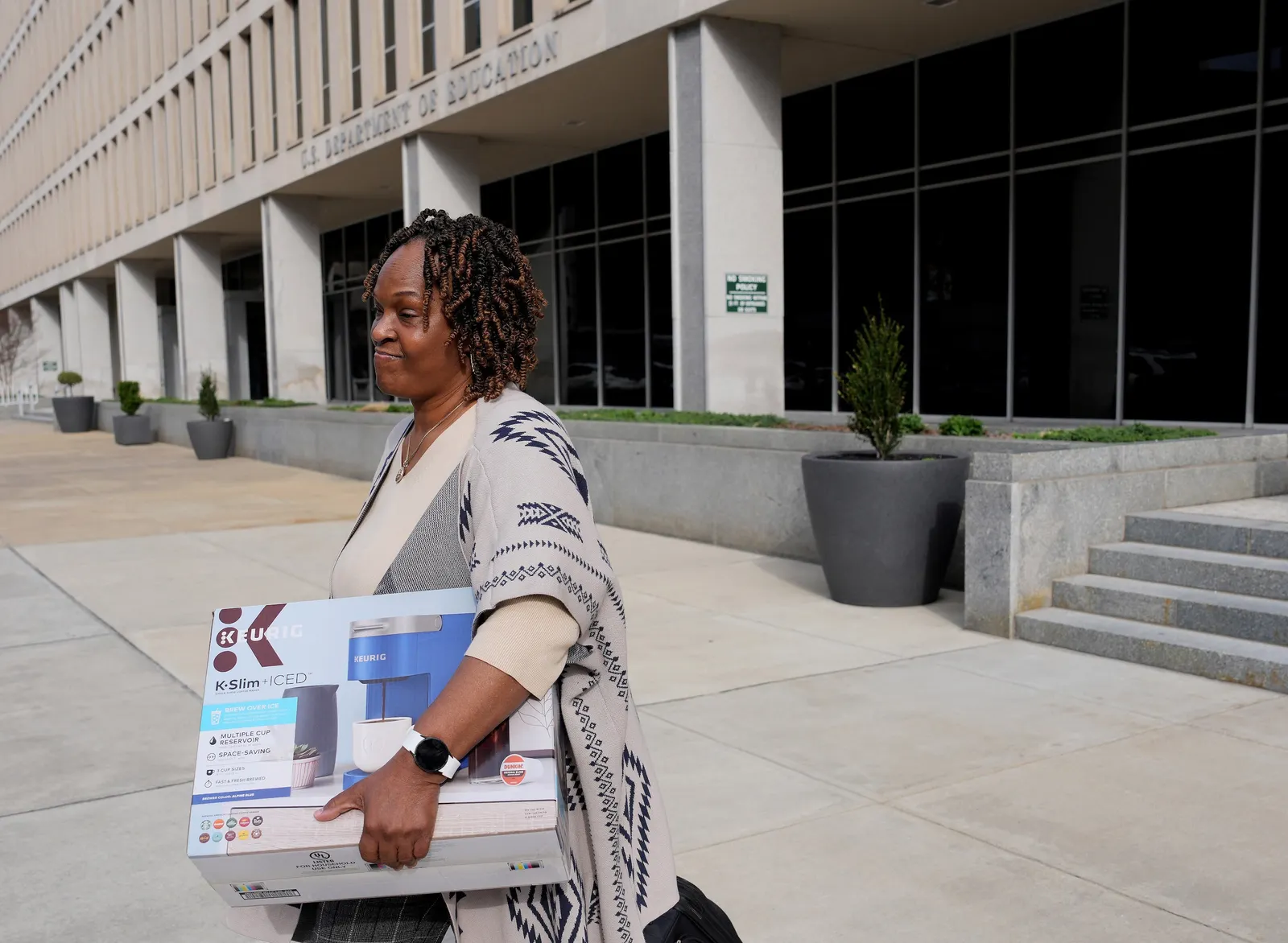
A U.S. Department of Education employee leaves the agency's headquarters with their belongings on March 20, 2025, in Washington, D.C. On March 11, the agency announced a massive reduction-in-force that shrunk the department workforce.
Win McNamee via Getty Images
March
- Linda McMahon, a former administrator of the Small Business Administration and former president and CEO of World Wrestling Entertainment, was confirmed by the Senate in a 51-45 vote along party lines as secretary of the Education Department on March 3.
- One of the biggest developments this month in the Trump administration's efforts to shrink the federal education footprint came on March 11 with a massive reduction-in-force order at the Education Department The Education Department's workforce dropped from 4,133 when Trump was inaugurated to around 2,183 due to those layoffs and previously accepted buyouts.
- McMahon and others joined Trump at the White House on March 20 for an executive order signing ceremony, directing McMahon to “take all necessary steps to facilitate the closure of the Department of Education.”
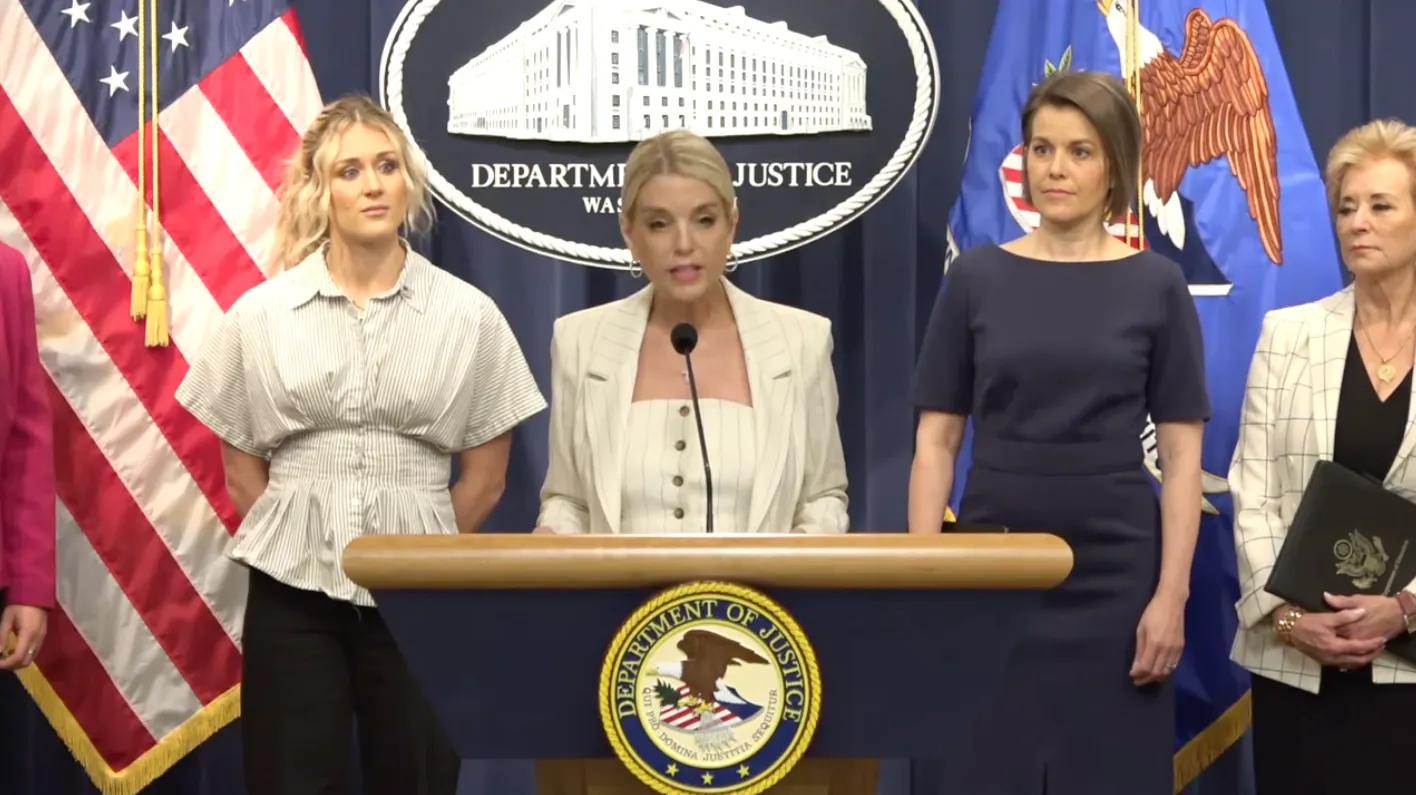
U.S. Attorney General Pamela Bondi announced a civil lawsuit against Maine Department of Education on April 16, 2025, and said that schools that comply with the administration's civil rights statute interpretations will be spared.
Retrieved from U.S. Department of Justice.
April
- The Trump administration on April 4 announced a major change in Title IX enforcement at schools and colleges: It would tap the U.S. Department of Justice for a Title IX Special Investigations Team. The move marked a shift of some education civil rights investigation and enforcement responsibilities to the Justice Department, which would henceforth help investigate policies allowing transgender students to participate on girls’ and women’s athletic teams and to use facilities aligned with their gender identity.
- On April 4, mass layoffs at the U.S. Department of Health and Human Services led to the shuttering of five Office of Head Start regional offices in Boston, New York, Chicago, San Francisco and Seattle. The retrenchment raised alarms among early childhood education advocates, who cautioned that the cuts could lead to service delays and weaken the program. Adding to those concerns, Head Start was zeroed out in a leaked draft fiscal 2026 budget plan for HHS.
- Anxieties continued to increase over the administration’s uptick in Immigration and Customs Enforcement activity. Two Los Angeles Unified School District elementary schools reported that federal agents had attempted to gain entry on April 7 by claiming they had families’ permission to speak to students.
- The administration moved to cut off Maine’s federal K-12 funds, backed by a DOJ civil lawsuit announced April 16 over the state’s transgender student athlete policy. The move came amid other changes to how the Education Department conducts Office for Civil Rights investigations, which included rapid and targeted investigations.
- The Education Department on April 30 cancelled $1 billion in grants initially awarded to districts across the U.S. to support student mental health. The funds — which aimed to help bring more mental health professionals into schools — were discontinued due to “conflict” with Trump administration priorities, according to the agency.
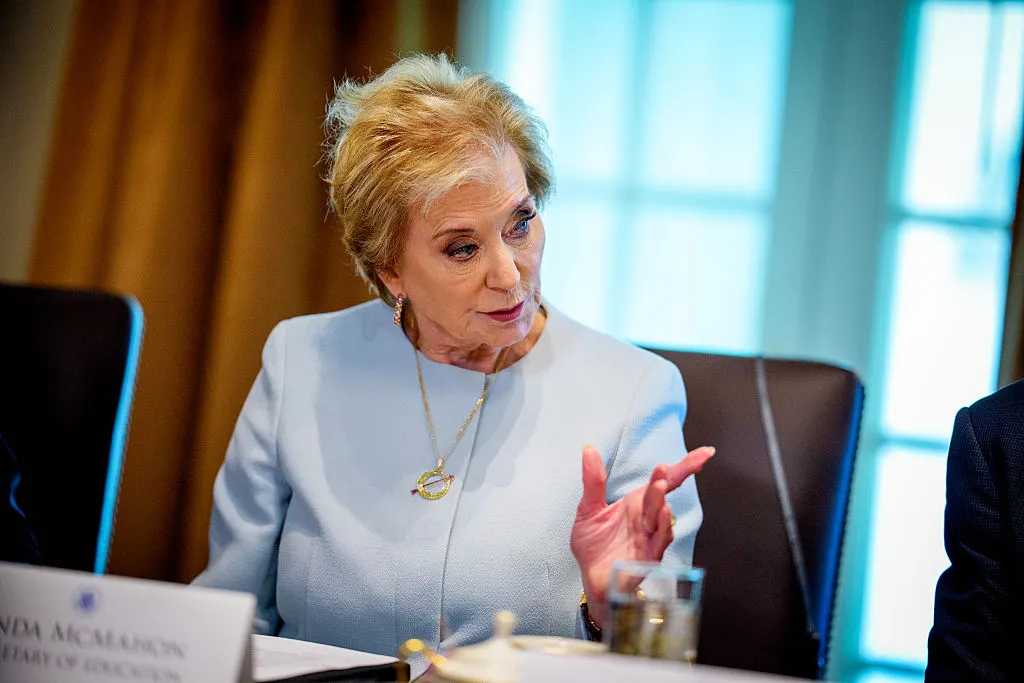
U.S. Education Secretary Linda McMahon speaks during a Cabinet meeting at the White House on April 30, 2025, in Washington, D.C.
Andrew Harnik via Getty Images
May
- The Trump administration kicked off May by unveiling its federal skinny budget proposal for FY 2026 on May 2. Reflecting the administration’s anti-DEI priorities, proposed cuts included all $70 million for Teacher Quality Partnerships grant that were often used for workforce diversity efforts, all $7 million for Equity Assistance Centers that were established as part of desegregation efforts, all $890 million for English Language Acquisition, and a $49 million cut for OCR. Head Start, however, was spared from the chopping block, as was funding for Title I and the Individuals with Disabilities Education Act. The budget plan also included a $60 million increase for charter schools.
- On May 22, U.S. District Judge Myong Joun issued a preliminary injunction in State of New York v. McMahon that ordered the department be “restored to the status quo” prior to the day President Donald Trump retook office. The agency’s actions since its mass layoffs, Joun said, showed no evidence that the workforce reductions had improved efficiency or that the agency was making progress in working with Congress to close the department. “A department without enough employees to perform statutorily mandated functions is not a department at all,” Joun wrote. “This court cannot be asked to cover its eyes while the Department’s employees are continuously fired and units are transferred out until the Department becomes a shell of itself.”
- The administration also faced legal setbacks on various other fronts in May. A court-approved settlement between the U.S. Department of Agriculture and Maine, issued May 2, prohibited the federal government from freezing school meal funds for the state. The funds were frozen in relation to the state’s Title IX dispute with the Trump administration. Judges also ordered the administration to restore temporary extensions of federal COVID-19 emergency funds on May 6 and to temporarily reinstate the Southern Education Foundation’s Equity Assistance Center on May 30.
- On May 30, the Trump administration released further details on its proposed FY 2026 budget for the Education Department. The more comprehensive budget requested $66.7 billion for the agency, amounting to a $12 billion, or 15.3%, cut from FY 2024 funding levels. The administration's K-12 Simplified Funding Plan called for merging 18 current competitive formula funding grant programs into one $2 billion formula grant program. The administration said the move would lead to innovation and return power to the states.
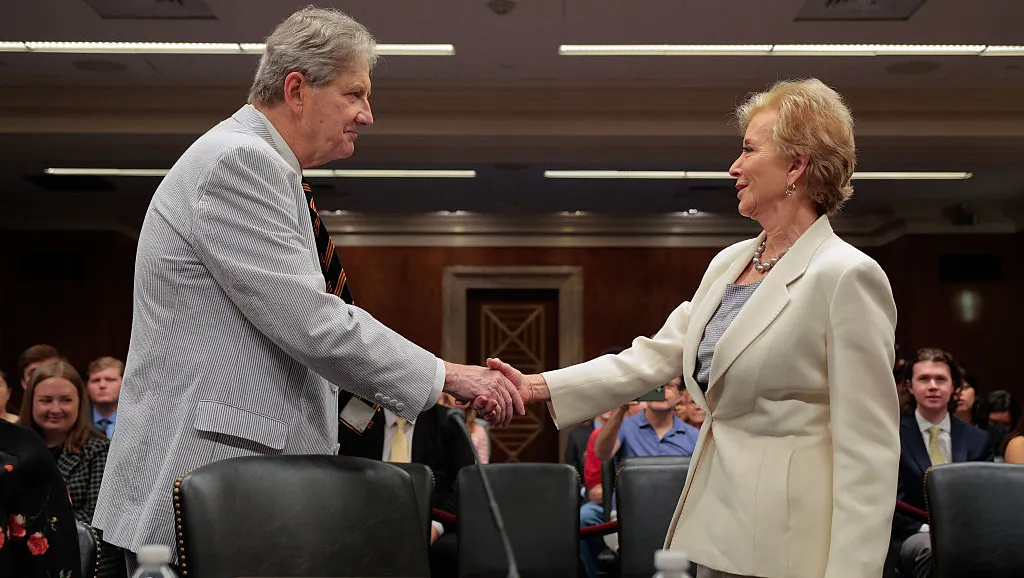
U.S. Education Secretary Linda McMahon greets Sen. John Kennedy, R-La., before a hearing of a Senate Appropriations subcommittee about the Education Department’s fiscal year 2026 budget proposal on June 3, 2025, in Washington, D.C.
Chip Somodevilla via Getty Images
June
- The administration’s Title IX crackdown over transgender student athlete policies continued as the Justice Department on June 2 warned California districts of “legal liability” for complying with state policies on the issue. The letter to public school districts in the state came after a transgender athlete won gold in a state high school track and field competition. California responded by suing the Justice Department. The Education Department later announced an OCR investigation had found the state in violation of Title IX and threatened further DOJ action.
- McMahon defended the administration’s education budget proposal at a Senate appropriations subcommittee hearing on June 3, during which she said the administration had set a “responsible” goal for the Education Department’s closure and that improving literacy was her No. 1 priority.
- The Education Department’s court battles over the March reduction-in-force continued as states suing the agency over the layoffs claimed the move had impacted legally required functions such as research and grant distribution. In documents submitted to the U.S. Supreme Court, however, the Education Department said states had “no statutory right to any particular level of government data or guidance.”
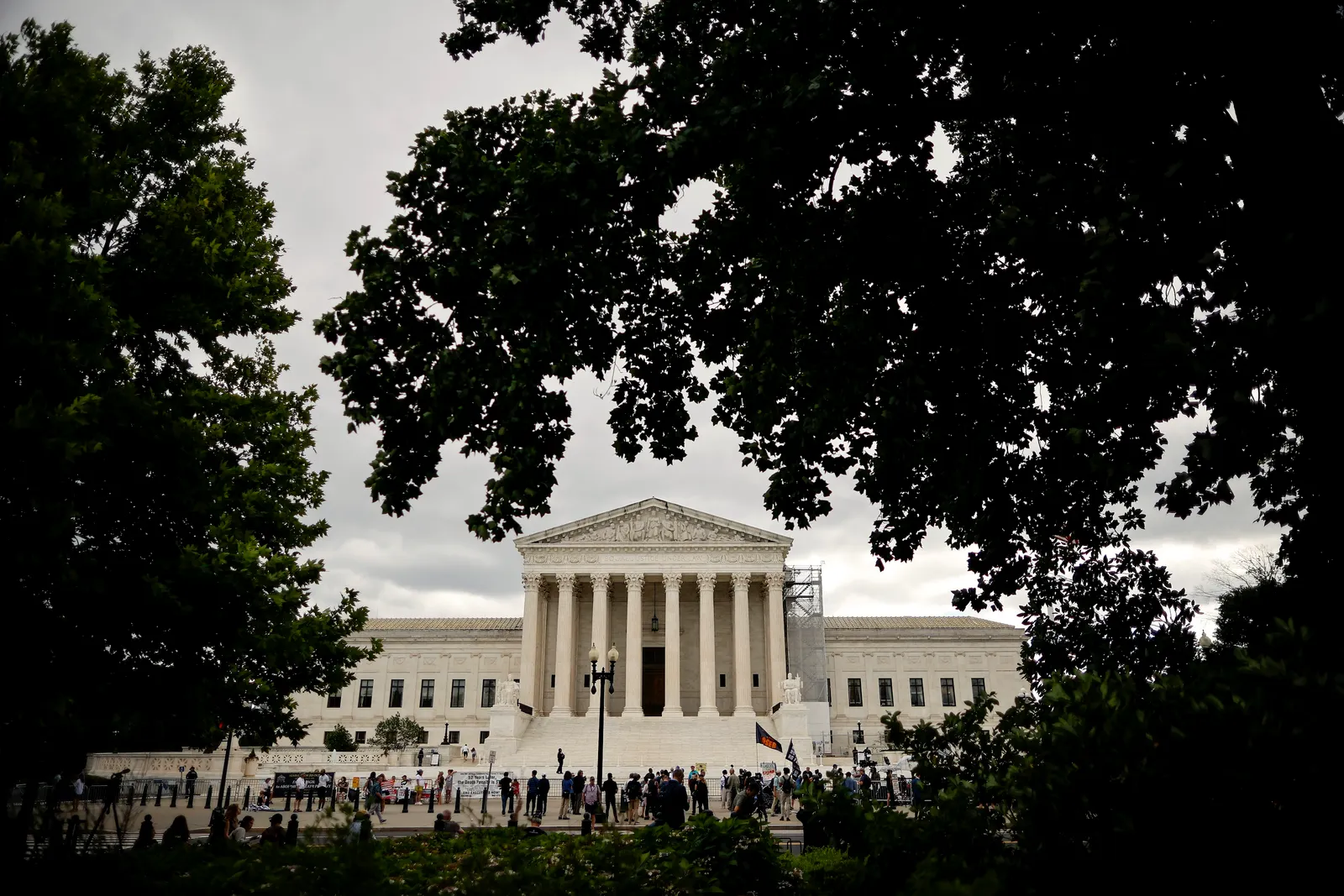
The U.S. Supreme Court is pictured on July 1, 2024, in Washington, D.C. On July 14, 2025, the high court allowed the Education Department to temporarily proceed with layoffs that began in March while lower courts determined their legality.
Chip Somodevilla via Getty Images
July
- Nearly half of states sued the Trump administration over $6.2 billion in frozen federal K-12 grant funds in mid-July, which were supposed to be distributed to states and localities by the beginning of the month. Due to the funding freeze, school districts faced "budgetary chaos" related to after-school programming, services for English learners, and professional development. The frozen funds put education programs at risk, including those related to migrant education, English learner services, professional development, academic enrichment, and before and after-school services. As a result of the states' lawsuit, the administration began to release the money less than a month after the government's missed distribution deadline.
- The Trump administration on July 10 restricted education-related programs for some immigrants based on their immigration status, saying “no taxpayer-funded benefits go to unqualified aliens.” The restrictions affected Head Start, tuition for dual enrollment, adult education, and career and technical education training programs. States sued the administration over the restrictions on July 21 and succeeded in winning temporary relief as the administration entered a court agreement four days later to pause them while the lawsuit is pending.
- The Supreme Court on July 14 gave the Education Department the green light to push forward with layoffs that began in March, allowing them temporarily while the question of their legality is argued in the lower courts.
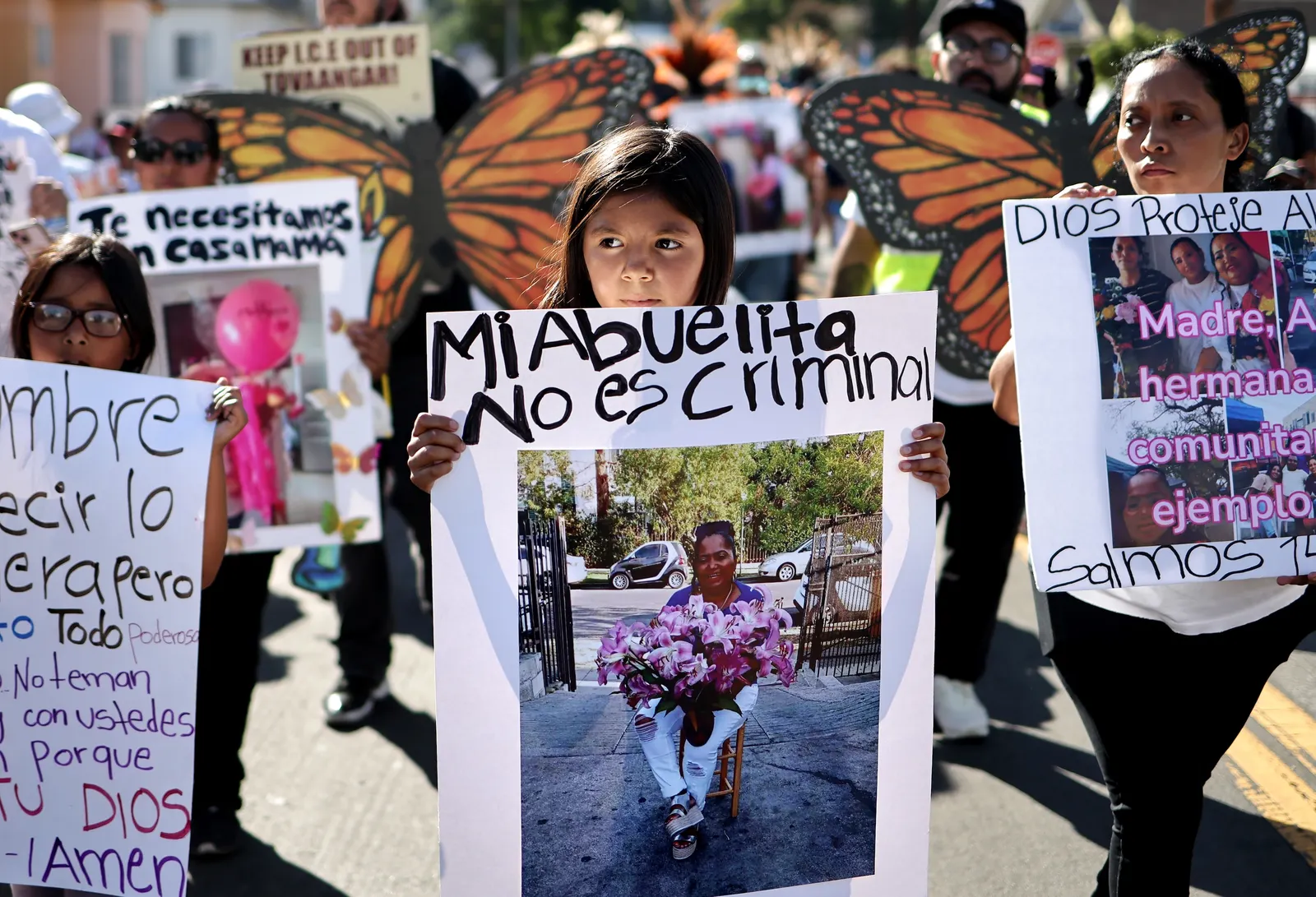
The granddaughter (center) of Emma De Paz, a street vendor detained during ICE activites, carries a sign during a protest on July 1, 2025, in Los Angeles, Calif. Heavy ICE presence in Los Angeles — including on school grounds — sparked outcry over the course of the summer.
Mario Tama via Getty Images
August
- August began with outcry from education policy and legal experts over sweeping anti-DEI guidance released by the Department of Justice on July 30, which affected school district hiring and training practices, as well as programming available to students. Under the guidance, districts could be exposed to legal liability by asking job applicants how their “cultural background informs their teaching,” using recruitment strategies targeting candidates from specific geographic areas or racial backgrounds, training employees on "toxic masculinity," and asking job candidates to describe how they overcame obstacles — which the department said could amount to "illegal discrimination."
- As schools open their doors for the 2025-26 school year, reports of ICE enforcement around or on school grounds ramped up, impacting parents during school pickup and drop-offs. Students were also affected by ICE activity, which included a 15-year-old with disabilities being handcuffed as he was registering for classes in Los Angeles.
- The Education Department quietly rescinded Obama-era guidance that called on states and districts to ensure English learners “can participate meaningfully and equally” in school and “have equal access to a high-quality education and the opportunity to achieve their full academic potential.”
- State universal school meal programs faced financial turmoil as President Donald Trump's "Big, Beautiful Budget" law, which was enacted on July 4, cut Supplemental Nutrition Assistance Program and Medicaid — a move that could have severe ripple effects for the same programs.

Lanya Elsa (middle) says support through IDEA Part D grants were pivotal for her sons, Conner McKittrick (left) and Dalton McKittrick, who are deafblind. Deafblind programs funded by the grant were left scrambling after abrupt cancellations by the Trump administration which said they were "not in the best interest of the Federal Government.”
Permission granted by Erika Dubois Photography
September
- Families, educators and advocates of children and youth who are both blind and deaf scrambled to reclaim abruptly canceled federal funding after the Education Department sent a notice of noncontinuation for four deafblind projects in Washington, Oregon, Wisconsin and a consortium of New England states. Combined, the four projects’ grants were estimated at $1 million affecting about 1,365 children.
- U.S. Attorney General Pamela Bondi warned in a Sept. 8 memo to the U.S. Department of Justice's Civil Rights Division that schools must provide parents with the ability to opt their children out of instruction related to gender and sexuality, or risk being targeted by the department. It directed the division to be vigilant of parental rights' violations at schools and for U.S. district attorneys nationwide to weed out and respond to "credible threats against parents."
- The Trump administration's Make America Healthy Again Commission on Sept. 9 released the "Make Our Children Healthy Again" strategy report, which focused partly on school nutrition policies and pointed toward a need to serve healthier meals to schoolchildren. The report called for barring or limiting artificial dyes in food products and improving access to whole, healthy foods in school meals.
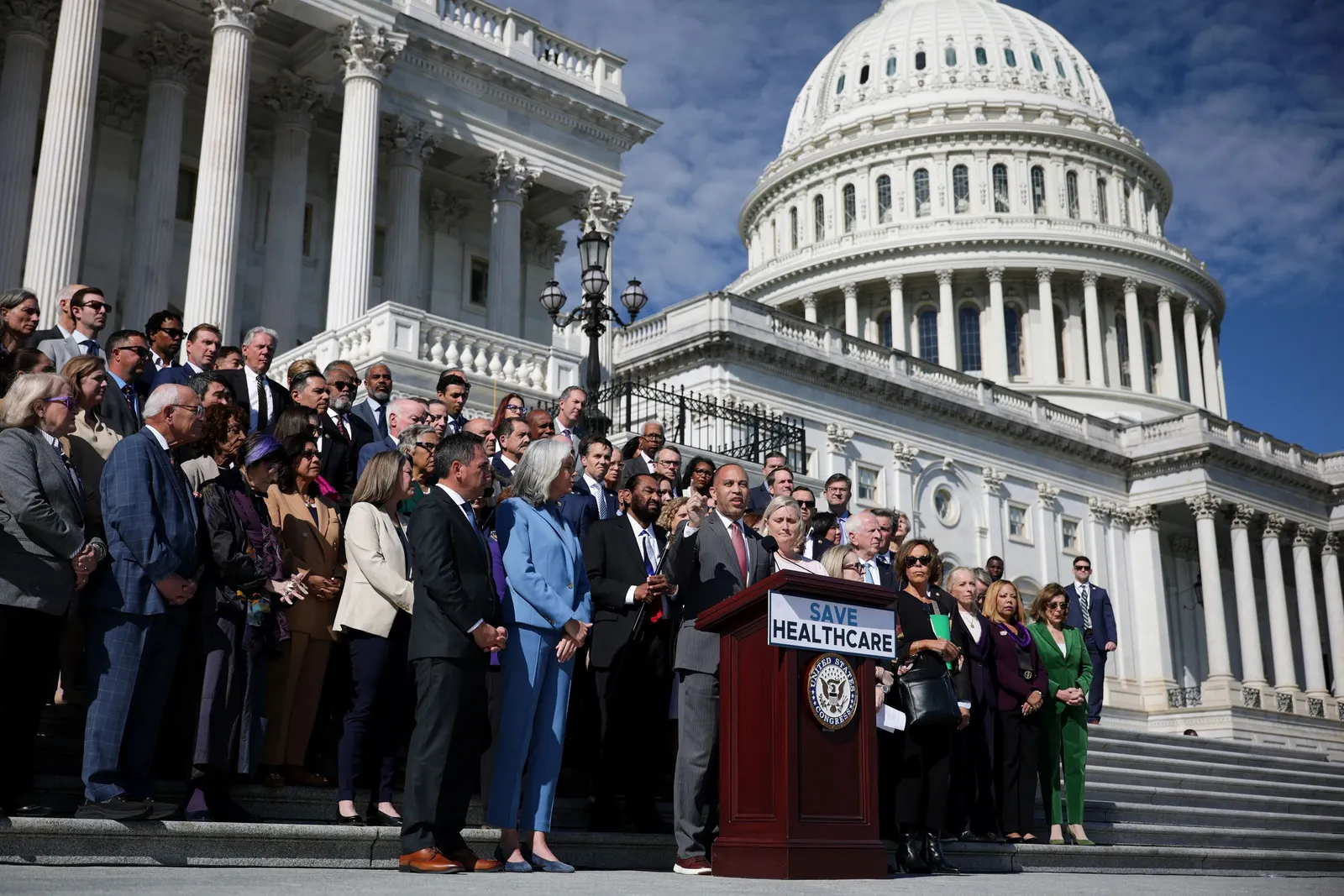
House Minority Leader Hakeem Jeffries, D-NY, speaks at a news conference on Oct. 15, 2025, about the federal government shutdown, flanked by members of the House Democratic Caucus, outside the U.S. Capitol in Washington, D.C.
Alex Wong via Getty Images
October
- Oct. 1 marked the first day of a prolonged federal government shutdown after Congress could not come to agreement on sticking points on the 2026 fiscal year budget. The Office of Management and Budget issued a memo a week before the shutdown threatening mass firings of federal employees should the shutdown come to fruition.
- The 4th U.S. Circuit Court of Appeals dealt a blow to Virginia’s Fairfax County Public Schools in its Title IX legal battle with the Trump administration on Oct. 1, when the court denied the district’s request to temporarily block funding restrictions issued by the Education Department. The Trump administration put Fairfax schools’ federal funding on “reimbursement only” status after the agency said the district violated Title IX by allowing transgender students to use bathrooms aligning with their gender identity.
- On Oct. 10, some 466 Education Department employees — including most staff at the Office of Special Education Programs — received RIF notices as part of the wider shutdown-related effort to lay off federal employees. The layoffs particularly caused concern among special education advocates over the potential effects on funding and implementation of programs under the Individuals with Disabilities Education Act.
- An Oct. 28 preliminary injunction paused RIF notices issued during the shutdown.
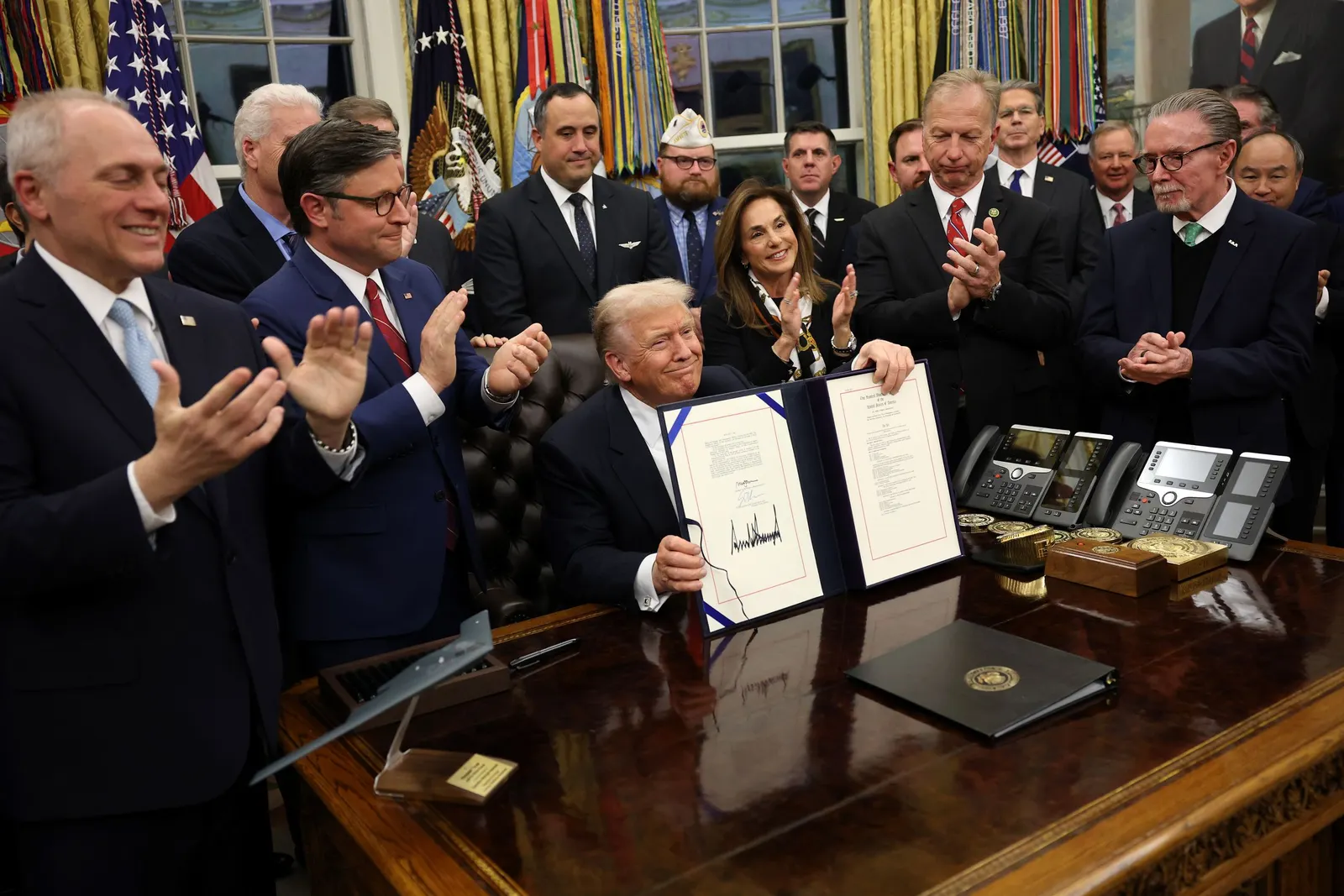
President Donald Trump holds up federal legislation he signed on Nov. 12, 2025, to reopen the federal government during a ceremony with Republican lawmakers and business leaders in the Oval Office in Washington, D.C.
Win McNamee via Getty Images
November
- The federal government shutdown ended on Nov. 12 when Trump signed a continuing resolution to reopen the federal government and fund the Education Department through Jan. 30. The continuing resolution required back pay for employees furloughed during the shutdown and rescission of the RIFs issued on Oct. 10. The agency was also prohibited from issuing further RIFs through Jan. 30.
- Moving one step closer toward dismantling the Education Department, the Trump administration announced on Nov. 18 that it would transfer the agency’s management of six programs to other federal agencies. Special education, civil rights enforcement and financial aid were not impacted by the announcement. Affected programs, however, included the Office of Elementary and Secondary Education, Indian education programs, international education and foreign language studies, and the Office of Postsecondary Education’s institution-based grants.
- A coalition of school districts, employee unions and a disability rights organization amended a lawsuit on Nov. 25 seeking to halt the outsourcing of Education Department programs through the interagency agreements announced on Nov. 18. The lawsuit said that moving the department’s core programming to other agencies is illegal and would be harmful to K-12 and higher education students, families and educators.
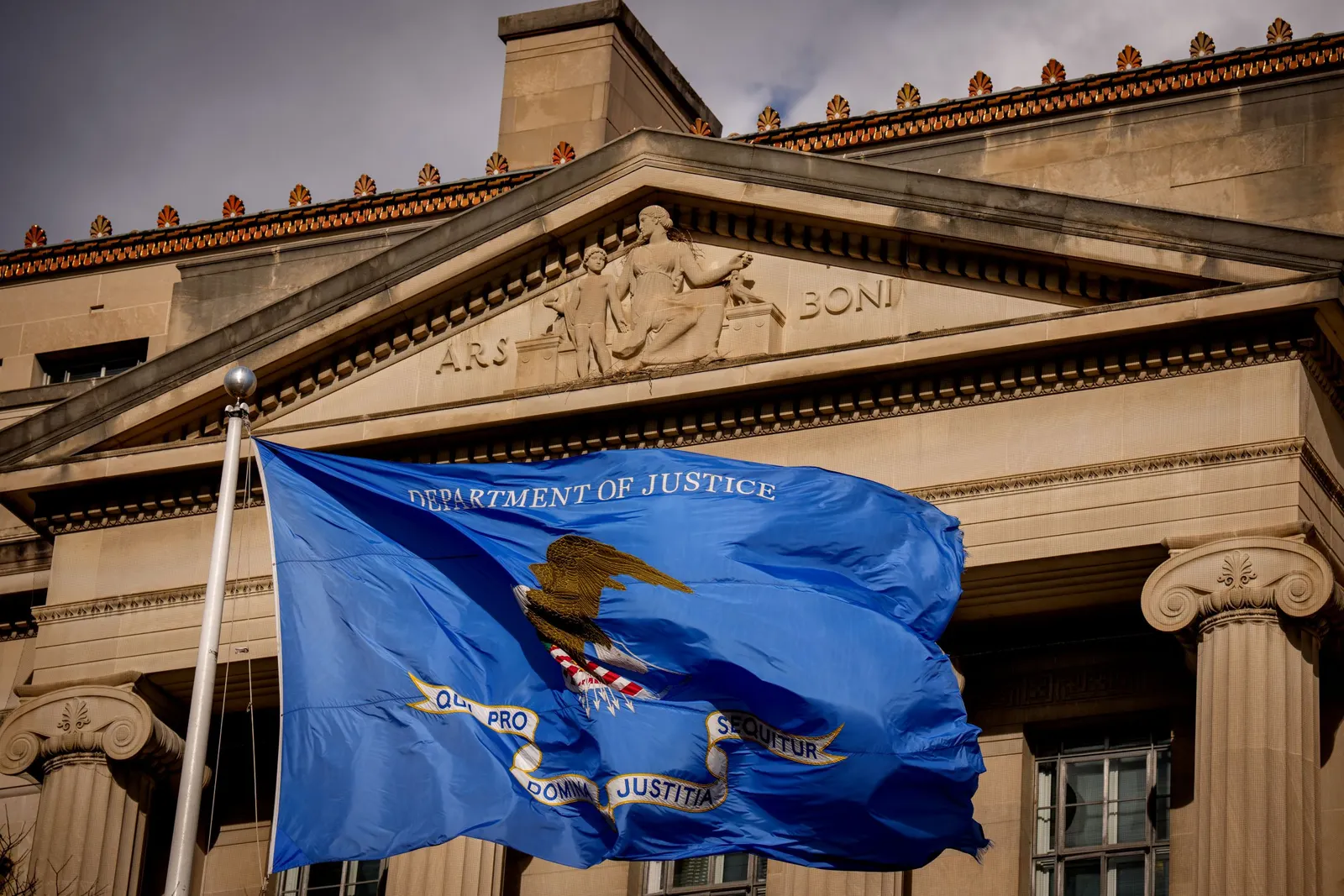
The exterior of the Robert F. Kennedy Department of Justice building on Dec. 19, 2025, in Washington, D.C. The Justice Department continued to take a greater role in Education Department matters in December by, for example, suing Minneapolis Public Schools.
Andrew Harnik via Getty Images
December
- The Department of Justice continued to take a greater role in enforcing the Trump administration’s K-12 priorities as the agency announced on Dec. 8 it would join a lawsuit against Virginia’s Loudoun County School Board involving two Christian high school boys who were suspended after complaining about a transgender student in their locker room.
- That same week, the Justice Department sued Minneapolis Public Schools on Dec. 9 over a teacher union agreement that the agency alleged was racially discriminatory because it included diversity-oriented goals for recruiting and retaining Black men.
- A federal judge on Dec. 19 ordered the Education Department to permanently reinstate cancelled mental health grants in 16 states. The order said the April cancellation of the school-based and professional development funding was unlawful and had caused “significant disruption” to the 16 plaintiff states. Court documents said the canceled grants totaled $1 billion nationwide. The Trump administration had issued $208 million in new mental health grants under revised priorities the week before the Dec. 19 order.