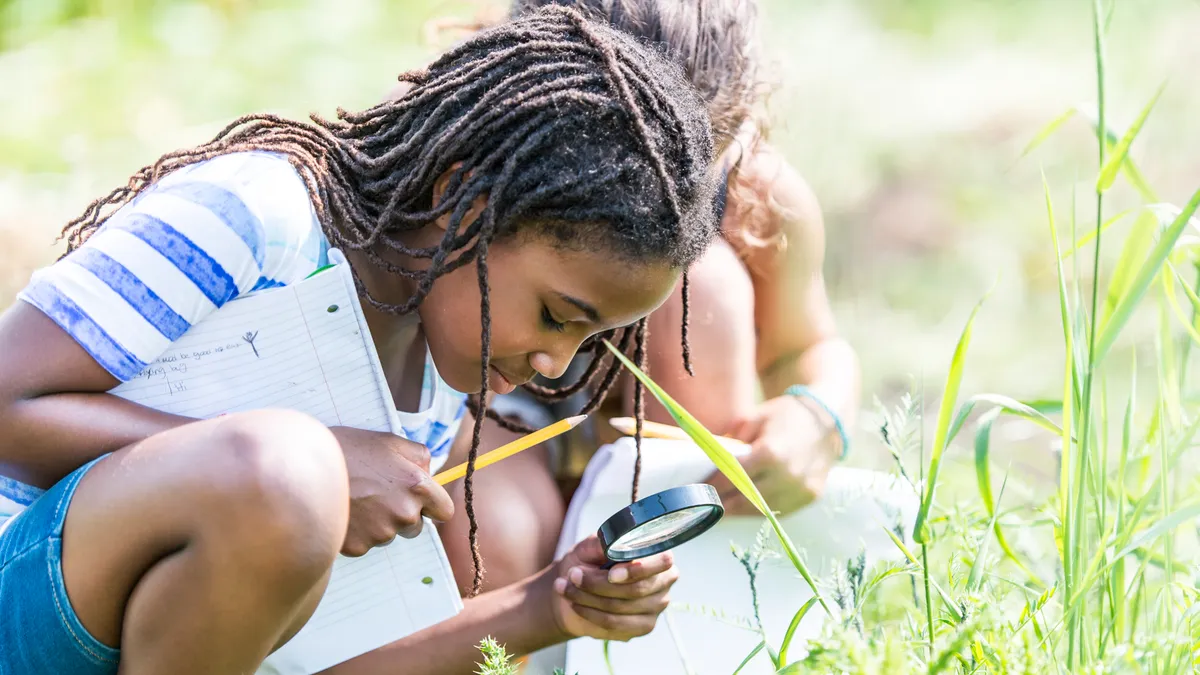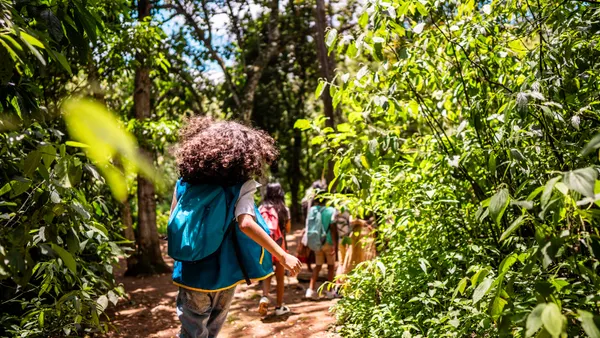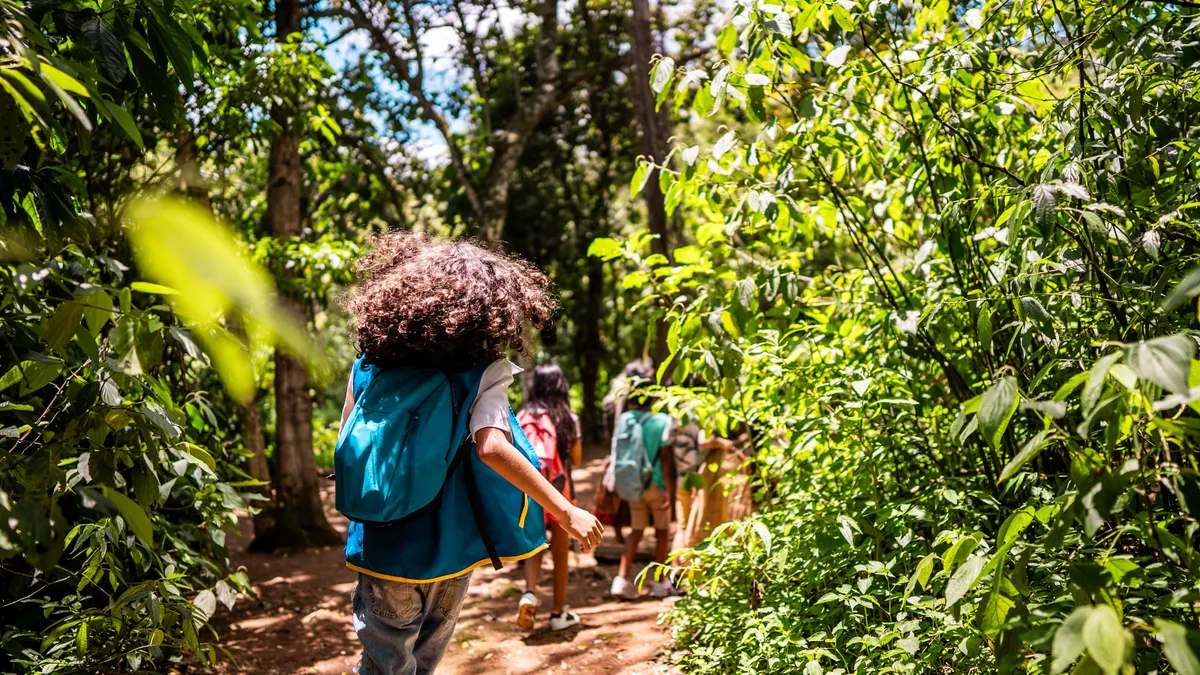
When school social worker Ellen Mazza takes groups of 7th and 8th graders hiking, orienteering, cross-country skiing, canoeing, camping and rock climbing through free programming by the nonprofit Chicago Voyagers, she sees them build autonomy, self-advocacy, communications skills and acceptance of one another.
“If they need help with something or don’t understand something, they help each other,” said Mazza, who works at Neal Math and Science Academy, a public middle school located in North Chicago, Illinois, adding that she was speaking for herself, not her district.
Canoeing, for example, requires paddlers to talk with each other, she said. "It takes time, but they start to learn how to communicate better. We can bring that into the classroom,” Mazza said.
Alex Goodfellow, executive director of Chicago Voyagers, said that time spent in nature provides a variety of mental and physical health benefits, as documented in a growing body of research, providing dopamine hits that don’t require “likes” and “shares” from others.
“We’re challenging people to try new things, test their resilience, build their self-confidence,” she said. “We’ve seen the spiral of digital and social media affecting youth mental health, and not just youth. Nature provides an avenue to escape some of that, improve your mood and lower stress — to get into a focus on mental well-being, and not get into the cycle of scrolling and chasing.”
Mazza brings diverse groups of eight or nine students roughly once per month for a variety of team-building activities, sometimes including high school students but mostly middle-schoolers, she said.
Participating students include those with and without disabilities, Spanish speakers, Black students, and both girls and boys. “We look for certain qualities, like leadership abilities,” Mazza said. “We ask, ‘What would a leader do, right now?’ … Some of the activities that we do, it’s important that students be able to follow directions.”
All in all, students greatly enjoy the programming, Mazza said.
“They love getting out once a month to learn something new, to do something they don’t normally have exposure to on a regular basis,” she said. “Learning how to use a compass, learning how to read a map, and then having to collaborate with somebody else — they may not be friends. They learn more about acceptance. You can get along with somebody, even if they’re not your friend.”
In addition to being free and thus available to students of all financial backgrounds, the Chicago Voyagers programs provide any needed clothing and equipment as well as trained guides, Goodfellow said.
“We are focused on and want a sense of belonging and inclusion for marginalized groups,” she said, such as lower-income populations and others who have historically been excluded from safe outdoor recreation. “If you look at the city of Chicago, and the disparity in safety from neighborhood to neighborhood, it’s really important to build that sense of belonging and access for that reason.”
Chicago is located on Lake Michigan, for example, and yet many young people have never seen or experienced the lake, Goodfellow said.
“It creates a different sense of place — who you are, who you can be, where you can grow, and the opportunities the world can provide,” she said. “We’re creating this connection to the community and the outside world, and that larger benefit of seeing opportunity out in front of you just by experiencing the natural world.”
Because the program includes adults from the students’ communities and schools, they also have the chance to develop stronger relationships with people like Mazza, Goodfellow said.
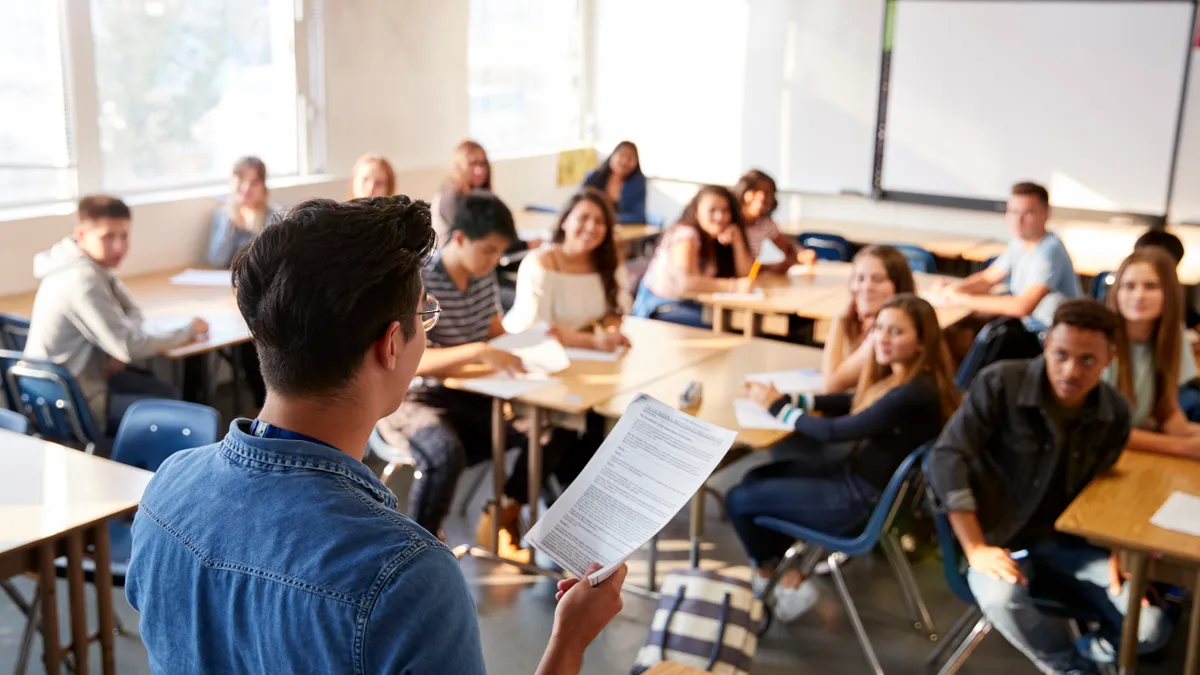
“They have someone they know and trust,” she said. “It allows educators, and school social workers, to see the kids in a different environment — to see them not in the box of a classroom, dealing with the constraints or frustrations of being in school, but to see their silly side and their communication amongst peers when they’re not in a school setting."
Goodfellow added, "Youth get the value of the opportunity to build a relationship with someone who may be an art teacher, a gym teacher — someone who’s not their teacher, but someone who lives, works and plays in their community.”