Lessons In Leadership is an ongoing series in which K-12 principals and superintendents share their best practices as well as challenges overcome.
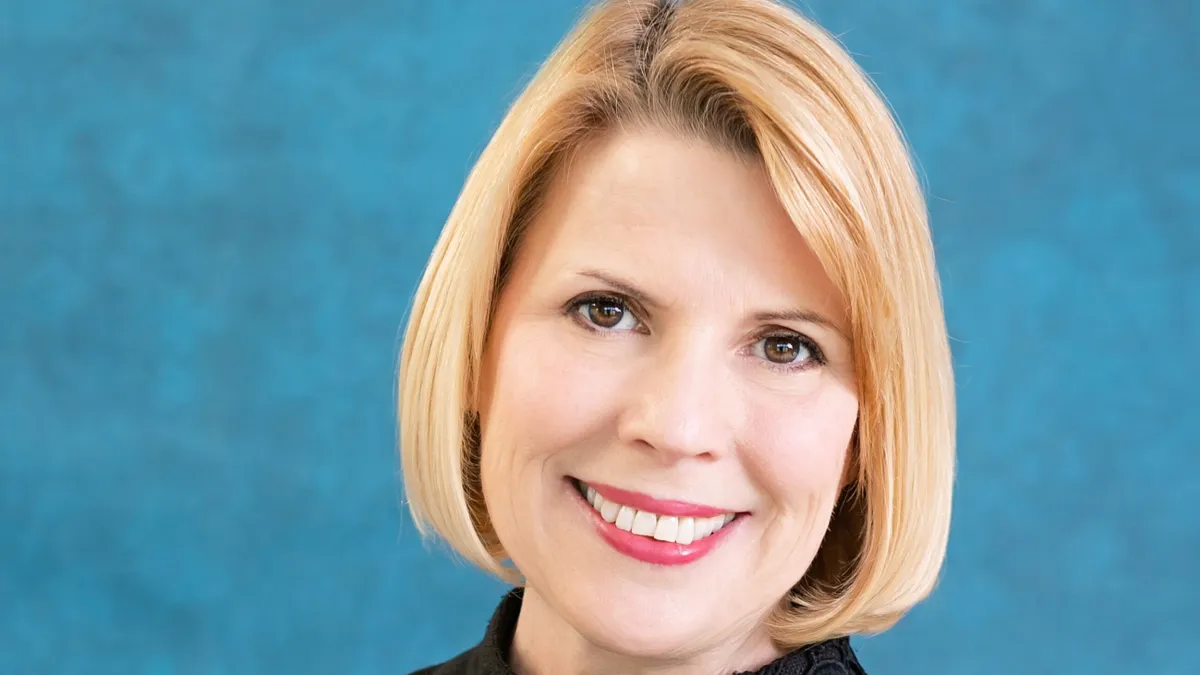
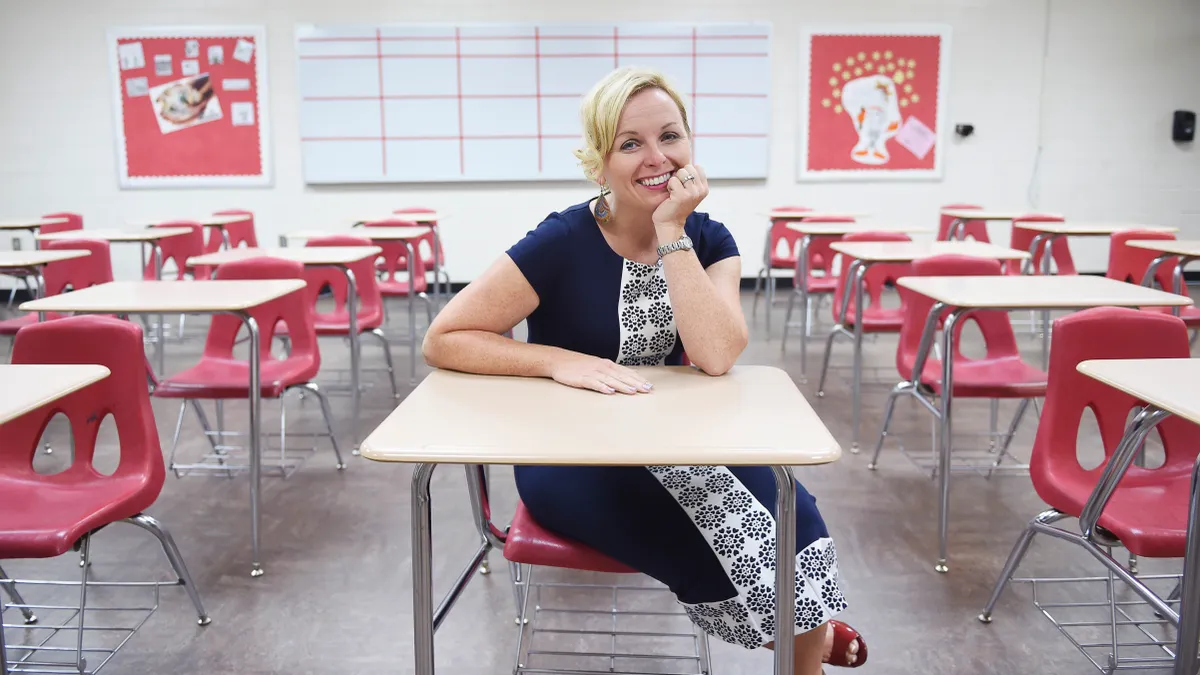
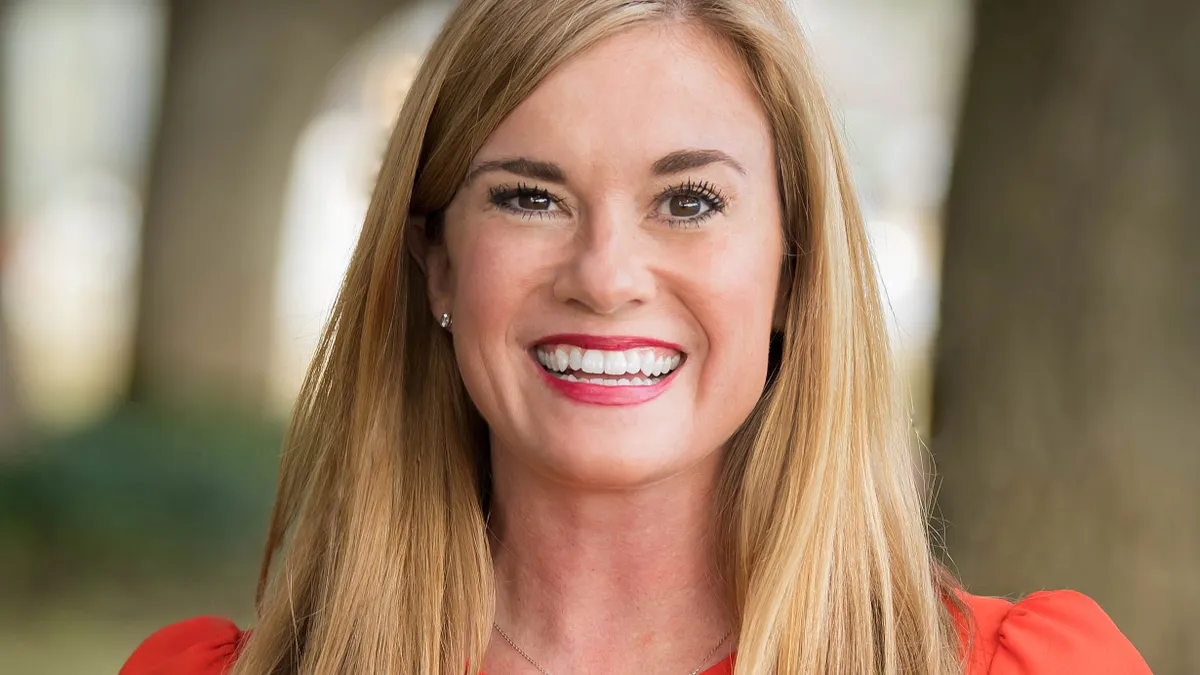
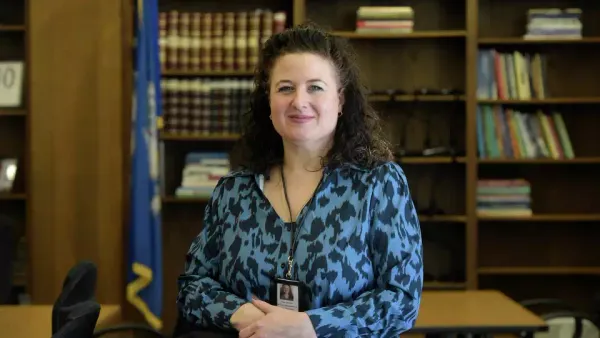
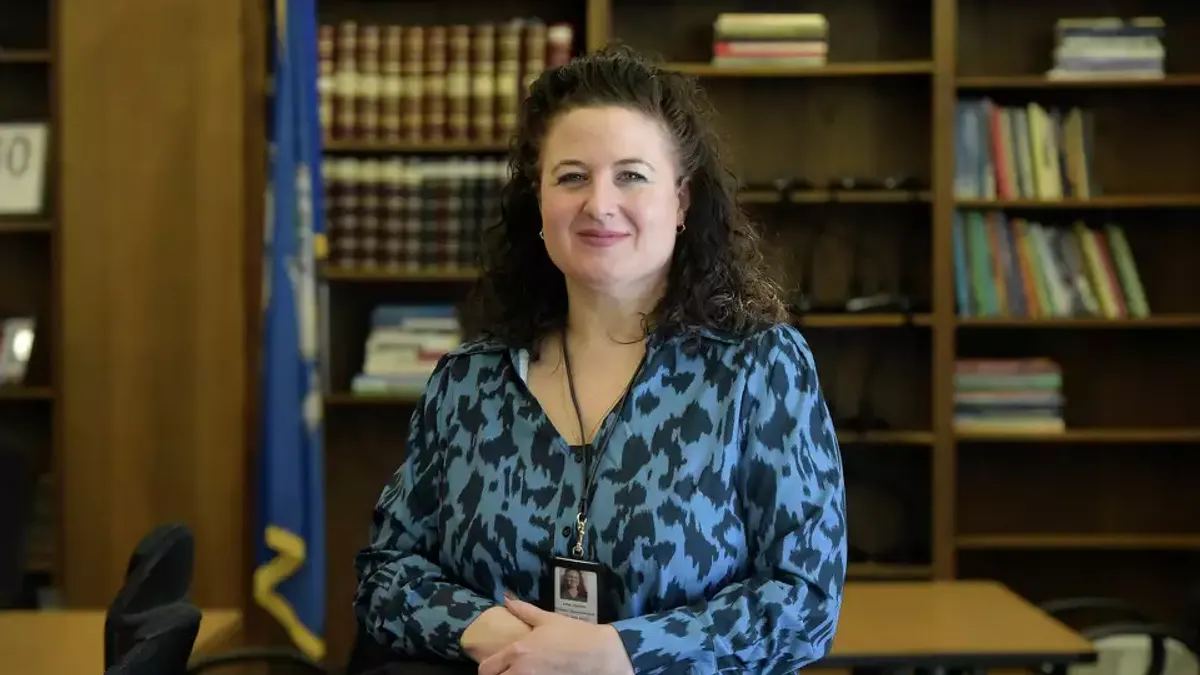
From student teaching and internships to the superintendency, Kara Casimiro has spent more than 30 years in Connecticut’s Danbury Public Schools.
In the time between starting with the district and becoming its top decisionmaker in the 2023-24 school year, Casimiro has held a number of roles at both the school and district levels. That includes previously serving as the director of instruction and assessment and assistant superintendent for teaching and learning.
Those roles are particularly notable because of what the district has done at Danbury High School — the district's only comprehensive high school and the largest high school in the state. In a bid to reimagine the high school experience and better prepare students for the working world and college, Danbury Public Schools has overhauled a more traditional model in favor of a career academies approach in which students can explore 21 pathways across eight academies.
The district’s goal: to ensure every student has a career-connected learning experience, no matter what they choose to do after high school.
We recently caught up with Casimiro to learn more about the academies, the importance of exploring career options in K-12, and how parents have reacted to the model.
Editor’s note: The following interview has been edited for brevity and clarity.
K-12 DIVE: What led you to pursue an innovative redesign and adopt the academies model, and how does that also enable you to improve career-connected learning opportunities in Danbury?
KARA CASIMIRO: A lot of people want to blame everything on the pandemic, but just prior to that, we were starting to see our graduation rates start to slip. We were concerned about student engagement and wondering if our outcomes were meeting entry requirements out in colleges and in the world of work and other training programs, so we really started to have some conversations about that.
Just prior to COVID, we started to do some research in a quest to transform Danbury High School, which is the largest high school in Connecticut, to a model that was going to be more productive and provide more opportunities for students.
We won a Barr Foundation grant and spent a year or two roaming the country looking at models. We've learned that where there's career-connected learning, there's high levels of engagement and, in many cases, better graduation rates and opportunities for students.
We went down to Nashville, and we saw the academies of Nashville. We went out to Colorado, and we saw places like Cherry Creek Innovation Center. We had teams that went out to High Tech High.
We had a lot of opportunities, through partnership with the National Career Academies Coalition, to see models where students are graduating with more than just a high school diploma: They're graduating with a lot of knowledge and information to make good postsecondary decisions about what they want to do.
So we came back and started to get to work on that in Danbury, and it's been an amazing journey. We've opened just this year a second campus, a satellite campus, that houses three of the seven academies that we have developed, and the main campus just across town has four of those academies plus freshman academy.
So we're in a complete wall-to-wall academy model. Every student participates. There's no opt-out. Everyone's involved in career academy work, which is designed to prepare students for college and career.
These are schools within the school. We link our peers and teachers and community partners around a very structured environment with the goal of really fostering academic success and really providing a concierge service, if you will, toward pathways that will produce something more than just a high school diploma.
What does an academy model actually entail?
CASIMIRO: There's a couple of key elements that are hallmarks of career-connected learning and academy models. All of them have college preparatory sequential curriculum with a career theme and exposure, and embedded industry certifications and credentials that students can obtain.
We're working on work-based learning experiences across all of those academies right now. We have those in several of our pathways and are working to build more. In doing that, we're forging partnerships with employers, higher ed, and in the community so our students have an opportunity for those work-based experiences.
Another hallmark of a career-connected academy model is an advisory board that has industries as part of that, as well as higher ed, so that we're in concert with one another and not in competition. We're working to provide those opportunities for students where hopefully when they're done with their career journey, they're coming back to Danbury to work in the area.
And [the model] helps employers develop relationships with our students while they're young. Sometimes they are able to shepherd them through their postsecondary training, and some will offer to pay for that and/or scholarship students. Those students are likely to return and go to work for those companies, or develop really requisite skills that are needed and are in demand — not just locally, but regionally as well.
I think the hardest thing to kind of come around is that there's been a misnomer in that a career track is for the students who aren't interested in going to college. But the career track is really for everyone. It's just a matter of at what point you jump off the train to start your career.
With those employability skills, those durable skills, the soft skills, the executive functioning skills, every employer we talked to in every industry — whether they're hiring engineers or line workers — want a good collaborator. They want someone who could communicate well. Someone who is a team player and has certain dispositions. They're organized. They're reliable. They're on time.
It benefits everyone, and while students are in workplace-based experiences, they're seeing all types of careers that they might be interested in.
Most students are never exposed to a wide variety. If you were maybe a child of two working professionals, and maybe you're in kind of the mid- or upper-socioeconomic group, you're mixing in and networking with people at family parties and other events where you're being exposed to different careers in very different circles. But students who come from lower socioeconomic areas are not getting that same level of exposure.
It's what you see when you go to school, it's what you see when you go back to the neighborhood, and it's what mom and dad do for employment.
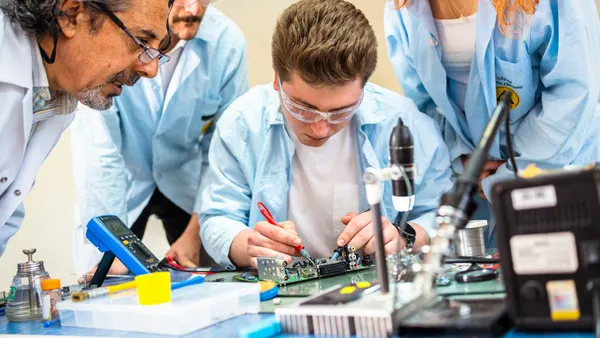
We have in 9th grade what we call an exploration course. And the exploration course goes over all the opportunities that are in the seven academies, including the 21 pathways that we're offering experiences in. And it's not wood shop and welding, it's business and entrepreneurship, biomedical, medical technology and engineering, cybersecurity, networking, culinary arts and hospitality, computer integrated manufacturing, architecture, civil engineering, audio engineering and design, applied engineering, green design, environmental stewardship.
It gives students an opportunity to really select what that postsecondary experience is gonna be for them. As they’re doing these, they have an opportunity to earn industry credentials where when they graduate, they can go out into that field.
Did you run into any pushback when you were presenting this to parents in the community as far as needing to help them understand the vision and why it’s a benefit?
CASIMIRO: I wouldn't say pushback. I definitely needed to provide clarity. We have a technical high school in town, and so it was like, “Are you trying to build another technical high school?”
And no, this is definitely high-tech, and there's a lot of career and technical education, but that's not all we're doing. There's education and human development pathways, justice and law — there are a lot of different pathways in there. It just really needs to be explained.
You're not picking a college major — that was another question that came up. This isn't, like, locking you into a life of a career in high school. This is going to give a couple of electives in the sequence to give a nice experience in an area a student has already identified that is of interest to them.
I'm like, “Listen, I could tell you right now as a superintendent, I changed my college major probably about five or six times, because I really didn't know what I wanted to do, and I was first-gen.” Most of our kids here are first gen.
I didn't have a lot of guidance. I had great parents but not a lot of guidance and experience with career choosing or what to take in college, and this model could have easily saved me and my parents quite a bit of money, because I wouldn't have had to switch so many times because I just had no experience.
I had no sense of what opportunities were out there and what different career paths looked like. I had very limited information about that.
Knowing what you want to do is important, but sometimes knowing what you don't want to do is even more important. Because the process of elimination can save a lot of costs if you do that in an environment where it’s in high school and it's very low-risk to try something on for size.
I've read that your district's middle school is also going to be aligning more with this model. How far along is that, and what will that look like?
CASIMIRO: That'll take a few years to develop out. That's mostly about staffing and also remodeling some of our rooms to be more encouraging of project-based learning, so kids can do more hands-on projects to completion and actually apply the math and things that they're learning about and demonstrate learning. That includes hiring engineering teachers for the middle school, and other kinds of teachers they may not normally come into contact with until high school.
It's really kind of a pre-academy experience. We’re continuing to bring people in to talk about what they do for work and all kinds of affiliated activities that go with that — college and careers and salaries and work environment and aptitudes and skills.
The more exposure along the way that we give kids about what's out there, the more they’re able to develop and build an identity for themselves about their interests, so that they can pursue it. And they can do so even earlier in high school if they're well-informed.