Dive Brief:
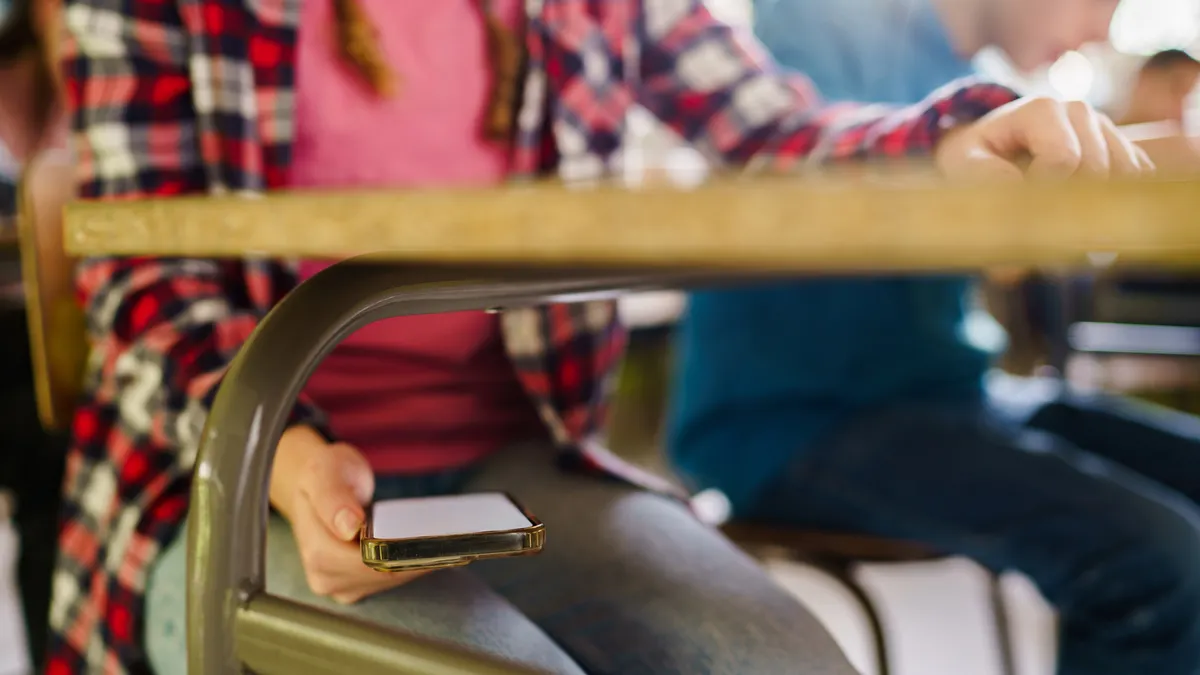
- A bell-to-bell ban of student cellphone use in an unnamed, large, urban school district in Florida led to a more than 80% reduction in daily cellphone "visits" — or uses — by high schoolers, according to a paper published Tuesday by Education Next, a journal published by the Program on Education Policy and Governance at Harvard University’s John F. Kennedy School of Government.
- The cellphone ban led to improved academic outcomes and attendance in middle and high schools, but it had no significant effects for elementary school students, the study found.
- Although suspension rates spiked in the first school year of the cellphone ban, particularly for Black students, they returned to pre-ban levels in the second year of enforcement. This finding demonstrates that school administrators and others should look into policies that ensure an "equitable implementation period" when implementing cellphone bans, the study's authors wrote.
Dive Insight:
The academic, discipline and phone usage results from the unnamed Florida district's cellphone ban are similar to those published last month by the National Bureau of Economic Research.
In that study — the first in the U.S. to analyze the impact of student cellphone bans on a national scale — researchers examined the impacts of cellphone bans at middle and high schools that use lockable phone pouches sold by Yondr.
The NBER study also found significant reductions in phone usage and an uptick in suspension rates in the first year of implementation. However, that research found little evidence that academic achievement improved in the three years following cellphone pouch adoption. There was also little effect on attendance, self-reported classroom attention and perceived online bullying.
In 2023, Florida was the first state in the nation to implement a statewide cellphone ban during instructional time. The state's school districts were allowed to implement additional restrictions. As of May 5, 22 states and the District of Columbia have bell-to-bell cellphone bans, according to the Education Next study. Another 19 states have some type of school cellphone restriction or policy.
In the Education Next study, authors David Figlio, a professor of economics and education at the University of Rochester, and Umut Özek, a senior economist at Rand Corp., looked at a Florida district’s student-level data on test scores, disciplinary incidents and absences from one year before the ban and the first two years after the rules went into effect.
The researchers also used geolocated cellphone-use data from Advan to compare schools with high and low pre-ban cellphone activity, allowing them to estimate the causal effects of the policy.
Highlights from the Education Next study’s findings include:
- Cellphone use fell sharply. In high schools, daily cellphone "visits" — or uses — dropped more than 80%, from 46 daily visits per 100 students to 10. In middle school, cellphone use fell by half, from 62 daily visits per 100 students to 31.
- Test scores improved in the second year. Students' reading and math performance held steady in the first year of the ban compared to the final tests administered during the pre-ban year. Scores then rose by about 3.5 percentiles two years later.
- Suspensions ticked up temporarily. The suspension rate rose by 25% after the ban was implemented compared with the same month one year earlier. That trend continued throughout the first year of implementation, but numbers returned to pre-ban levels in the second year.
- Suspensions impacted Black students at a higher rate. In schools with high cellphone use before the ban, in-school suspensions for Black students increased by about 30% in the first year, while rates for White and Hispanic students stayed steady. These effects disappeared in year two of the cellphone ban.
- Unexcused absences dropped. The ban reduced unexcused absences by 5% to 10% — a trend primarily driven by middle and high schoolers. The study said this suggests that improved student engagement and school climate could be contributing to improved academic achievement.
"As states and school districts nationwide seek a reset on student cellphone use, the challenge is to minimize short-term adverse effects until a new cellphone-free status quo is established," the study said.