Dive Brief:
- Among the more than 3,700 unique book titles banned in the 2024-25 school year, 44% featured characters or people of color, and over a quarter (29%) were nonfiction — while only 10% included "on the page" sexual experiences, according to an analysis released May 7 by PEN America.
- The most-banned topics include non-sexual violence (57%), death and grief (48%), empowerment and self-esteem (39%), and LGBTQ+ topics and metaphors (36%). Consensual sexual experiences trailed in fifth place at 34% of books being banned with that topic, and mental health disorders came in sixth at 29%.
- Books in the most-banned category — non-sexual violence — cover war, gun violence, natural disasters, domestic violence, human trafficking, slavery and genocide, physical fighting and more, according to the analysis.
Dive Insight:
A previous report from the organization found 6,870 instances of book bans — or non-unique titles — across 23 states and 87 public school districts during the 2024-25 school year. That totaled 22,810 cases of book bans across 45 states and 451 public school districts since the organization began tracking the issue in July 2021.
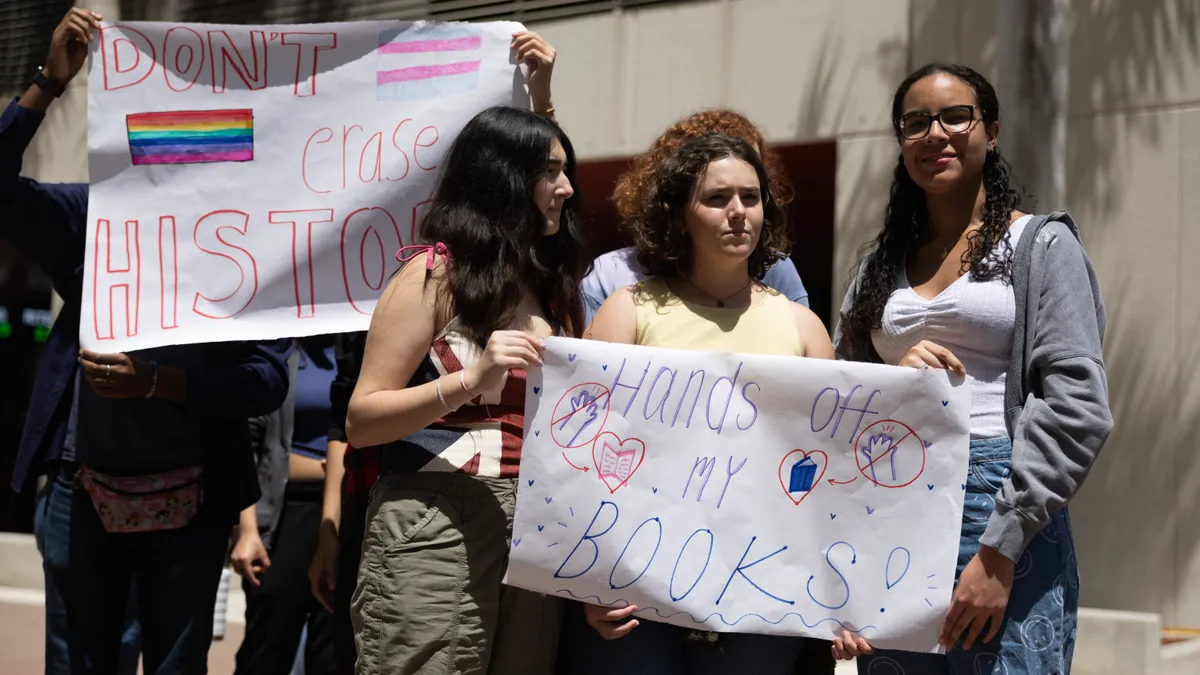
The book ban movement, which coincided with the rise of the parental rights movement in 2020, was initially launched by parents — and lawmakers supporting them — to weed out titles that they said were age- or culturally inappropriate due to references of "pornography," such as LGBTQ+ materials, or "divisive content," like race-related topics.
A report released last month by the American Library Association showed that 2025 broke the record for censorship at public, school and college libraries — yet less than 3% of book challenges in 2025 came from parents. Meanwhile, a full 92% were initiated by groups or government officials, and the remaining 5% came from library users or unknown sources, according to ALA.
Districts are also turning to artificial intelligence to weed out titles, especially in places where they are under pressure from state or local leaders to comply with legislation restricting books.
Texas' New Braunfels Independent School District, for example, has reviewed or will review over 3,000 books using AI.
Texts reviewed by the district include those by historical figures such as former U.S. Representative John Lewis and civil rights activist Ruby Bridges, and by classic authors like William Shakespeare and Zora Neale Hurston. Books by or about contemporary figures such as singer Taylor Swift and actor Matthew McConaughey also made the list.
“This latest trend shows an embrace of anti-intellectualism, undermining public knowledge by devaluing education and expertise,” said Kasey Meehan, director of PEN America’s Freedom to Read program, in a May 7 statement. “It is another example of how censorship sweeps broadly, leading to removals of all kinds of books, in its efforts to sow fear and distrust in our public education system.”
Supporters of book restrictions, however, say such decisions are important especially for younger children. Parents also say it's important for them to be able to steer what their children are exposed to.