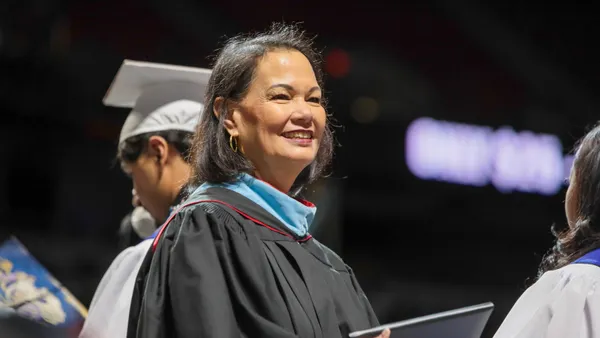

When I was a school principal, I’d put aside several hours every week for one-on-one coaching with teachers. I did it because I’d seen what happened as teachers grew in their professional capacities: they were more satisfied and more likely to stay, students were more engaged, and stakeholder relationships improved. For this reason, I’ve spent most of my career supporting educators’ professional growth.
Effectively cultivating teacher growth requires focusing on behaviors proven to enhance professional practice. Through my work with a school improvement organization, I observed significant alignment between my coaching experiences and the five overarching dimensions of professional practice identified in the organization’s research. Those dimensions and the related factors that strengthen and sustain quality instructional practice include:
- School culture and climate. Students take social, emotional, and academic risks when they feel secure. Teachers build that sense of security by sharing responsibility for student growth and treating students and colleagues with respect.
- Learning. Student learning improves when teachers meet instructional expectations and effectively use data, resources, and interventions.
- Essentials. Teachers’ core competencies are honed by their understanding of professional expectations (such as punctuality and dress codes) and their ability to reflect on their practice.
- Agency. Teachers’ intrinsic motivation and adaptability are also shaped by self-reflection.
- Relationships. Connections with both students and coworkers depend on collaboration and communication skills as well as overall trustworthiness.
How to measure what matters
Once school leaders know what to measure, they need to choose data sources that align with the established growth goals. Below are some useful options:
- Classroom observation and walkthrough data measure professional growth in any of the five dimensions. Review multiple instances before deciding on the presence and strength of a particular practice or element.
- Survey data can holistically gauge overall growth. However, when the goal is to cultivate a specific practice, such as creating a safe, positive school environment, analyze only survey items related to that practice.
- Professional learning and coaching notes provide solid reference points for tracking teacher improvement. Self-reflection tools and improvement plans do the same and have the added benefit of allowing teachers to track their own progress, giving them a sense of ownership and motivating them.
- Data on student engagement and learning outcomes are also strong indicators of whether teacher practices are improving. Observation and walkthrough data shed light on engagement levels while standardized and formative assessments provide data on outcomes.
A 4-question protocol for prioritizing improvement
There’s no exact formula for deciding which practice should top the improvement priority list. However, that decision should not rest solely with school leaders. Instead, allow teachers to review their own data and determine, through discussion and reflection, which dimension and action deserve their focus.
A simple set of questions can guide the conversation:
- What do the data say?
- Why is this happening, that is, are there misconceptions, misunderstandings, or unclear expectations? (Skipping this question creates a risk of applying the wrong solution.)
- What needs the most attention?
- What strategy should we implement?
While a teacher may need to grow in all five dimensions, no one can work on all five at once. If all data sources point to the same issue, that’s an obvious priority.
Without data, educators will struggle to understand exactly where they’ve improved and by how much. But when schools measure teacher practices within the five dimensions and act on the data, they build a culture of growth for staff and students alike.
Nicole Reeves, Ed.D., serves as vice president of professional learning at Cognia, a global nonprofit organization. Prior to this role, she was a teacher, assistant principal, principal, national trainer, and educational consultant. As an educational expert and facilitator, she has supported administrators, teachers, and board-level personnel at all levels to improve organizational and instructional processes that support student learning.