Over a year after the Trump administration gutted the U.S. Department of Education to nearly half of its staff, the agency has restructured many of its key programs and announced new priorities for some of them — shedding light on how the department intends to allocate its remaining resources.
In the last week, the agency has released at least three priorities, spanning career and workforce readiness, educator training and retention, literacy and artificial intelligence.
The Education Department is stressing these initiatives while also continuing its push for increased state-involvement in education programming and decrying past administrations' emphasis on equity initiatives as "promoting race- and identity-based programs rather than improving student academic achievement and teacher retention."
The first of the string of recent announcements was released last week, as part of the first grant competitions announced under a new interagency agreement between the Education Department and U.S. Department of Labor, which offloads many key education programs to the Labor Department.
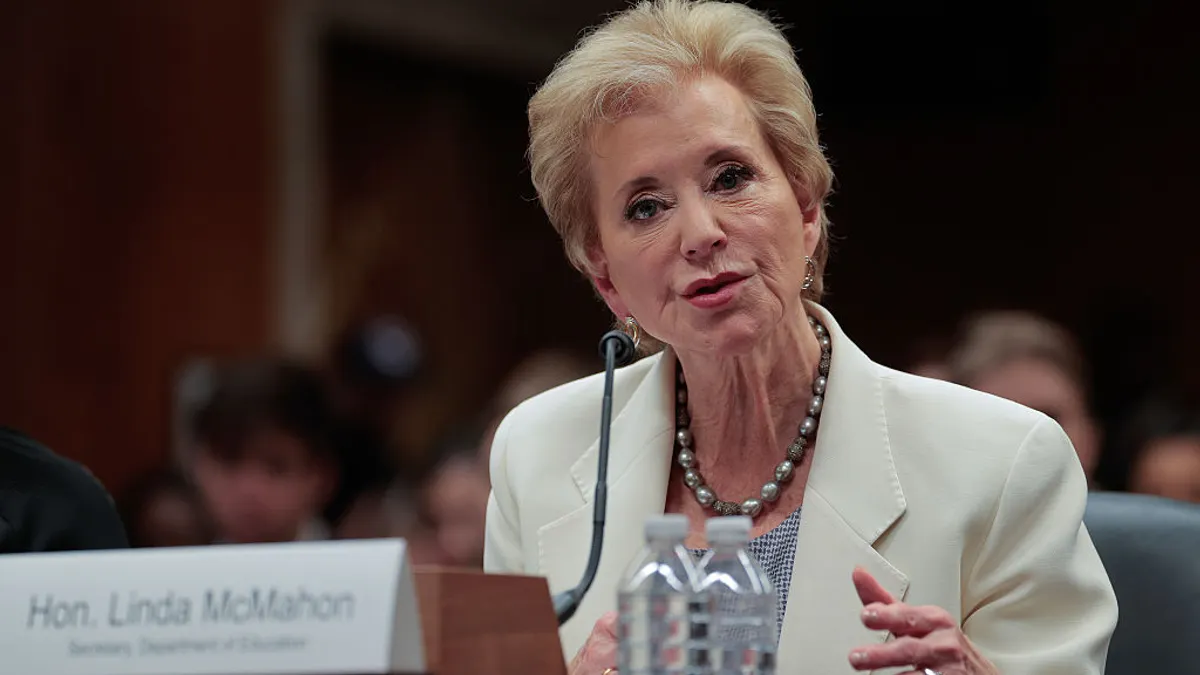
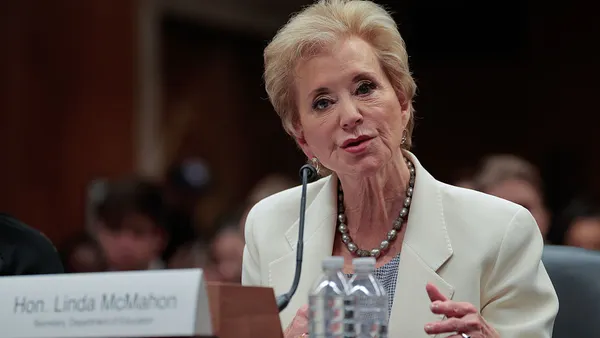
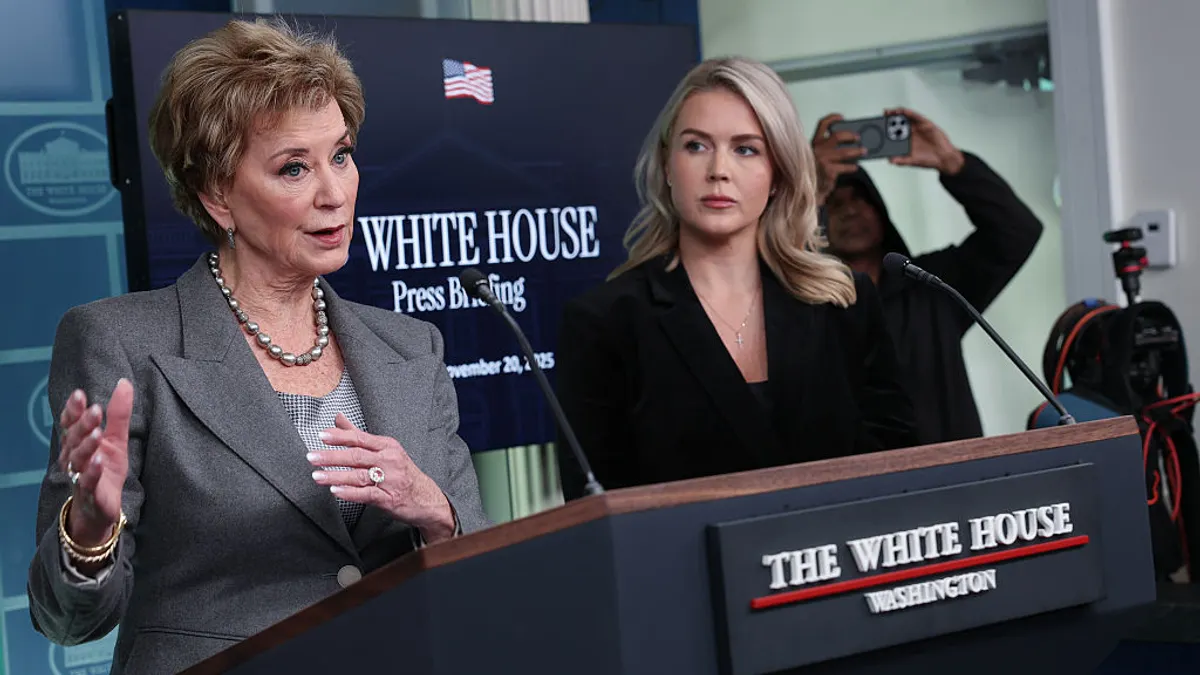
"The Trump Administration is using Secretary [Linda] McMahon’s Supplemental Priorities to prioritize grantees who will focus on meaningful learning opportunities for students, including supporting families to provide at-home learning, pilot and/or scale innovative education workforce and employment models that emphasize merit, meet industry’s needs, and return education to the states," the grant announcement said.
Here are three things to know about the Education Department's priority revamp:
Career and workforce preparation, especially for educators
The Education Department finalized its priorities for career and workforce readiness, according to a federal register notice published April 13. Career and technical education was among the first programs to be moved to the Labor Department under an interagency agreement announced last year.
The Education Department will be supporting initiatives that tailor programs to local workforce needs, support skilled trades, expand pre-apprenticeships and registered apprenticeships including through dual enrollment, and provide work-based learning opportunities.
After feedback from the public "around the importance of paid opportunities for learners, specifically educator apprenticeships," the department tweaked its final priority to include focus on paid apprenticeships for educators.
The priority supports expanding registered apprenticeships that prepare elementary, secondary or special educators, especially those that lead to certification and would address workforce shortage areas.
Artificial intelligence opportunities, but no federal guardrails
The Education Department is also pushing forward with its focus on artificial intelligence, despite last year's closure of its Office of Educational Technology, which former department employees feared would hinder equitable access to technology amid the accelerated spread of AI tools.
The department is doing so despite what it described as “strong opposition to advancing AI technologies in K–12 classrooms" from commenters who "urged the Department to prevent children from using AI.
"Several commenters stated that use of AI technology in education is dangerous because it is unstudied and unregulated, and noted that untested AI tools could be harmful for children," the department said in an April 13 notice.
Despite this pushback, the department will be prioritizing AI to allow students "to be competitive in a rapidly evolving technical workforce" and because it "believes that it is critical for every American to have the opportunity to learn about AI in ways that are age-appropriate."
Its priorities include integrating AI literacy skills and concepts into teaching and learning practices, expanding offerings of age-appropriate AI and computer science education in K-12, providing professional development for educators on the subject, and creating AI-related opportunities including coursework and certification for high school students.
However, after states in recent years put guardrails around AI technology amid what was a lack of federal guidance and despite the public's concerns around AI-related student safety and privacy, the department is still leaving such measures up to states. At least 34 states had adopted official guidance or policy on AI in schools, according to an October 2025 count by AI for Education.
"The Department believes that how best to ensure safety and communicate about technology use is optimally decided at the state and local level and declines to enact requirements at the federal level," the department said in its Federal Register notice.
Literacy in high-needs areas, despite proclaimed end to DEI
The department also stressed literacy overall as part of the first grant competitions announced under an elementary and secondary program interagency agreement with the Labor Department.
The literacy-related grant competition was one of two announced last week, and is meant to advance literacy in high-need districts and schools.
It would support programs that emphasize developing and enhancing school library programs and up-to-date materials, providing early literacy services, and promoting early language and literacy development in low‐income communities, among other things.
The priority for equitable literacy programs for low-income children comes despite the administration's repetitive push to eliminate diversity, equity and inclusion efforts for many programs that support underrepresented students.