Dive Brief:
-
Some 22% of teens in military families reported low mental well-being, nearly 30% reported thoughts of self-harm within the previous six months, and 16% said they had harmed themselves at least once during that time period, according to a survey released Tuesday by the National Military Family Association.
-
However, in what the group's CEO called a "bright spot" most respondents (70%) reported moderate well-being. Still, about 2% of the approximately 800 respondents reported making a suicide plan in the prior three months.
-
Teens living in military families also have faced food insecurity at higher rates than their civilian peers for five consecutive years, according to NMFA's findings. Slightly over one-third of respondents reported some level of food insecurity in the previous month, which exceeds the 20% rate reported in 2023 for military families overall.
Dive Insight:
Teen mental health is a concern nationwide, regardless of military status. The Centers for Disease Control and Prevention found in 2023 that 20% of high school students had seriously considered attempting suicide and around 10% had attempted it in the 12 months preceding the survey.
The CDC called on schools that year to prevent and reduce the negative impact that violence and other trauma had on teens.
To address teen mental health concerns, the CDC suggested a range of improvements for schools, including providing quality health education, creating positive environments promoting mental health, and increasing school connectedness through mentoring, clubs and community outreach.
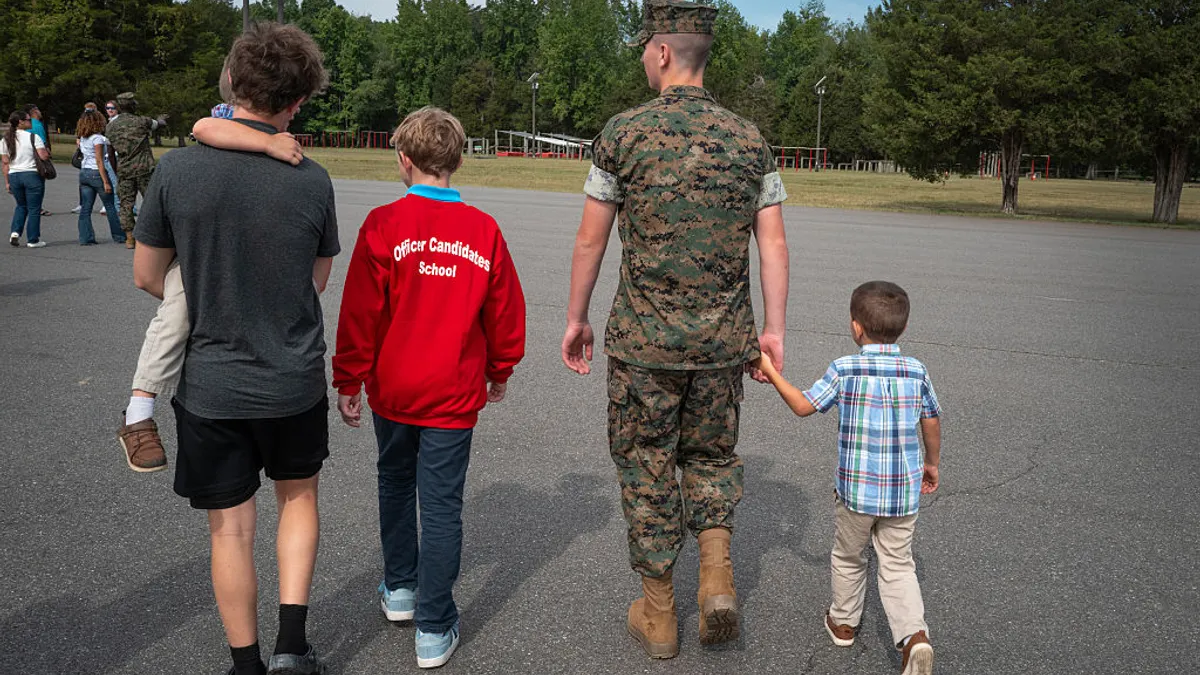
However, military-connected teens face unique challenges, NMFA said on Tuesday. They, on average, experience four parental deployments, five permanent change-of-station moves and four different schools, according to the survey. They also often live with at least one wounded parent and are tasked with helping them.
"One of the things that we have seen year over year is that the well-being of military teens is not comparable to their civilian peers," said Besa Pinchotti, CEO of NMFA, in a briefing Tuesday introducing the report. "Well-being is consistently lower for military kids every year."
Pinchotti said peer connections and having a trusted adult in schools are key to making a difference. "It's the coach, it's the teacher." she said. "The problem is our kids are moving away from those coaches and those teachers."
In 2021, the Military Interstate Children's Compact Commission reported there were 1.2 million military children of active duty members worldwide and nearly 80% of military children were enrolled in public schools throughout the U.S. On average, they attend six to nine schools throughout their K-12 years.
Structural supports need to be in place to provide peer connection and trusted adults for incoming military families, Pinchotti and other experts said at the briefing Tuesday.
Making sure students have access to extracurriculars like sports and music is also a good place to start, said Jena Kubiak, district advisor for community engagement, whole child and community design in San Diego County's Office of Education.
"We should have those systems in place as a preventive measures, rather than waiting until there's a truancy problem or until there's behavioral issues or even worse — until there's a mental health issues and crisis," said Gayle Mills, division director at National University's Harmony Academy, which provides resources and professional development for educators. Harmony Academy is part of Sanford Harmony, which collaborates with NMFA to develop resources for educators and schools.
Districts should start by identifying their military families, according to Dan Dunham, military student and families specialist at the Virginia Department of Education's Office of Behavioral Health and Student Safety.
"If you don't know, you need to work really fast," Dunham said.
Kubiak added that identification and intervention for younger students is especially important.
"So that by the time they take a survey at 13, that's when the needle can move," she said. Otherwise, "we're going to keep trying to put Band-Aids on things" that should have been addressed earlier.
A majority of respondents in the NMFA survey, conducted during late 2025 and early 2026, were White (69%) and over half (59%) were girls or young women. About 83% of respondents were ages 13 to 18, and the others were 19 to 24. The average age was 16 years old.