WASHINGTON — State education agencies are aiming to improve student outcomes by updating academic standards, introducing high-quality instructional materials and expanding postsecondary pathways.
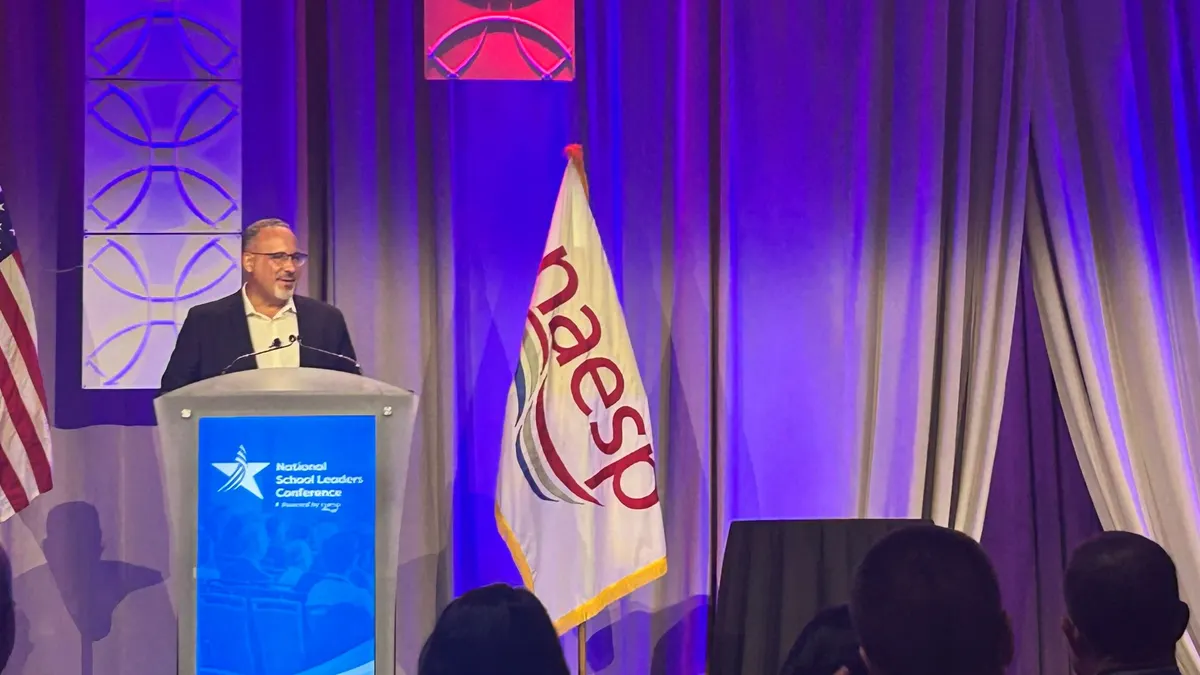
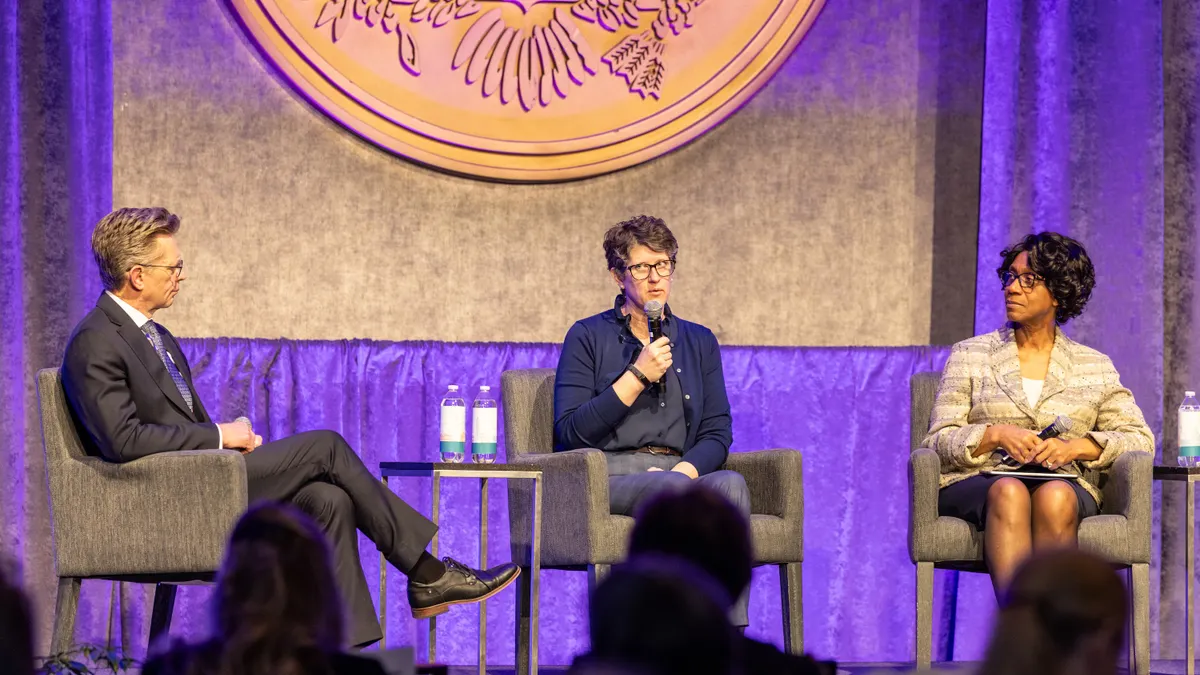
Three state education chiefs — Eric Mackey from Alabama, Jill Underly from Wisconsin and Charlene Russell-Tucker from Connecticut — talked last week about how spearheading such systemic and successful change involves many stakeholders, including local educators, families, lawmakers and colleges. The three spoke during a session at the Council of Chief State School Officers' legislative conference on March 24.
Wisconsin’s 'portrait of a graduate' program
Underly said that in 2021 as schools across the country were addressing pandemic-related learning loss, Wisconsin was on a quest to improve student achievement and conducted listening sessions around the state.
That effort led to the discovery that several districts had implemented portrait of a graduate programs that focused on preparing students for real life by emphasizing essential skills such as critical thinking, communication, collaboration and lifelong learning. Wisconsin then began developing a statewide initiative to support districts as they expand real-world learning opportunities modeled on the portrait of a graduate framework.
Portrait of a graduate programs represent a community's shared vision of the skills students need to be successful in K-12, college, career and in life.
"Parents wanted more innovation in education," Underly said. "We needed to be more innovative."
That effort included reorganizing the Wisconsin Department of Public Instruction to reflect the new priorities, as well as strengthening K-12 connections with early childhood and college programs, she said.
When asked what thrills her most about this work, Underly responded: "that the kids are excited, that the students want to learn."
Connecticut’s focus on multiple career pathways
Connecticut's State Board of Education and its Department of Education have been focusing on multiple career pathway options for students as one element in their strategic priorities for 2023-2028. This school year's theme in the state is Unlocking Lifelong Potential and includes approaches, such as expanding the educator workforce and supporting safe learning environments, aimed at helping students succeed in schools and in life.
A critical component of this work is ensuring that these efforts are coordinated with other state initiatives.
"It's not just a list of things you're doing," Russell-Tucker said. "They've got to be aligned."
She added, "It's not a one and done. Systems must be aligned, then the agency staff must be aligned, and our partners must be aligned around getting the work done as well."
Alabama’s initiatives to boost math achievement
Alabama's Mackey spoke about state initiatives to improve math achievement through rewriting standards, developing new formative assessments and other actions. The hard part, Mackey said, is sustaining reform efforts like this over many years and across political generations.
"I frankly think that's one of our problems in education: We're all trying to see the long goal, and we're working with bodies that see short-term wins," said Mackey. Having those short-term wins can help maintain momentum for change, he said.
"Getting everybody to believe that they are a part of the solution" is one way to maintain efforts toward significant improvements, Mackey said.