
It's no secret that teachers are growing more concerned about school safety, as the consistently high rates of gun violence in schools cause fear amongst many academic professionals. However, despite the perceived risk of these attacks, shootings don’t even top the list of safety issues teachers worry most about.
Interestingly, an article published by K-12 Dive earlier this year highlighted that school shootings reached their lowest count in five years. While this downward trend is encouraging, a school safety expert quoted in the article emphasized the importance of realistic prevention practices to address ongoing concerns.
When teachers feel safe at school, they’re more likely to stay in their jobs. And when teachers stay in their jobs, student learning outcomes are generally better. For this reason, it is important for school leaders to guarantee their infrastructure is secure by managing perceptions of safety and ensuring the appropriate infrastructure is in place.
Closing the building safety confidence gap
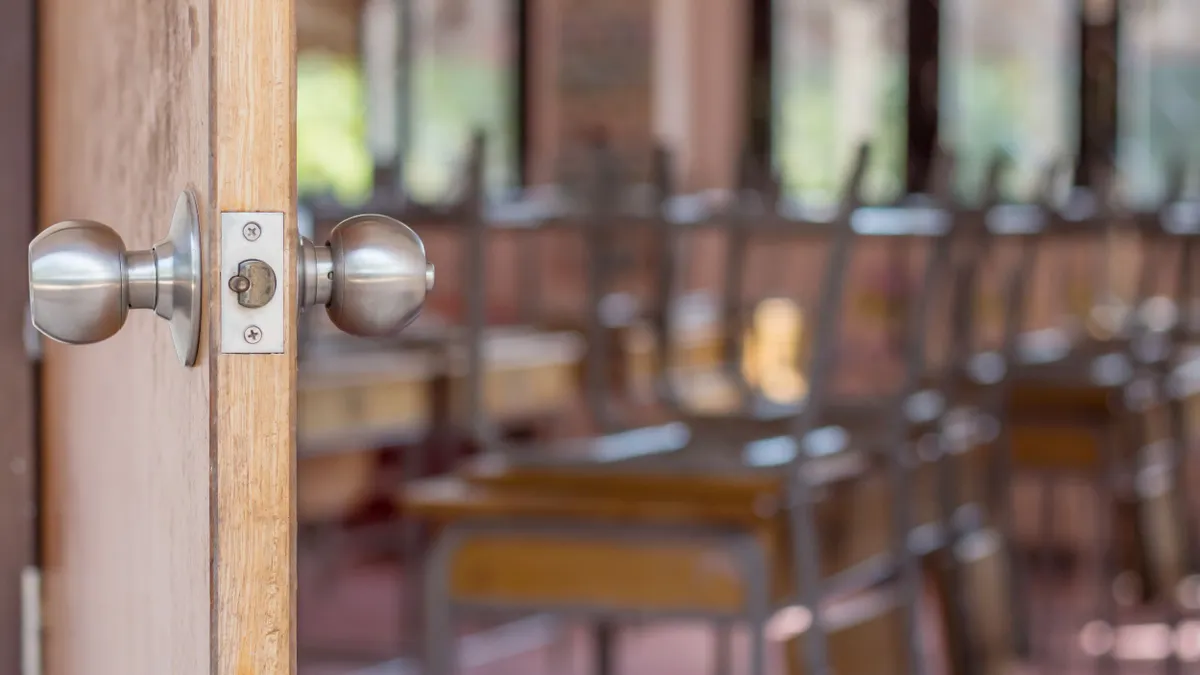
Door locks are designed to prevent access to a space, and the manual door lock mechanism does a good job of that. However, outdated door locks can introduce safety risks when they:
- Need to be checked from the outside to confirm they are locked.
- Are not ADA compliant.
- Make it easy to lock teachers out.
- No longer work or are difficult to secure.
This has inspired schools to take alternative steps to increase perceptions of safety. Some are adding low-cost solutions such as barricade devices, wedges, or floor bolts. Others are training students and teachers to use furniture to barricade doors that otherwise lock.
These approaches often violate ADA and life-safety requirements, including fire ratings. A compliant classroom door must allow people to exit the space with a single motion, but many barricade devices prevent this.
Barricade devices create new risks:
- If someone with harmful intent is already inside a classroom, the barricade device can prevent others from seeking safety and can keep law enforcement out.
- They require extra training to use, becoming another responsibility for teachers.
- Students and teachers may misunderstand the situation and barricade the door when they should really be exiting the building.
- Students can misuse them for bullying.
“The intention is good,” says Brian Clarke, director of architectural specifications at Hager Companies, which makes access control solutions for K-12. “The concern is that these products can be so effective at blocking a door that they also keep out the people who need access during an emergency.”
Rethinking access control for better safety perception
The best way to prepare students and teachers to handle any safety situation is to ensure they have confidence in their school’s safety infrastructure. School leaders can do so in two key ways:
- Ensuring campus safety infrastructure is up to date.
- Educating teachers and students on the risks of overengineering classroom access control.
Keeping access control up to date
Eight in 10 K-12 schools conduct physical security site assessments once a year, according to SIA data. That means 20% are not regularly reviewing safety infrastructure. Clarke recommends the following steps to ensure schools are identifying potential safety issues before they become problematic:
- Exterior doors and access points need weekly checks to confirm they are closing, latching, and locking the way they should. Interior doors deserve routine attention as well.
- Most districts benefit from planned assessments in the fall, spring, and summer to catch issues before they grow.
- Reviews should also happen after any major publicized school security event when details become available. Districts should assess whether their campuses would be prepared in a similar situation.
When it comes to classroom access control, Clarke has a few additional pointers:
- Check that each door with a lock operates correctly and that all components match the intended ANSI (American National Standards Institute) or BHMA (Builders Hardware Manufacturers Association) function.
- When a door is closed, the latch bolt and auxiliary latch should align with the strike and engage properly.
- An annual safety audit should include verifying the functionality of locks and electronic controls, reviewing physical security, and identifying any procedure gaps.
“Consistent, thoughtful assessment helps schools stay ahead of problems and maintain safe, reliable openings throughout the year,” Clarke says.
Educating students and teachers to avoid overengineering
Educators, students, and families should be able to trust that classroom door locks will work as intended. After all, locking the door is a top action across all grade levels during lockdowns.
Schools can build confidence in their safety infrastructure by being open about the work they are doing and inviting their community into the process, Clarke says. That could include:
- Case studies that explain upgrades made and how they align with best practices.
- Public meetings to give parents and guardians a chance to hear directly from administrators, ask questions, and understand how decisions are being made.
- Educational resources to help staff, students, and families understand the protocols for all types of emergencies, including weather, fire, and security threats.
- Demonstrations during staff meetings to help teachers see that the hardware is secure.
“When people trust the infrastructure and understand how to use it, they are far less likely to take unnecessary or unsafe steps in the moment,” Clarke says.
Classroom access control teachers trust
By prioritizing secure, reliable classroom-level access control, school and district leaders can give teachers the peace of mind to focus on improving student outcomes and students the peace of mind to learn — all while being ready should a safety incident occur.
New innovations are giving school leaders more options. For example, locksets that can be secured from inside the classroom and visually indicate whether they are locked can help create a greater sense of security. By tying into the campuswide access system, these locks can be controlled by authorized personnel from within the classroom or the campus security office, allowing schools to quickly implement a campuswide lockdown.
“Technology has given schools practical ways to strengthen their basic safety infrastructure without adding complexity for staff or students,” Clarke says.