This audio is auto-generated. Please let us know if you have feedback.
Most clicked story of the week:
Title II, Part A funds under the Elementary and Secondary Education Act can now be used by states and school districts to support creating strategic staffing models, according to a Dear Colleague letter from the U.S. Department of Education. Title I dollars may also be used for schoolwide programs, the Feb. 9 letter said.
Number of the week:
67%
The portion of 4th graders in the District of Columbia who scored at basic, proficient or advanced levels on the math portion of the 2024 National Assessment of Educational Progress. That’s up from 57% in 2022 and 36% in 2003 — and just one metric representing the significant gains from math achievement investments made in the nation’s capital.
Federal policy in the spotlight
- The Education Department’s Office for Civil Rights did not enter into any resolution agreements for sexual harassment and assault cases in K-12 programs in 2025 after the inauguration of President Donald Trump, according to a K-12 Dive analysis of the department’s resolution agreement database. This lack of Title IX resolution agreements coincides with a broader slowdown in the office’s resolution agreement output last year, as the office only entered resolution agreements in 177 cases, according to its online database.
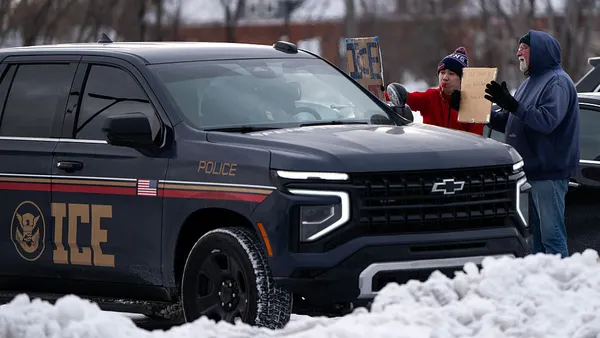
- Faced with students staying home or switching to online learning because of federal immigration enforcement activity, special educators are working to continue individualized services for students with disabilities who are suddenly out of the school building. “When we started even talking about a virtual learning option, it really came from a place of concern for our students and their access to education,” said Heidi Nistler, assistant superintendent of specialized services for St. Paul Public Schools in Minnesota.
- The Federal Communications Commission’s September reversal of Biden-era E-rate expansions that made hotspots and school bus Wi-Fi eligible for coverage is now straining rural and low-income districts that had invested in the tech, administrators say. In Illinois’ Bunker Hill Community Unit School District 8, for instance, nearly 1 in 5 families lack access to reliable broadband internet at home — and Superintendent Todd Dugan says the district has had to be more selective about hotspot availability due to the cuts.
Curriculum corner
- Reading out loud in the classroom can be uncomfortable for some elementary students, but experts say listening to early learners read aloud is critical to understanding their fluency. Those who only read silently, for instance, might skip words they don’t understand or mispronounce others they think they know. Techniques for building students’ comfort can include normalizing mistakes, reading aloud as a class or with partners, and rereading familiar texts, said Carolyn Strom, clinical assistant professor of early childhood literacy at New York University’s Steinhardt School of Culture, Education and Human Development.
- While youth are likely to have a positive impact when they become involved in their communities, there’s a huge gap between the impact they can have and the opportunities available for them, according to a recent CivicPulse survey of nearly 1,400 local government leaders, including school board members. Respondents valued K-12 schools highest, at 83%, among eight institutions in terms of their positive impact on civic participation and ability to help young people navigate political polarization.