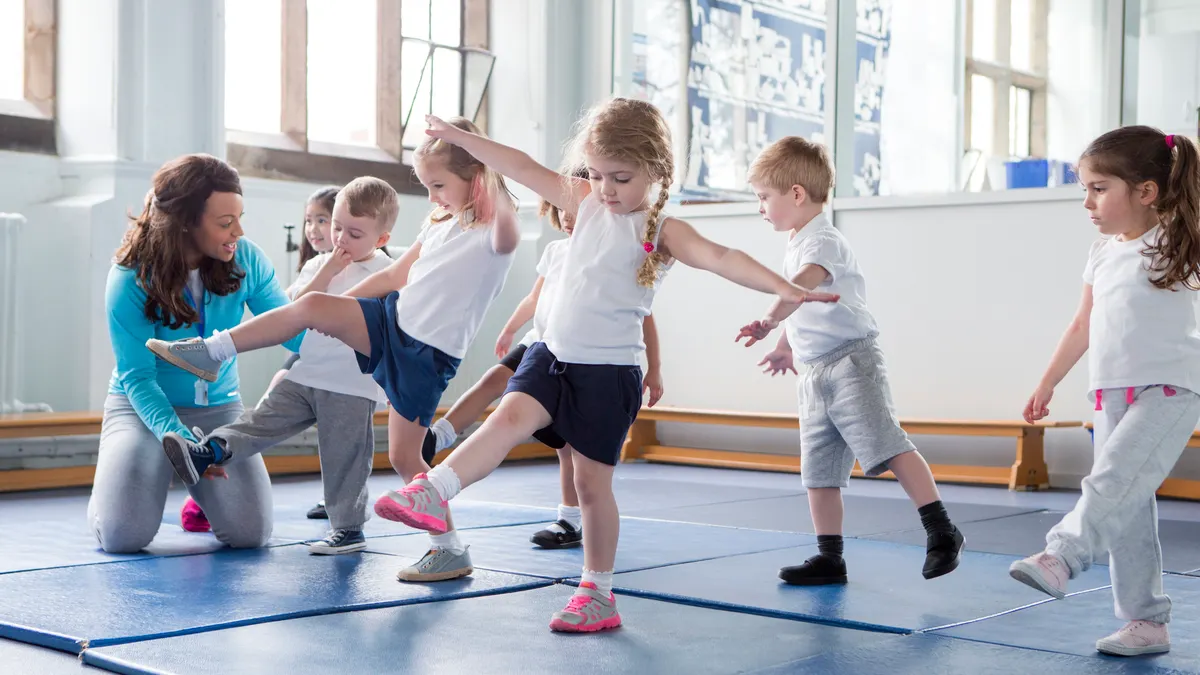
Preschool and early elementary students should be encouraged to explore and take risks in physical education within set parameters to give them a chance to move about, use their imagination and build their confidence and social skills, according to Michelle Lugo, director of educational content and programs for the Society of Health and Physical Educators America.
This involves providing routines and clear instructions, but allowing opportunities for choice, such as what equipment to use, she said.
Teachers can give instructions in small chunks. "Give them a couple minutes to try to explore, and then bring them together and try the next thing,” Lugo said.
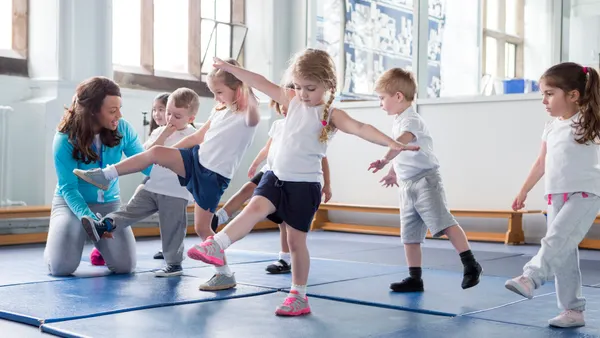
Lugo gave examples of how P.E. teachers might encourage children to use their imagination when working on skills such as balance or how to move their body in safe ways. Teachers could, for example, ask students how many ways they could balance on three body parts or balance in a zigzag path.
"Give them parameters, but allow them to choose — how to balance on one body part, or two body parts. Take a beanbag — [and ask,] 'Can you balance it on your head?' There’s a way you want them to move, but you give them freedom on how to move,” she said.
Building social skills through movement
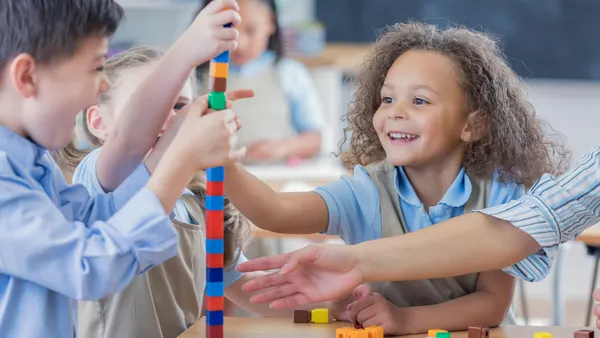
In addition to honing students' physical development, such activities build self-confidence and social skills, Lugo said.
“In P.E., it’s built into the standards that kids learn how to develop those social skills through movement," she said. "I always say that in recess time, it’s more open-ended, and there’s an opportunity to apply what you’ve learned in P.E. In class, you’re doing safe learning, with trial and error, and a teacher-instructor to help guide you.”
When students enter more organic game-playing environments, such as during recess or when playing at home, they'll be able to use the skills they learned during the school day, Lugo said.
In P.E. class, the teacher should help students build perseverance, she said. "Offer choices of ways for students to engage — an easier task, a harder task, and something in the middle,” Lugo said.
That also helps account for different levels of athletic skill, without shining too bright of a spotlight on that fact, Lugo said.
“You’re creating an environment that it’s OK to make a mistake, we’re all learning,” she said. "You always have a way to scale up or scale down, but not in a way that’s going to feel defeating. It’s a guided exploration.”
The resulting combination of confidence and social skills will serve students well in academic classrooms as well, Lugo said.
“You’re going to need social skills regardless of whether it’s P.E or math,” she said. “What’s great about the P.E. subject is that we have specific standards, or learning targets, that are focused around building social skills — cooperation, leadership, talking respectfully to one another. Even though the context is movement, all of that translates to the classroom."
Physical education provides the time and space to focus on those skills, which then transfer to recess, the lunchroom, classrooms and home, Lugo said, adding that P.E. can be a space to talk about feelings — and about managing those feelings.
“We try to incorporate that naturally, where it fits, within P.E," she said. “It’s a twofold benefit, because they still get to be active and move their bodies — which is really important for kids that age — but they’re also working on life skills and social-emotional skills that transfer across the school setting.”