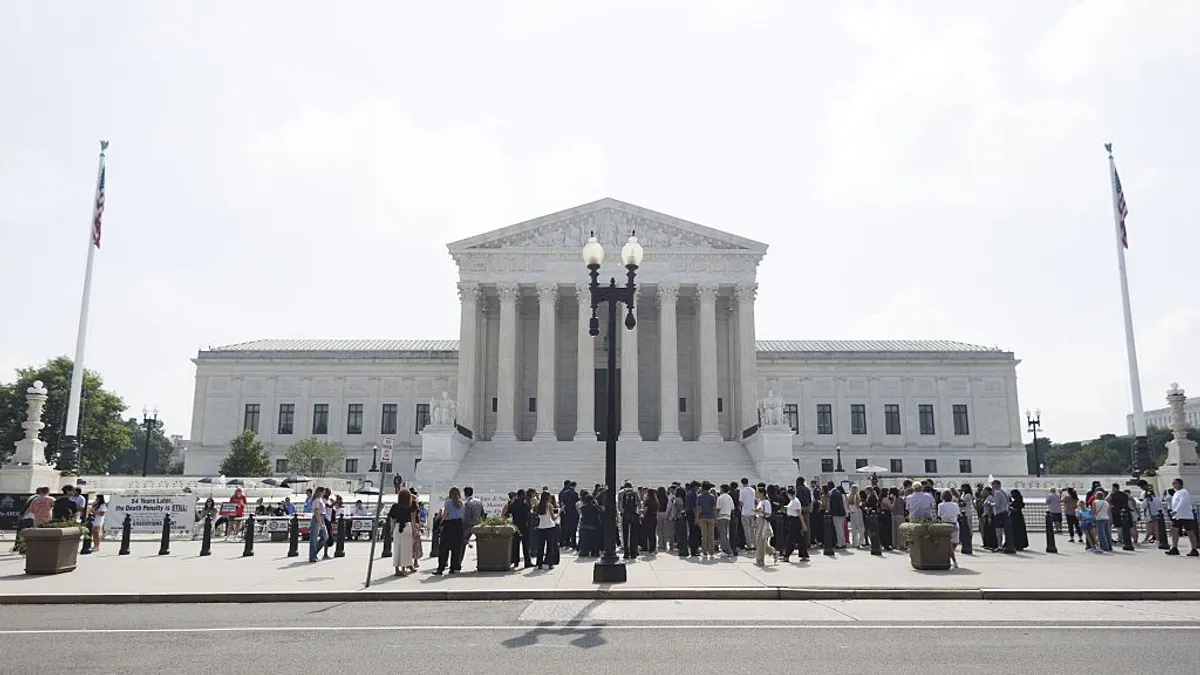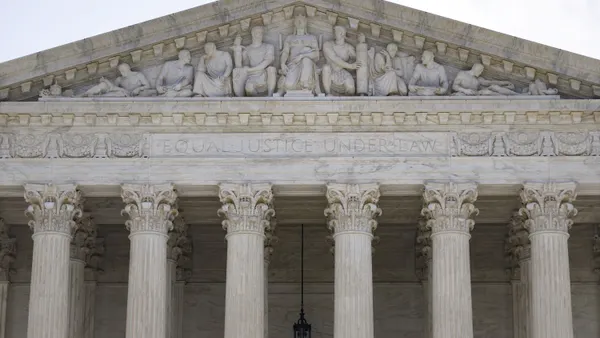
The U.S. Supreme Court on Monday turned away another case pitting LGBTQ+ student rights against parental rights in schools, this time related to the constitutionality of gender support plans.
In Littlejohn v. School Board of Leon County, two Florida parents sued their school board and superintendent, claiming their 14th Amendment rights were violated when a team of school officials met with their 13-year-old child — identified in the case as A.G. — and drafted a gender support plan.
The officials also referred to A.G. as "nonbinary," required teachers to refer to the student using they/them pronouns, and updated records to reflect the student's "new" name, according to the parents' court documents.
"They did all this without even asking A.G. if she wanted her parents to be involved," said the parents' petition to the Supreme Court, which was denied Monday. "When the Littlejohns found out and asked the school to stop, the school refused. When the Littlejohns asked to participate, the school said they had no right. And when the Littlejohns asked for records of the meetings with their daughter, the school said those records were private."
The parents, meanwhile, were opposed to A.G.’s “social transition” and had retained a therapist for the student, who was in middle school.
The Littlejohns appealed to the Supreme Court after federal district and appeals courts dismissed their claims because the district's actions were under a past policy and didn't "shock the conscience."
Had the high court taken on the case, it would have answered what the Littlejohns’ petition described as “a question of great and growing national importance" — whether schools violate parents' rights when they create gender support plans without parental consent or involvement.
Such policies have gained steam in recent years, especially in Democrat-leaning areas. Proponents say such plans protect students from "outing" and from potentially abusive household environments. However, parents have said the practice undermines their rights to raise their children how they see fit.
"This case is an ideal vehicle for the Court to resolve the disarray," the Littlejohns’ petition said.
However, the court has rejected multiple LGBTQ+ and parental rights cases as the issues continue to divide public schools nationwide.
Last week, the court turned away a Massachusetts case filed on behalf of parents who claimed Ludlow Public Schools violated their rights with a policy requiring students’ consent to notify their parents that they preferred using a different name or pronouns at school.
Last month, however, the court sided with parents and teachers who objected to California state policies preventing schools from sharing students’ LGBTQ+ identities with their parents. The decision in Mirabelli v. Bonta came without oral arguments as part of the court’s shadow, or emergency, docket.
The court, in an unsigned opinion, wrote that the policies “cut out the primary protectors of children’s best interests: their parents.” In a dissenting opinion, Justice Elena Kagan said the case “shows, not for the first time, how our emergency docket can malfunction,” saying the court had “scant and, frankly, inadequate briefing about the legal issues in dispute.”
Kagan said that almost 40 similar cases were working their way through lower courts at the time.