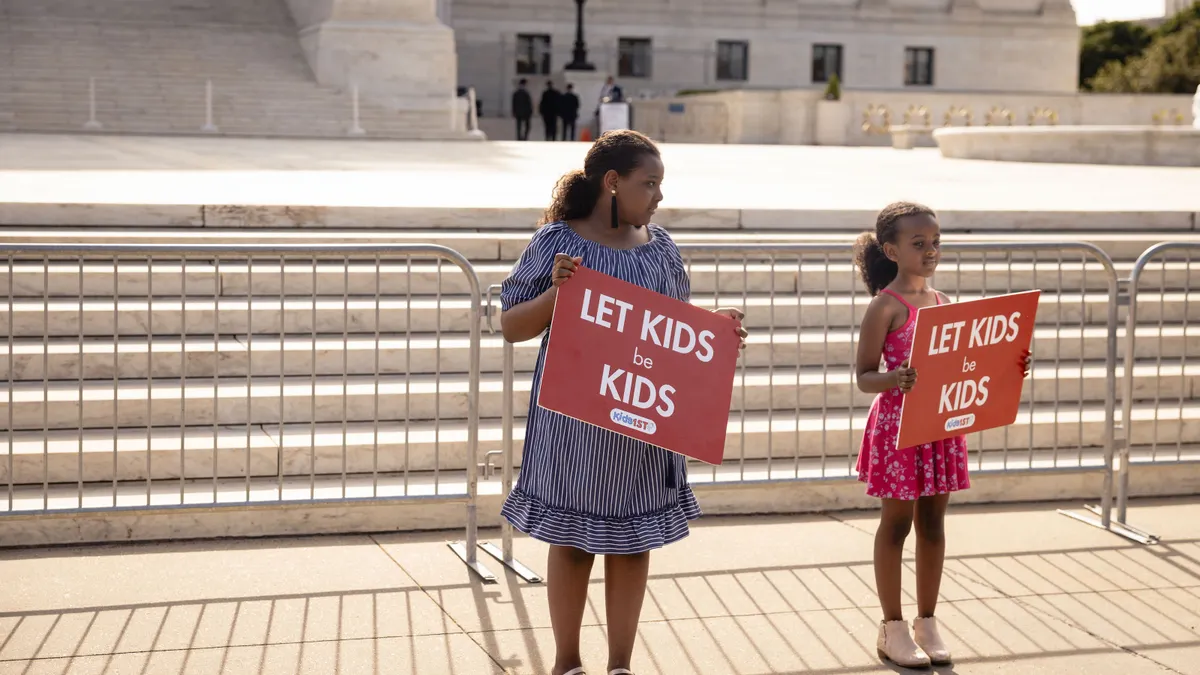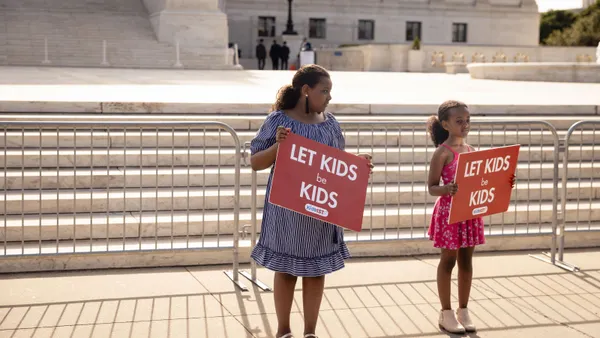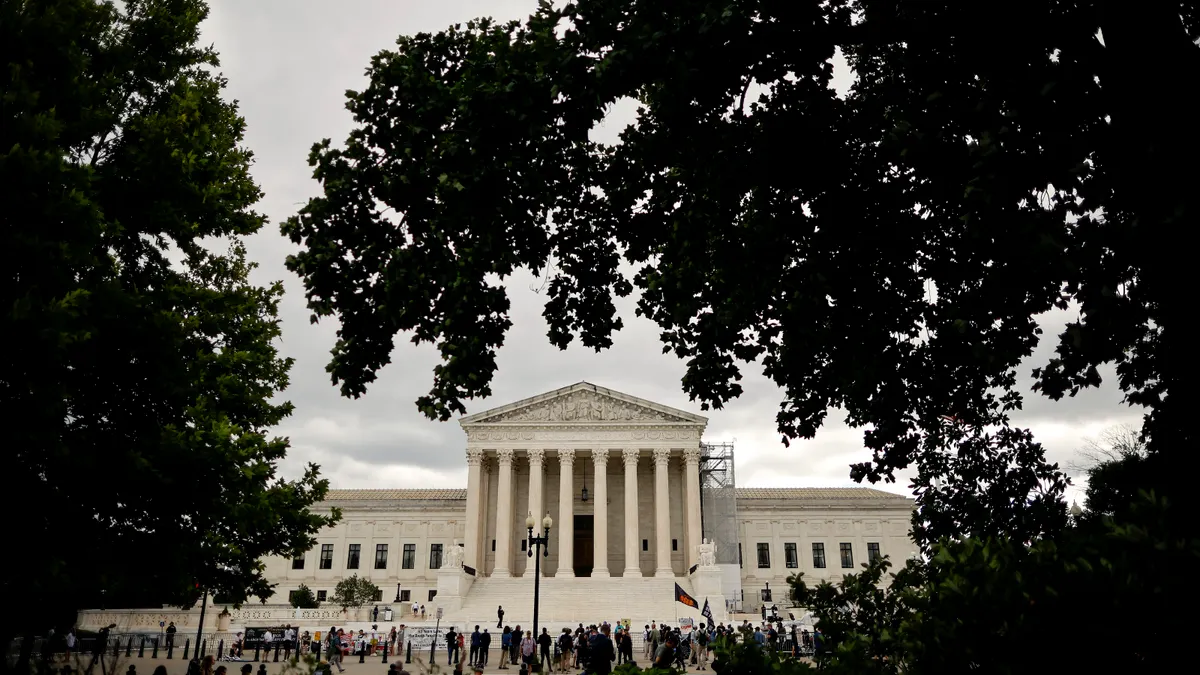
The U.S. Supreme Court is set to hear back-to-back oral arguments Tuesday in two landmark cases that could change the course of Title IX implementation across the nation, especially as it relates to the controversial issue of transgender student participation on sports teams.
The cases — West Virginia v. B.P.J and Little v. Hecox — ask Supreme Court justices to decide whether Title IX, the federal statute protecting students from sex discrimination, protects or prevents transgender students' participation on women and girls' sports teams. The cases are also going to be examined under the 14th amendment's equal protection clause.
The cases come amid an increasing divide between red and blue states, as the former pass laws preventing transgender students from participating in women’s and girls' sports and the latter protect transgender students' rights to compete.
“Schools have long separated sports into boys’ and girls’ teams,” said West Virginia in its petition for West Virginia v. B.P.J. “More recently, though, the lines have begun to blur.”
The oral arguments also come as the Trump administration and U.S. Department of Education crack down on state and district policies protecting transgender students, and especially their participation in sports.
Here are three things to know as the Supreme Court takes on the high-profile cases:
Why are there two cases?
While both cases are related to transgender students competing on sports teams, Hecox was filed by a college student at Idaho's Boise State University who sought to try out for the women's track and cross-county teams, while B.P.J. is on the K-12 level and involves puberty blockers and hormone therapy.
At the time Hecox was filed, Lindsay Hecox was a freshman, and a 2020 Idaho law categorically banned transgender girls and women from playing on sports teams aligning with their gender identities in both public K-12 schools and colleges.
A preliminary injunction issued by the district court allowed her to try out for NCAA, but Hecox never made the team. However, Hecox is now a senior in college and the injunction allows her to participate in women’s clubs for soccer and running, according to Hecox's court filings.
B.P.J., on the other hand, was filed on behalf of a high school student who has publicly identified as a girl since the 3rd grade. The student took medication to stave off the onset of male puberty and has also begun to receive hormone therapy with estrogen, according to court documents.
When B.P.J. was an 11-year-old rising middle schooler in 2021, her principal told her mother that she would not be able to try out for the girls' cross country team due to a West Virginia law banning student participation on sports teams based on gender identity. Prior to the law’s passage in 2021, schools in the state allowed transgender students to play on teams aligning with their gender identity on a case-by-case basis.
Title IX policies on the matter have been inconsistent
Not only do districts nationwide have a patchwork of starkly different policies based on their differing state laws on the issue, but federal administrations have also pingponged on the topic based on which party is in the Oval Office.
The Biden administration's Education Department attempted to pass Title IX regulations in 2023 and 2024 on transgender students' athletic eligibility, proposing a framework for when students should be allowed to play on teams aligning with their gender identity.
Those regulations would have prohibited categoric bans such as the ones in Idaho and West Virginia, and instead would have required districts to develop criteria on athletic team eligibility based on considerations such as differences in grade level, competition and types of sport. Many saw the proposal issued in 2023 as a middle ground, but it never materialized into a final rule.
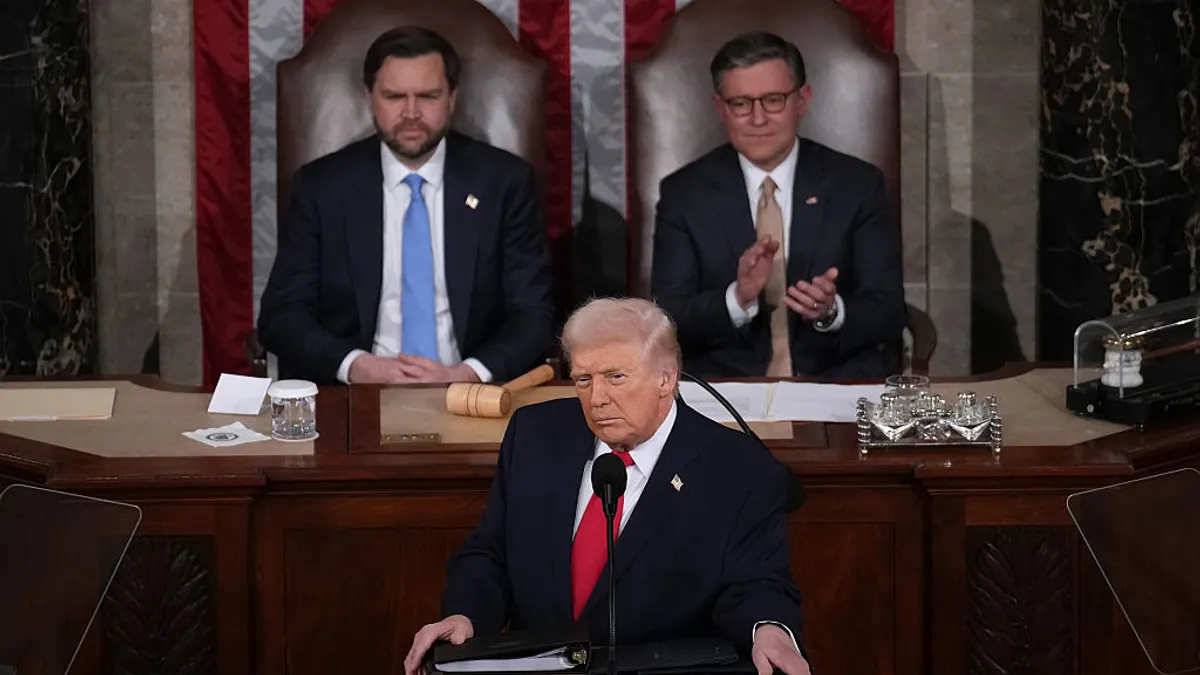
The Trump administration, on the other hand, has completely banned transgender student participation on women and girls' sports teams. It has gone so far as referring states such as Maine and California to the U.S. Department of Justice.
Meanwhile, the Education and Justice departments are threatening states and districts that they could lose federal funding if they don't prohibit transgender students from playing on teams aligning with their gender identities.
Transgender student inclusion, the administration argues, threatens women's and girls' rights.
The case could go beyond sports
A decision in the two cases could carry implications for Title IX beyond sports, depending on the opinions issued, civil rights experts say.
At the core of the debate — one that has also divided presidential administrations and states — is whether Title IX protects transgender students in education programs or requires their exclusion in certain situations as a way to protect students assigned female at birth. This question has implications for district policies on restroom and locker room access, for example.
In 2020, the Supreme Court heard a similar case, Bostock v. Clayton County, in which justices ruled that LGBTQ+ individuals were protected from employment discrimination in the workplace.
Since then, Title IX and other legal experts have been anticipating whether the high court would decide in line with its precedent set in Bostock — by saying Title IX also protects LGBTQ+ students in school settings — or break it.