At a time when natural disasters are growing in frequency and causing major disruptions to school communities nationwide, NWEA released a playbook this month to help schools prepare and recover from severe weather events.
NWEA, a K-12 assessment and research organization, developed the guidance from analyzing previous district responses to extreme weather disrupting school operations. NWEA outlined its recommendations in three stages — preparation before a disaster occurs, immediate response in the weeks following a disaster, and ongoing recovery strategies that equally focus on academic recovery and student mental health supports.
Key lessons that NWEA learned include:
- To fare better after a disaster, schools need to develop a recovery plan before weather-related damages occur. School leaders should understand the most likely climate hazards their communities could face. They can start by looking at resources from The Brookings Institution that gauge this for schools based on the Federal Emergency Management Agency's National Risk Index.
- To act as a local resource center during disaster recovery, schools should build relationships with community organizations ahead of time. This will help schools not only address academic needs but also provide supports for student housing, mental health and other services.
- To help students recover from a traumatic event such as a natural disaster, it’s critical that schools reestablish school norms and daily rituals as soon as possible. This helps create a sense of normalcy for students, which can help with their emotional well-being and academic recovery.
- Before schools can successfully address academic recovery, they must first prioritize the unmet needs of their school communities and address student trauma and teacher well-being.
In a separate NWEA report released in August, the organization found that the increasing number of severe weather events is having negative financial, academic and emotional impacts on students and educators. The report cited the federal government’s National Centers for Environmental Information, which reported that 2024 saw 27 individual weather and climate disasters driving at least $1 billion in damages. That’s closely behind the record high of 28 events from the previous year.
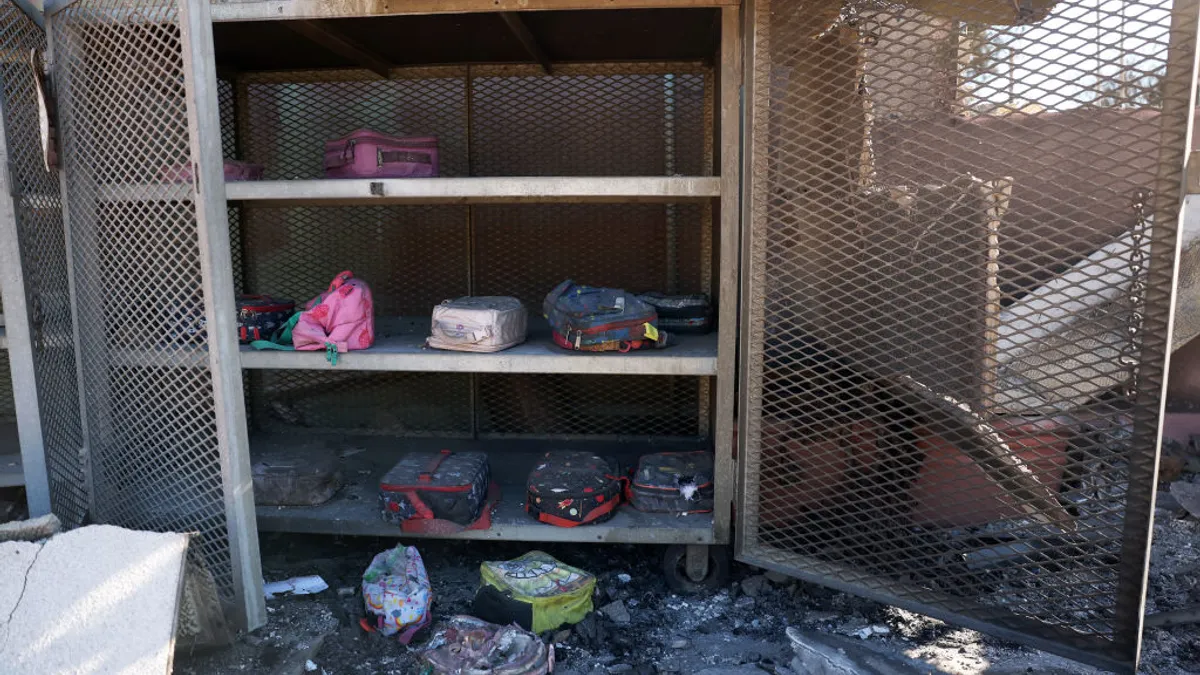
Recent natural disasters — such as the southern California wildfires in January 2025 and Hurricane Helene’s severe impact on North Carolina in September 2024 — destroyed some school buildings, causing prolonged closures in those communities.
Some schools damaged by Hurricane Helene in Western North Carolina were still closed a year later, according to reporting by EducationNC.
California’s Palisades, hit particularly hard by last year’s wildfires, saw similar cases of extended school closures.
Los Angeles Unified School District Superintendent Alberto Carvalho announced earlier this month that the district will invest $604 million to rebuild two elementary schools and a charter high school that were damaged in the wildfires. ABC 7 reported that the Palisades Charter High School is expected to reopen soon, while the elementary schools should be rebuilt by the fall of 2028.
Hurricane Helene and the California wildfires also demonstrated how schools can partner with community resources in times of immediate recovery.
Buildings in North Carolina's Asheville City Schools, which remained fairly undamaged by Hurricane Helene, were used as donation dropoff sites as well as a point for distributing meals and water. In the state's Buncombe County Schools, the district’s nutrition teams provided food to people who were temporarily housed in school buildings and local shelters.
Shortly after the California wildfires in 2025, a number of community organizations, including state and local teacher unions, rallied to provide mental health resources for students and staff in addition to other emergency resources.
Some schools are also navigating concerns with getting displaced students to return once a building reopens after a natural disaster, as seen at Palisades Charter High School. That challenge could also further exacerbate ongoing concerns districts face nationwide with dipping student enrollment driven by the continued decline in birthrates and more competition from private school choice policies.