This audio is auto-generated. Please let us know if you have feedback.
Most clicked story of the week:
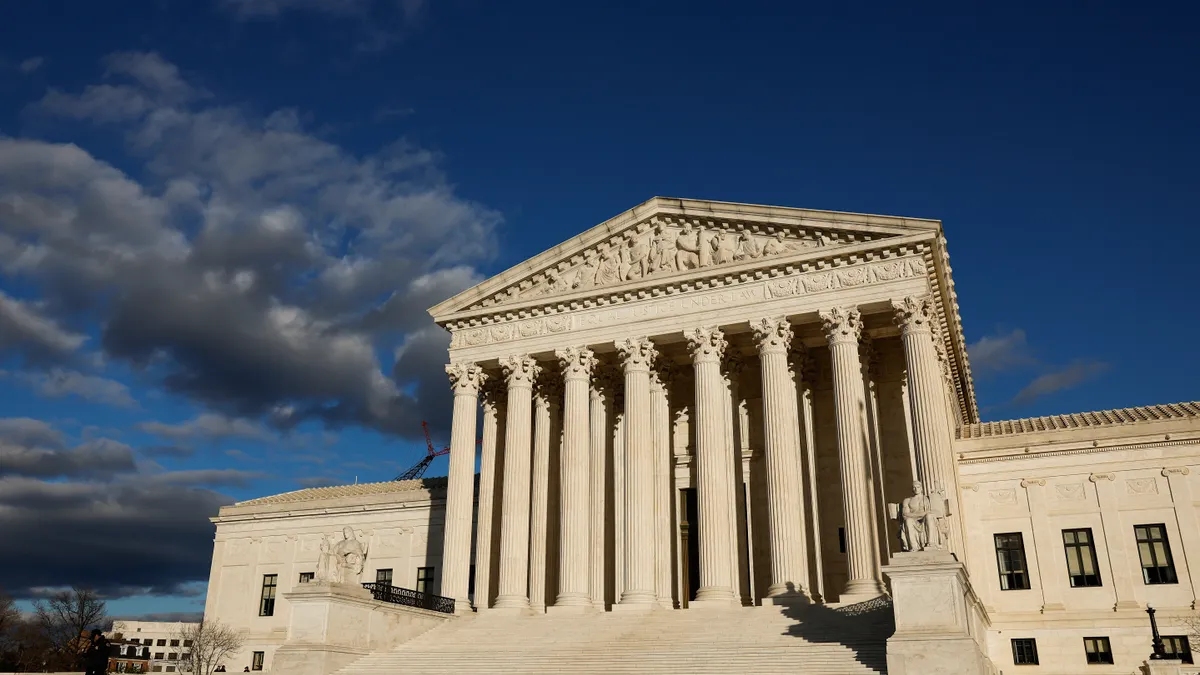
The U.S. Supreme Court on Dec. 8 declined to hear a Texas case that could have decided the constitutionality of book bans in public libraries. By not hearing arguments in Little v. Llano County, the justices left in place a lower court ruling allowing state and local governments to make decisions on book bans.
The case turned on whether book removal decisions — which have intensified across public schools and libraries in the past few years — are subject to the First Amendment’s free speech protections. The case would have been the first on book bans to be heard by the Supreme Court since 1982, according to PEN America, which opposes such bans and filed an amicus brief asking the court to take the case.
Number of the week:
By the numbers
$40 million
The collective amount in salaries paid to hundreds of employees in the U.S. Department of Education's Office for Civil Rights who have been put on paid administrative leave for almost nine months, according to Rachel Gittleman, president of American Federation of Government Employees Local 252, the union representing Education Department employees. The Education Department has sent a letter asking some OCR employees who have been on administrative leave since March 21 to return to work by the end of December to prioritize the office’s current caseload of discrimination complaints.
Focusing on AI literacy and online privacy
- More than a dozen bills seeking to protect children and teens online were advanced in a markup meeting by the House Subcommittee on Commerce, Manufacturing and Trade on Dec. 11. The 18 bills, including the Kids Online Safety Act and the Children and Teens’ Online Privacy Protection Act, or COPPA 2.0, now go to the full House Energy and Commerce Committee and, if approved there, to the House floor.
- Only four states — Colorado, Virginia, North Dakota and Ohio — explicitly focus on artificial intelligence within their computer science standards, according to a report by Code.org and CSforALL. When AI and computer science are taught separately, the report suggests that states risk uneven implementation of AI education, which can lead to “fragmented expectations for the future workforce,” the two nonprofits said in a Dec. 10 statement.
Addressing students' mental health and academic performance
- The Education Department issued more than $208 million in mental health grants on Dec. 11, months after canceling what court documents have said was $1 billion in mental health allocations because the programs did not align with the Trump administration's priorities. The new awards are going to 65 recipients, half of which will support rural communities. They’ll be required to limit funding to hiring school psychologists rather than also funding school counselors and social workers, who often also provide student mental health supports.
- The reopening of schools for in-person learning following pandemic-era building closures decreased rates of depression, anxiety and attention-deficit/hyperactivity disorder in students, according to a study published in late November in the journal Epidemiology. The research shows returns to classrooms were linked to a 43% decrease in monthly mental health diagnoses and a nearly 11% decrease in related non-drug healthcare expenses. These impacts were seen nine months after school reopenings, though benefits typically occurred after six months.
- Students' participation in summer school helped modestly increase their math achievement in 2022 and 2023 but had no impact on reading, according to an analysis by NWEA, an assessment and research company. The gains seen in math are equal to about 2–3 weeks of learning during the school year. The findings also suggest summer school combined with school-year academic supports as effective approaches for learning interventions. The analysis said there was not a clear explanation for why math achievement rose but reading did not.