The U.S. Department of Education's Office for Civil Rights did not enter into any resolution agreements for sexual harassment and assault cases in K-12 programs in 2025 after the inauguration of President Donald Trump, according to a K-12 Dive analysis of the department's resolution agreement database.
This lack of Title IX resolution agreements coincides with a broader slowdown in the office's resolution agreement output last year, as the office only entered resolution agreements in 177 cases, according to its online database. That number, down from 518 in 2024, was the lowest annual tally since 2013.
Sexual harassment and assault investigations and resolution agreements were previously a major enforcement area under the Title IX anti-sex discrimination law. Its scarce enforcement during the first year of Trump's second term shocked education civil rights experts and women's civil rights advocates, who called it an anomaly compared to the typical flow of investigations and resolution agreements published by OCR.
"Seems that OCR has had a marked shift in the types of cases that they are going to prioritize," said Kayleigh Baker, a Title IX expert and senior supervising consultant for TNG Consulting, which works with school districts on civil rights compliance. "And it's changed in a way that clearly aligns with some of the executive orders that we saw in the early days of President Trump's second administration."
Those orders included barring transgender students from athletic teams and facilities aligning with their gender identity and prohibiting diversity, equity and inclusion in federally funded programs — including K-12.
"The Trump administration has chosen a small handful of issues that it is interested in enforcing through civil rights, and it's noisy about those and noisy about its disdain for everything else," said Catherine Lhamon, who led OCR under the Obama and Biden administrations. “And that is unprecedented and dangerous and illegal.”
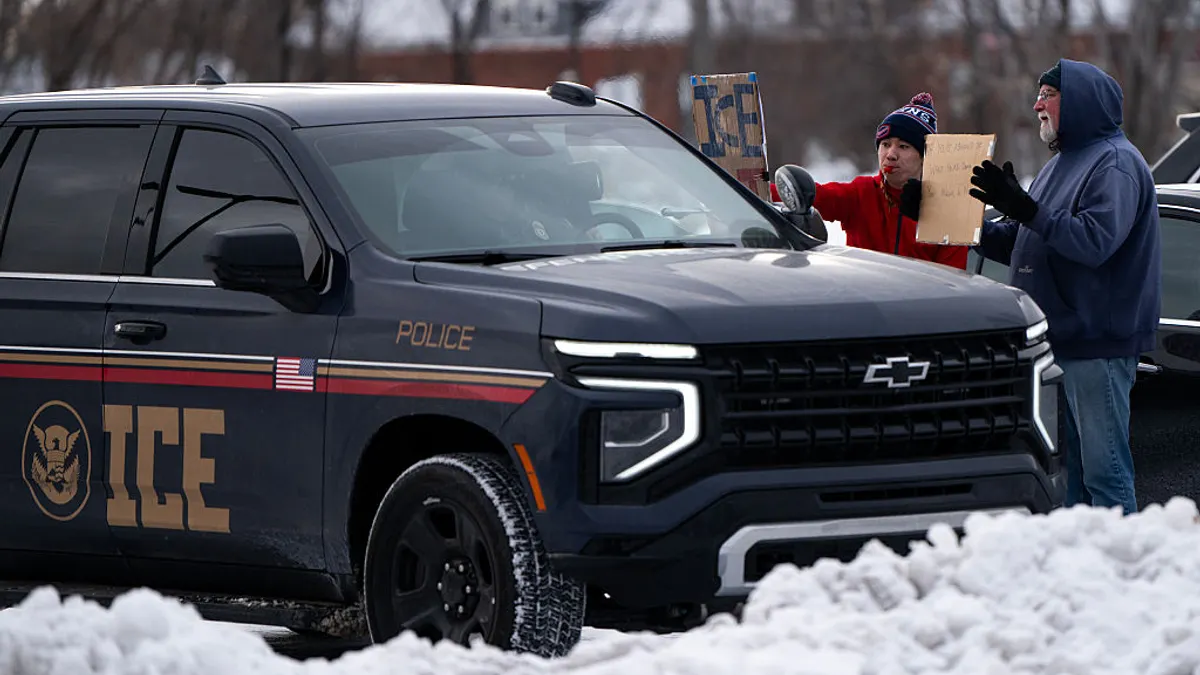
Julie Hartman, Education Department press secretary for legal affairs, said, however, that the agency’s emphasis on using Title IX to prohibit transgender students from accessing facilities aligning with their gender identities "has restored commonsense safeguards against sexual violence by returning sex-based separation in intimate facilities."
OCR invokes Title IX — but not for sexual harassment
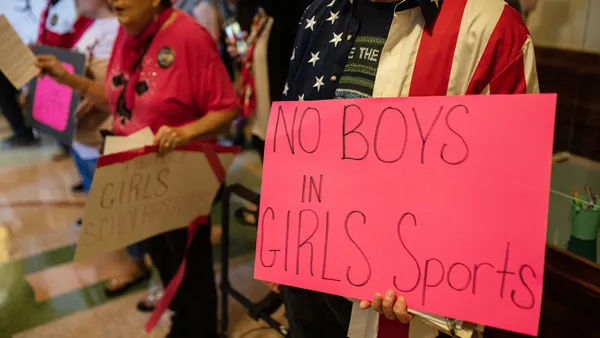
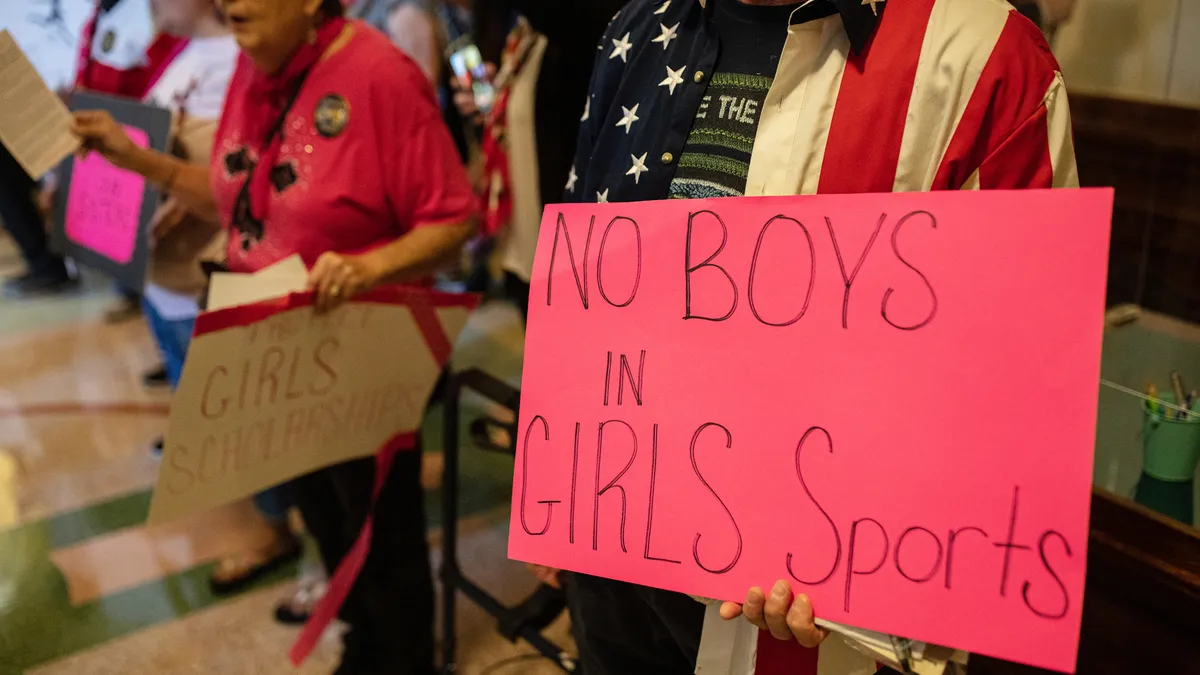
President Donald Trump campaigned on protecting women's and girls' rights in education programs — particularly by limiting transgender students' access to women’s and girls’ athletics programs and school facilities — under Title IX, the statute that prevents discrimination based on sex in federally funded education programs.
That same law is meant to protect students from sexual assault and harassment — and from adverse impacts on their access to education that could arise as a result of such incidents.
For instance, OCR is tasked with preventing unwanted sexual advances that create a hostile environment for students. In cases of rape or other sexual assault, enforcing Title IX ensures that survivors get accommodations that allow them to continue accessing their education, ideally uninterrupted.
Accommodations, for example, can include separating the alleged perpetrator of sexual assault from the victim or allowing extensions on assignments.
"Research has always shown a high prevalence of students experiencing sex-based harassment, including sexual assault, and yet this administration is choosing to ignore that issue," said Shiwali Patel, senior director of education justice at the National Women's Law Center. Patel, an attorney, worked at OCR on civil rights policy and legal guidance interpreting Title IX between 2016 and 2018, beginning with the Obama administration and then working partway through the first Trump administration.
“It’s such a sharp drop, it’s essentially a zero in a category."

Nancy Potter
Potter Law, founder
While Trump's OCR completed no resolution agreements related to sexual assault and harassment of women and girls in K-12 last year, it did expedite Title IX investigations and proposed resolution agreements to curb transgender students’ access to school facilities and athletic teams aligning with their gender identity. The Trump administration maintains that allowing such access discriminates against cisgender women and girls.
"So it really feels like an upside-down world," Patel said.
The administration's lack of Title IX resolution agreements to protect women and girls from incidents of sexual harassment and assault is a departure from the norm that has been practiced by both Republican and Democratic administrations. Nancy Potter, founder of Potter Law and a former OCR attorney, called it a "historic low" for resolutions in a major civil rights category.
"It's such a sharp drop, it's essentially a zero in a category," said Potter. "I think that it's pretty clear that they have this hyper focus under Title IX right now on transgender athlete participation."
Other Title IX agreements in 2025 — aside from transgender student issues — include what some civil rights experts described as low-hanging fruit.
"You have just a smattering of Title IX resolutions that address single-sex scholarships, posting of Title IX training materials and Title IX grievance procedures, whether or not they have a live hearing or cross examination," said Beth Gellman-Beer, who worked for OCR for nearly two decades and directed OCR's regional Philadelphia office until the layoffs that shuttered it in March. "That's just a small little piece of Title IX."
Administration touts ‘commonsense safeguards’
The Department of Education did not dispute K-12 Dive's findings on its sexual harassment and assault resolution agreements in K-12. However, it took issue with the OCR case resolution numbers listed on its own database.
Although the website reflects 177 resolution agreements in 2025, a senior Education Department official said in an email that OCR has settled over 300 cases through resolution agreements and mediation. More than 200 of those were related to K-12, said the official, who would only speak on background.
However, it's important to note that those higher numbers include — as the official said — mediation, which is separate from resolution agreements.
Resolution agreements often include some investigation into complaints, including but not limited to review of photo or video evidence, documentation, logs, policies and communications. Mediation, on the other hand, is a complaint resolution process that is "an alternative to its investigative process" in which a trained staff member assists both parties in coming to a negotiated resolution to a complaint, according to the Education Department.
Even so, Lhamon characterized as "appalling" the reported total that included mediation. "That's less than half that I would have expected from a functioning Office for Civil Rights," Lhamon said.
“OCR is and will continue to safeguard the dignity and safety of our nation’s students."
Julie Hartman
Education Department, press secretary for legal affairs
Education civil rights experts, including former OCR workers, attribute this number to a shift in the office's priorities and enforcement strategy, as well as the impact of layoffs. But the Education Department blamed a backlog of investigations, and instead highlighted its crackdown on transgender students' facility access as a win for Title IX enforcement.
“OCR continues to work through the 20,000 case backlog left by the Biden Administration," Hartman said in a Jan. 28 statement to K-12 Dive. "After the Biden Administration corrupted OCR to drive a transgender ideology into our schools, endangering young girls and confusing students about basic biological truths, the Trump Administration has restored commonsense safeguards against sexual violence by returning sex-based separation in intimate facilities."
"OCR is and will continue to safeguard the dignity and safety of our nation’s students," Hartman said.
Layoffs and administration changes — or changed priorities?
Resolution agreements and overall OCR output usually take a hit during presidential transition years, former OCR employees said. For example, during the transition to the Biden administration in 2021, the database listed 265 resolution agreements, down from 463 the year prior.
Still, the dip in 2025 is steeper than during that transition. And former OCR employees have said that a drop due to an administration change usually represents a brief pause rather than a year-long lack of resolution agreements in a major civil rights enforcement area.
OCR's broader slowdown, including its lack of Title IX sexual harassment and assault resolution agreements, also came amid great uncertainty from dramatic layoffs that reduced OCR's headcount by about half.
In the past year, as a result of litigation seeking to reverse those layoffs, civil rights enforcement staff pingponged between administrative leave and returning to the office based on court orders. And when laid-off employees did return, it was to sift through a backlog of cases, rather than their usual caseload that had a mix of both old and new investigations, employees affected by the layoffs told K-12 Dive at the time.
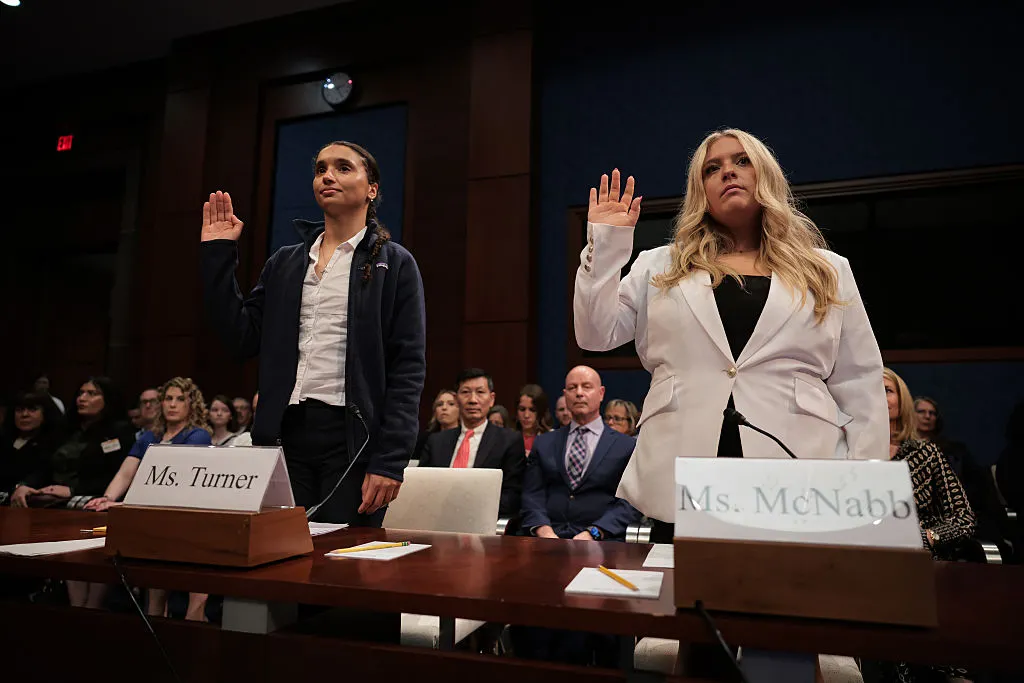
According to a U.S. Government Accountability Office report released last week, the Education Department paid OCR employees up to $38 million during six months of administrative leave between March and September.
The department rescinded reduction in force notices for OCR staff in early January 2026. But the Education Department has not responded to K-12 Dive’s requests for the office's current staffing numbers or whether the seven OCR regional offices shuttered during the layoffs will reopen.
The GAO report found that, despite the department's claims it was making OCR more efficient, the Education Department could not prove the layoffs improved OCR's ability to serve the American people.
Had the layoffs held, the office's staffing would have been reduced to only 62 staffers, down from 575 in fiscal year 2024, according to the GAO report.
The chaos swirling around the agency’s staffing in the last year and the slim number of OCR employees who would have remained if the cuts were upheld has raised many questions among civil rights experts, lawmakers and education leaders.One of those questions is whether the office would be able to fulfill its statutory obligations to protect students' civil rights, including those for sexual assault survivors.
"It really looks to me like there's a failure to meaningfully process entire categories of complaints, and when you do that, that just undermines the statutory purpose of the agency and its work," said Potter.





 Dive Awards