Last month, the U.S. Department of Education's Office for Civil Rights announced it was rescinding parts of a handful of Title IX resolution agreements issued under the Biden and Obama administrations. The move is exacerbating uncertainty around the office's current productivity and shaking the ground on which other resolution agreements stand.
"Our traditional civil rights enforcement history depends on consistency, and if that goes away, then students and schools are going to be navigating a lot of uncertainty," said Kayleigh Baker, a senior supervising consultant with TNG Consulting and an advisory board member for the Association of Title IX Administrators.
"They didn't just change the direction going forward,” Baker said. “They went back and unwound agreements."
The decision creates uncertainty for districts that look to agreements and OCR case resolutions as examples of best practices, she added. While rescinding guidance and official interpretations have become common practice for the OCR under previous administrations, the department has with much lesser frequency publicly rescinded resolution agreements — if at all.
In rescinding the agreements with five school districts and one college, the department said the “previous Administrations distorted the law" when they entered into the resolution agreements and "illegally saddled school districts with Title IX violations."
The agreements were made under the previous administrations’ interpretation of Title IX, which included LGBTQ+ students in the civil rights law’s sex-based protections.
However, the current Trump administration said that interpretation “impermissibly expanded the scope of Title IX to enforce discrimination based on ‘gender identity,’ not biological sex.”
What happens when a resolution agreement is no longer monitored?
Resolution agreements between OCR and school districts are meant to ensure that districts change their policies and practices to root out discrimination. They may stipulate that districts, for example, conduct climate surveys, increase staff hiring, provide training, or change their documentation protocols.
They more often than not come with a monitoring phase during which federal employees ensure compliance with the agreement's stipulations over the course of a set period of time.
However, many of the agreements that the administration rescinded last month were already out of the monitoring phase, meaning districts had already implemented the agreed changes, and OCR was no longer ensuring compliance, according to Baker.
"This is the department sending a message," said Baker. "They're very clear that their position is: Not only is this something that our administration doesn't care to enforce, our position is that it is unenforceable because it goes against what we are saying is settled law."
The administration also disagrees with previous Democratic administrations over disparate impact investigations under Title VI, which protects students from discrimination based on race, ethnicity, national origin and shared ancestry.
Disparate impact investigations are often large-scale, systemic investigations into districts' policies that OCR can launch if they suspect seemingly innocuous policies are having a disproportionate and often unintentional impact on traditionally marginalized students. The effort was meant to curb the overrepresentation of some racial and ethnic groups, such as Black and Hispanic students, in school discipline cases.
However, the "disparate impact" theory has been walked back under both Trump administrations.
An executive order issued by President Donald Trump last year titled "Restoring Equality of Opportunity and Meritocracy" eliminated federal agencies' ability to rely on the legal theory in conducting their investigations, saying the disparate impact theory "imperils the effectiveness of civil rights laws by mandating, rather than proscribing, discrimination."
With the administration rescinding Title IX resolution agreements, other agreements under laws such as Title VI have been brought into question.
"The question that I feel like it creates is: What rights do I actually have today, and will they still even be enforced tomorrow?" said Baker.
Dip in overall resolution agreements
The rescissions of the resolution agreements come as concerns grow over the office's overall number of agreements in 2025, the first year of Trump's second term.
Last year, OCR entered into agreements with schools and colleges in only 1% of pending cases in 2025, the lowest percentage from any OCR in over the last decade, according to a report released last month by Sen. Bernie Sanders, I-Vt.
The report also found that OCR didn’t reach any resolution agreements for major discrimination cases involving sexual harassment or sexual violence, seclusion and restraint, racial harassment, or discrimination in school discipline — all areas that OCR reaches resolution agreements on in a typical year.
The department, however, has stated that it had to contend with a backlog of 19,000 OCR complaints at the beginning of 2025 and has been rehiring lawyers following last year’s mass layoffs that shook the civil rights office, along with the broader department.
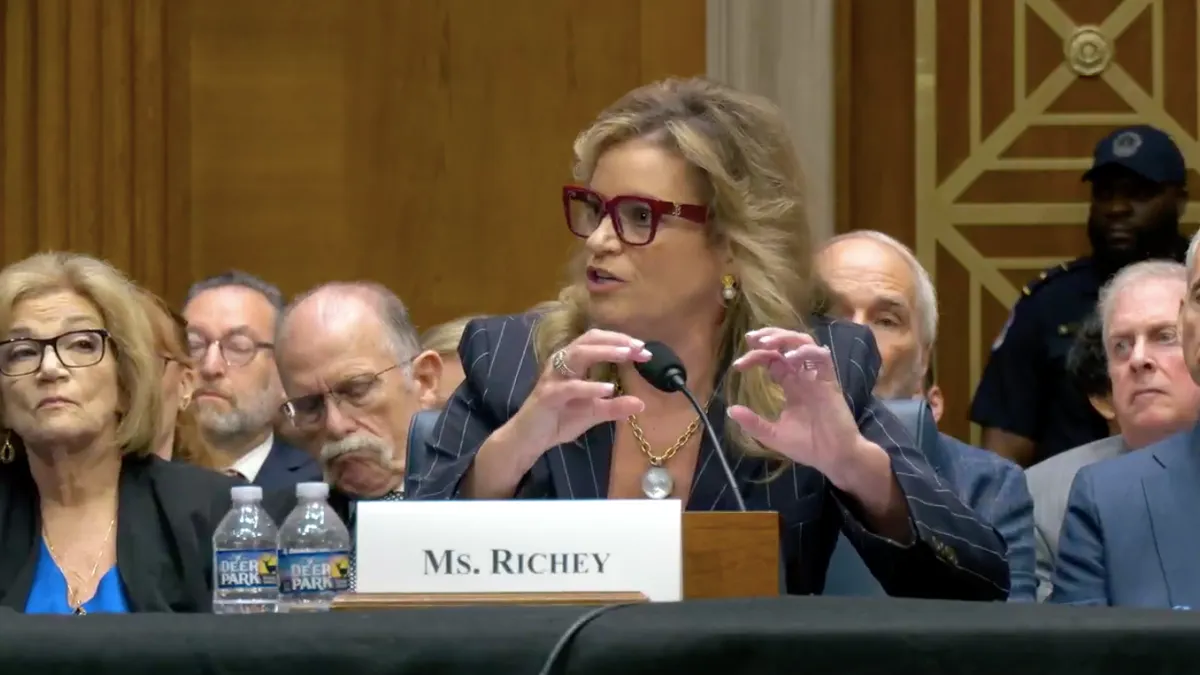
“There was a time when we were not processing cases as quickly as we should, but we are now focused on doing that and moving forward,” U.S. Education Secretary Linda McMahon said during an April 28 Senate subcommittee hearing. “We expect to see progress.”