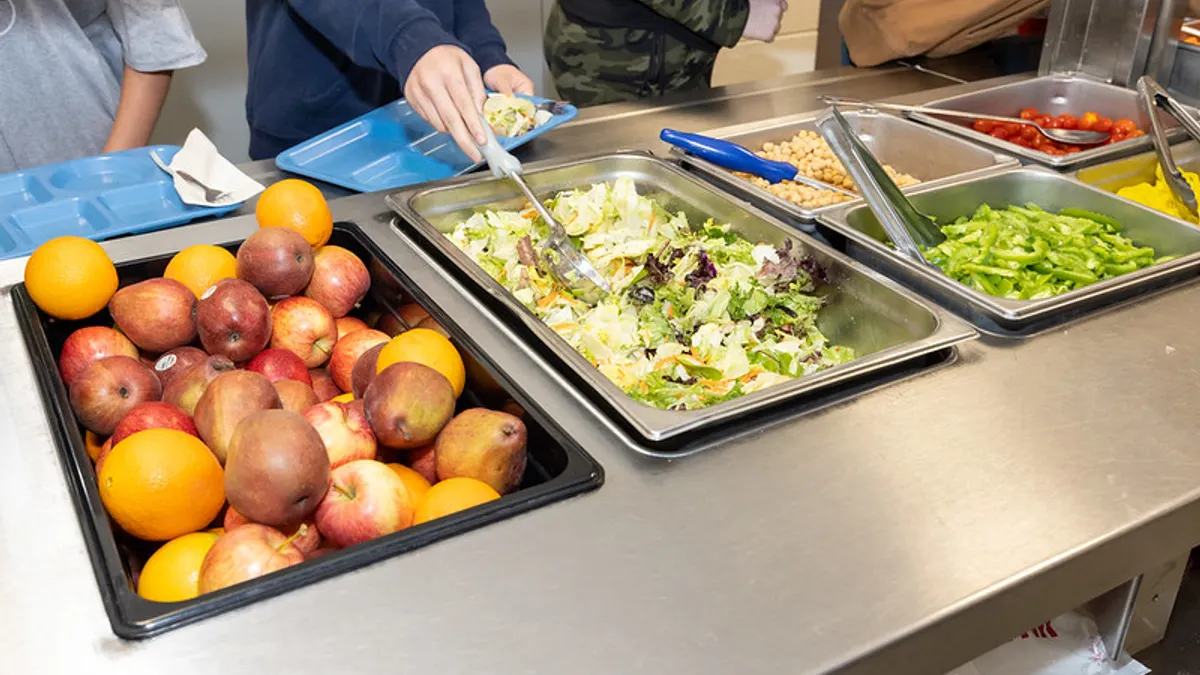
Educators throughout the U.S. and across grade levels are using food — including school lunches — to teach science lessons employing hands-on approaches.
In St. James Public Schools in southwest Minnesota, health teacher Steve Chapin provides nutrition lessons with help from the school’s foodservice provider. Students in the Tenth Grade Chefs program plan meals that are served in the cafeteria. “We’re giving kids the opportunity to plan and prepare nutritious, healthy, intelligent meals,” Chapin said.
In the mostly virtual Commonwealth Charter Academy, an public cyber charter school in Pennsylvania, some students come in person to the Harrisburg campus' indoor greenhouse that’s been part of the school’s AgWorks program for the past eight years, where they learn about everything from planting strawberry seeds to fishing for tilapia, said Lindsay Coulter, program coordinator.
“Agriculture is such an important career in Pennsylvania. We bring any exposure we can,” she said.
Health teacher Sarah Gietschier-Hartman at Clayton High School in the St. Louis suburbs added a lesson focusing specifically on nutrition for teens that stemmed from conversations with the school’s nurses, theater teacher, and field hockey and lacrosse coach, who all had noticed how constantly hungry — and thus distracted and weary — students seemed.
“We collaborated to create a lesson on the benefits of balanced nutrition for teens, and how it makes us feel better and prevent crashes,” she said.
Chapin, named the 2026 Health Educator of the Year by the Society of Health and Physical Educators America, teaches his students about macro- and micro-nutrients, and how they contribute to the energy level students need to focus on academics, succeed in athletics and otherwise get through their day. A representative from the district’s foodservice representative details how the U.S. Department of Agriculture's National School Lunch Program lays out expectations for fat, sodium and carbohydrates in foods, Chapin said.
“We want to make sure they see the long-term health impact of the choice related to eating,” he said.
Students then propose meal choices, many based on homemade recipes in the heavily Hispanic community, and they break down how the proposed meal matches nutrient requirements and budgetary allotments. The district’s internal foodservice director sometimes recommends substituting commodity items that the government can buy in bulk, and the students tweak their ideas.
Between December and February, students prepared and cooked 23 meals, working in groups of five, reporting to the cafeteria at 8 a.m. to receive instruction and safety guidance, Chapin said.
“We’re super-fortunate to have an incredible, knowledgeable foodservice staff,” he said. “They are genuinely excited to have our kids come in and work with them.”
The 8th graders whom Chapin also teaches focus on sugar and salt intake and prepare a healthy snack they would be willing to share with classmates — with the caveat that it must pass muster with regard to allergies — and then are asked to prepare a meal for their family at home.
“It doesn’t have to be complicated,” he said. “I just want them to learn how to be a kitchen and learn how to make homemade food.”
At Commonwealth Charter Academy, Coulter offers various opportunities for different grade levels. She runs a club for K-3 graders who plant everything from strawberry seeds to tomatoes.
Middle schoolers learn about vitamins and minerals and recently undertook a “moon soil” experiment in which they grew pepper and mustard seeds in simulated lunar soil. And in high school, students learn about the nitrogen, phosphorus and carbon cycles, all of which can be demonstrated through aquaponic agriculture, Coulter said.
“We’re bringing in environmental science, showing them catfish and American eels, talking about conservation and how people fish,” she said. “Tilapia is a big source of food, and it’s invasive to Pennsylvania, so we can talk about the pros and cons of fishing for them in the environment versus producing our own.”
At Clayton High School, Gietschier-Hartman, a 2018 SHAPE America Teacher of the Year, said students often visited the nurse’s office mainly because they needed a snack, while the coach reported athletes were running out of energy by halftime, and the theater teacher testified that actors often struggled to memorize lines.
Through the lessons she developed and launched last fall, students learn about carbs, protein and fat, using an interactive worksheet, students design “performance plates” they would find enjoyable and nourishing.
“It’s a way to teach them easy information that would help them build easy meals and realistic snacks, and include everybody in the room,” Gietschier-Hartman said. “The students have been pretty receptive to it. If we give them the opportunity to make these decisions on their own, they do a great job of it.”