Federal Republican lawmakers on Tuesday suggested that increasing students' access and participation in sports could help stem school and gun violence, as Democrats pushed back on whether that's a viable solution. The disagreement came on the heels of a fatal mass shooting at Brown University that occurred on the eve of Sandy Hook Elementary School massacre's 13th anniversary.
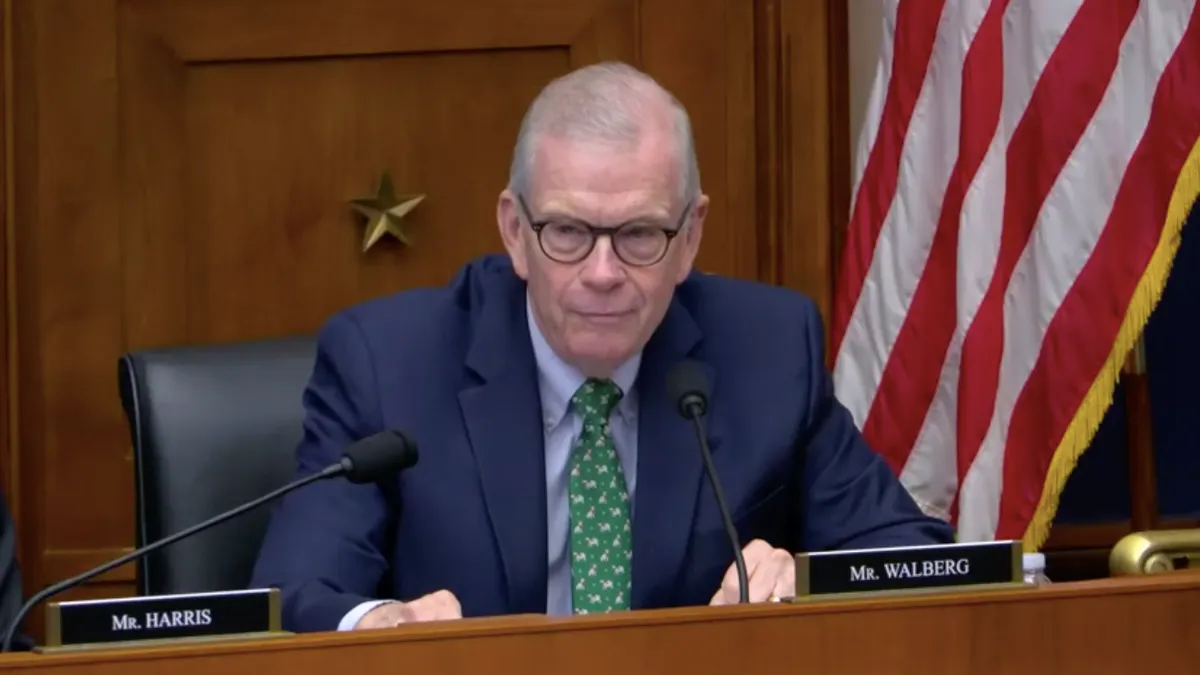
"This is a hearing on school safety," said House Education and Workforce Committee Chair Tim Walberg, R-Mich. Walberg spoke during a hearing titled "Benched: The Crisis in American Youth Sports and Its Cost to Our Future," held by the subcommittee on Early Childhood, Elementary and Secondary Education Subcommittee. Walberg chairs the full committee.
"If we did this right again, we would have less violence in schools," Walberg said. "These are the types of things that will change [the] perspective of kids and what they do in life itself. So this is a hearing on gun violence."
While Democrats and witnesses agreed that access and affordability are barriers to youth sports participation,they disagreed with Republicans over its potential to address school shootings. Studies have shown that youth sports participation is linked to better attendance, graduation rates, and academic performance.
"As important as sports participation is for kids, there is a much more pressing crisis at hand that the majority needs to recognize," said subcommittee ranking member Rep. Suzanne Bonamici, D-Ore. "We know what happened over the weekend."
Saturday's shooting at Brown University killed two students and injured nine others. In K-12, there have been 230 school shootings in 2025 as of Dec 16, according to the K-12 School Shooting Database, which tracks anytime a weapon is brandished with intent to harm on school grounds.
That number puts this year on track to fall well below last year's 330 school shootings. Last year became the first year since 2020 that school shootings hadn't broken a record high. Still, however, the 330 school shootings recorded in 2024 marked the second-highest number since 1966 and fell only 19 below the all-time high of 349 recorded in 2023.
“This subcommittee has held several hearings this year, but we have not had a single hearing related to gun violence," nor has the committee marked up a bill this year on school gun violence, said Bonamici. "We can talk about the other issues as much as we want — reading, math, CTE, screentime, student privacy, sports. None of that matters if children are shot and killed."
Witnesses at the hearing, however, stressed that better access to school sports could help improve student mental health, academics and outcomes. They reported anecdotes of students being less likely to engage in violence or commit crimes when after-school time is filled with sports activities.
"If you can calm yourself down when you're in an anxious state, you're a better athlete. If you can calm your anger down when you're hypercompetitive, you're a better athlete," said Steve Boyle, co-founder and executive director of 2-4-1 Care, Inc., a nonprofit organization that partners with school districts to provide sports opportunities.
John O'Sullivan, another witness and founder and CEO of the Changing the Game Project, said, "We have to keep as many kids as possible, as long as possible, in the best environment possible. " His organization advocates for parents and coaches to become better participants in kids' sports.
Democrats remained doubtful and pushed for a hearing specifically on gun violence.
"While sports are important for school safety, we have to have a hearing on this committee to address school shootings and the safety of our children in American schools," said Rep. Jahana Hayes, D-Conn. "I know that my constituents expect something more than to just normalize school shootings and teach our children how to shelter in place."
Hayes and other lawmakers on Sept. 12 sent a letter to Walberg and full committee ranking member Bobby Scott, D-Va., seeking a hearing before the end of the year on school shootings, and she said she received a response saying her concerns were "noted." The letter was sent in wake of shootings at a Catholic school in Minnesota and a Colorado high school.
"We need meaningful action to keep our students, teachers, and schools safe and a plan to address the underlying causes of gun violence," the letter said. "This Committee has the ability to bring together experts and individuals with firsthand experience to help develop federal legislation that implements school security upgrades, invests in mental health services, creates evidence-based crisis and threat assessments, and fosters a positive and trusting school environment."
The subcommittee has no hearings currently scheduled on gun violence or school safety, according to its calendar.
Congress in 2022 passed the Bipartisan Safer Communities Act in the wake of the Uvalde, Texas, mass shooting, the first significant gun safety legislation that also included school-based mental health measures in nearly three decades.
The funding provided to district mental health programs by that legislation, however, was put on pause and in many cases revoked by the Trump administration as it reviewed grants for potential diversity, equity and inclusion initiatives. The administration revoked about $1 billion in grants related to mental health earlier this year as a result, according to court documents.
Last week, the administration distributed a lesser amount — $208 million — to recipients who applied under a new grant application with updated requirements. These grants limit funding to the training of school psychologists only, instead of also funding school counselors and social workers, who often provide student mental health supports.