Project-based learning isn’t just for classroom-based subjects. Some schools are also choosing to include the approach — in which students learn through active participation in real-world, personally meaningful projects — in career and technical education, visual and performing arts, or even physical education.
“I would think it fits as well as it does with other content areas,” said Will Westphal, physical education teacher at both Taft Elementary, which serves K-4 students, and Alliance Charter School, a pre-K-6 Montessori school, in Wisconsin's Neenah Joint School District. “In any form of education, there’s a lot of ways to get things done.”
Westphal recalls a project-based learning initiative at a previous district in which he and a music teacher worked with 3rd and 4th graders to create “brain boost” dance videos for the whole school. The teachers provided guidance on music to use and appropriate length of the videos, but mostly it was the students being creative, making the recordings and figuring out what they needed for the visuals, he said.
Westphal recalls one instance when a song the students had chosen for their video happened to come on his sound system during his kindergarten class.
“All of these little kindergartners who had just seen the video stopped whatever they were doing and started doing the dance they had just learned,” he said. “That will stick with me forever.”
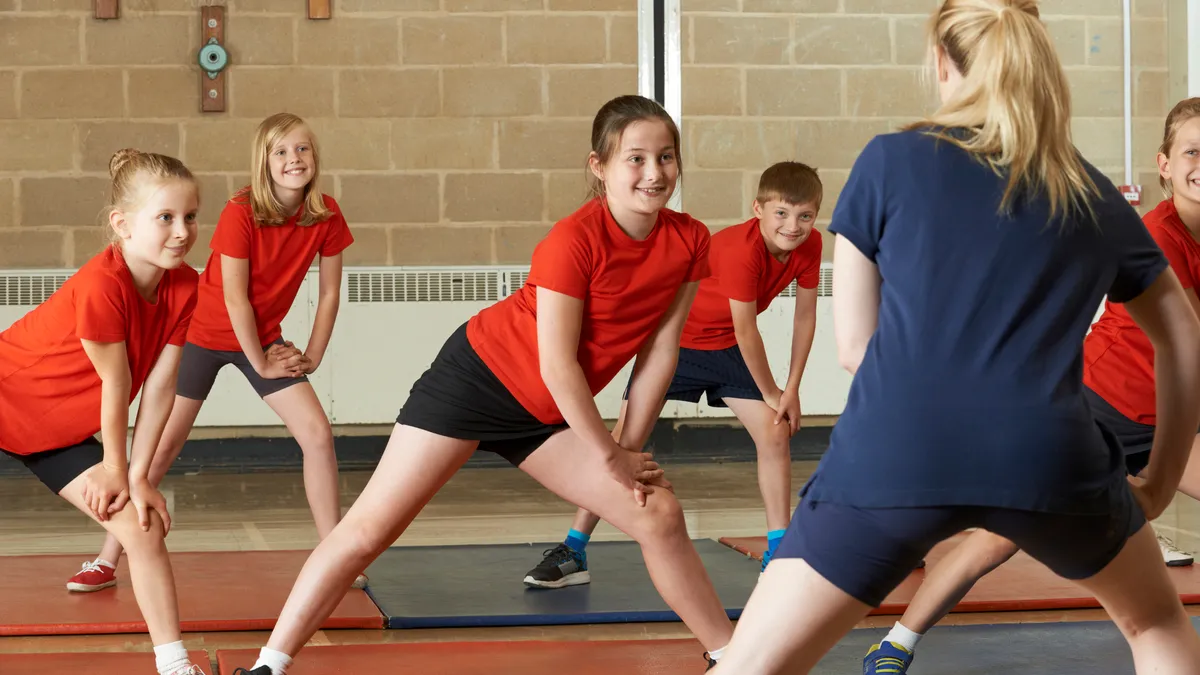
The concept of a “brain boost” matches up with research showing that students in academic classrooms need a moment to get up and move their whole bodies, said Westphal, who was named 2026 Midwest Elementary Teacher of the Year by the Society of Health and Physical Educators America.
“Dance or physical movement refreshes their brain,” he said. “They are better for their learning going forward. It’s not so much their brain getting a break, as getting activated again.”
In general, project-based learning activities should tie back to students’ real life, light their curiosity, provide a challenge, and ideally connect to their wider community, Westphal said.
“If kids have a problem that sparks their interest but also takes a little bit of work — [that scenario provides] another opportunity to grow,” he said. “Those are environments that students can really rally around.”
Westphal declares himself a “fan” of meaningful physical education frameworks that center around a combination of fun, joy, social interaction and challenge.
“Project-based learning fits with a lot of the things I value for students,” he said. “Project-based learning and its tenets, a lot of those [qualities] fit pretty nicely with what meaningful phys ed stands for.”
At his current schools, one project-based learning activity that has proved popular is asking students to create a game from scratch, using a ball of some kind, or based on “tag,” Westphal said.
“We frame it in our minds, and then it’s something we take out to the playground,” he said. “They’re making their rules as they try out the game with themselves or others — what’s working, what’s not, how do we need to adjust?”
Then, students introduce the game to their friends during recess, at which point “it’s pretty functional,” Westphal said. “It makes our school environment better. They have more options of what to do and make better use of recess.”