Dive Brief:
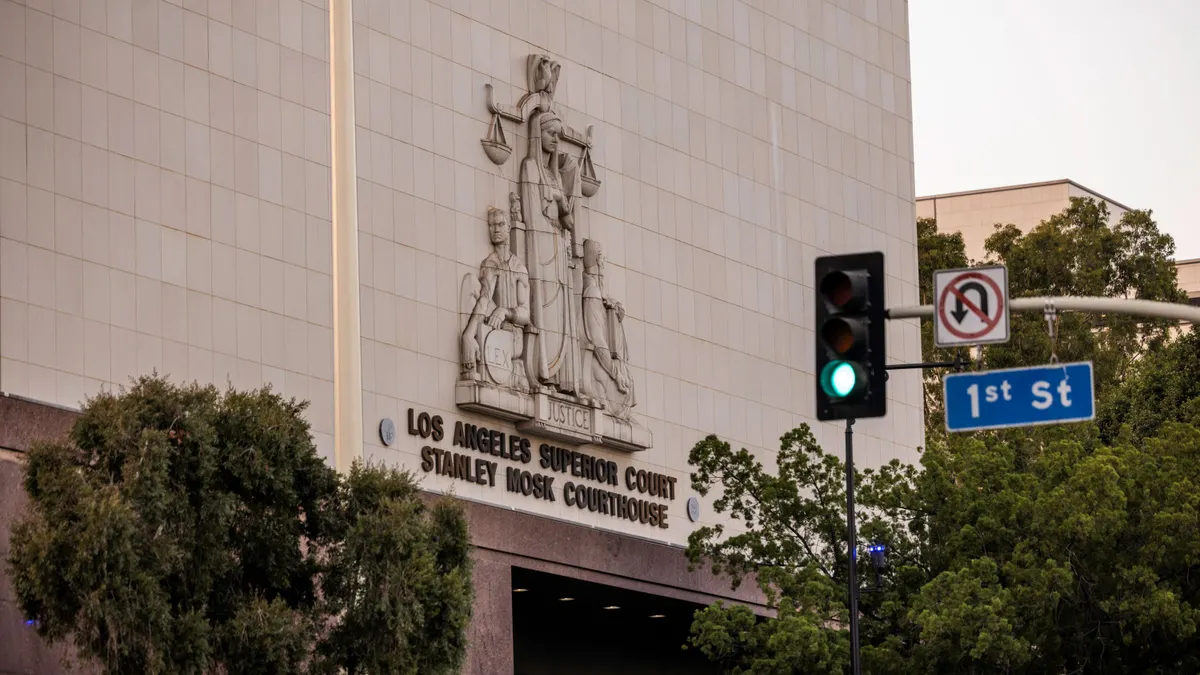
- A superior court judge in Los Angeles ruled that Pasadena Unified School District did not discriminate against Latino students when it closed three majority-Latino elementary schools in 2019.
- The lawsuit was filed in December 2022 by the Mexican American Legal Defense and Educational Fund on behalf of seven Latino parents whose children were impacted by the 2019 closures. The parents alleged the district violated the California constitution’s equal protection clause in addition to state anti-discrimination laws.
- Judge Randolph Hammock wrote in a tentative statement of decision on Jan. 13 that “nothing could be further from the truth” when the plaintiffs claimed there was “overwhelming, uncontested evidence” that the district’s school closure decision discriminated against Hispanic families.
Dive Insight:
Hammock’s ruling in favor of Pasadena USD comes as more public school systems are considering and approving their own closure and consolidation plans nationwide. These decisions come amid ongoing drops in enrollment, which have been fueled by factors including declining birthrates and growing school choice options.
Such closures can often lead to difficult conversations between district leaders and their school communities. Those contentious moments can even lead some school boards to reverse course and vote against proposals to close schools despite falling enrollment and related budget challenges.
In the case of Pasadena USD, the families’ complaint alleged the district’s closure decision had an “unjustified discriminatory effect on students from closing schools who are disproportionately Latino” versus other schools with a higher population of White students.
Specifically, the parents’ lawsuit said each closed elementary school in 2019 had “much higher” Latino student rates compared to the overall elementary school population in Pasadena USD.
Among the closed schools, 88% of Roosevelt Elementary students were Latino, 86% were Latino at Jefferson Elementary and 76% were Latino at Franklin Elementary during the 2019-20 school year. In that same period, 58% of Pasadena USD’s overall elementary student population was Latino, according to the lawsuit.
Those statistics, however, ignore “the obvious and undeniable fact” that every school at Pasadena USD serves a majority of Hispanic students, Hammock wrote in his tentative decision. “Thus, no matter what schools were closed, the majority of students in any of those schools would be Hispanic,” he said.
The plaintiffs claimed Pasadena USD failed to follow the California Department of Education’s guidance and best practices for districts seeking to close schools. Their complaint added that the district failed to give necessary transparency or notice during the process and comply with anti-discrimination laws, and that it did not protect Latino students from being disproportionately impacted by school closures.
Parents were notified of potential school closures one week before their formal approval by Pasadena USD’s school board, according to the complaint. Both the district and school leadership did not notify parents about the proposal, the lawsuit alleged.
“Simply put, on short notice, PUSD deprived hundreds of Latino children access to an equal education,” the lawsuit said.
But Hammock wrote in his tentative decision that the court rejected the plaintiffs’ assertion that race was the most predictive factor in a statistically significant way when the school board considered closures in this case. He added that the court carefully reviewed seven hours of Pasadena USD’s board meeting when members debated and voted on the elementary school closures.
“Race was never discussed at all during that lengthy meeting. Moreover, each voting member carefully explained his or her vote, and this Court finds that ‘race’ was not a motivating factor in this decision,” Hammock said.
Pasadena USD and MALDEF did not respond to requests for comment.
More school closure plans could be on the horizon for Pasadena USD after its school board approved a $233,300 contract with an education consulting firm in January to conduct a districtwide study on possible closures and consolidations.
The study is happening as Pasadena USD reported during a board meeting last month that Los Angeles County has lost 247,443 students between the 2015-16 and 2024-25 school years — that’s a roughly 16.2% decline. Total enrollment in the county decreased from 1,523,212 students in 2015-16 to 1,275,769 in 2024-25, according to Pasadena USD.