Dive Brief:
- Oklahoma Attorney General Gentner Drummond sued the Oklahoma Statewide Charter School Board on March 11 — the second time in three years — alleging the board abandoned a clear legal duty in its rejection of an application for a Jewish public virtual charter school.
- A previous bid by the state board to approve a Catholic public virtual charter school previously faltered in the U.S. Supreme Court. But Drummond alleges in his new lawsuit that the board failed to perform its duties by not publicly sharing all non-religious reasons cited for the rejection of the Ben Gamla Charter School Foundation's application beyond its inclusion of religion.
- Drummond claims the board did this purposefully "to avoid issues of state law" if Ben Gamla files a lawsuit aiming to return the issue to the Supreme Court, where a deadlock upheld the Oklahoma Supreme Court’s ruling against religious public schools.
Dive Insight:
Drummond previously sued the board in October 2023, seeking to stop the creation of St. Isidore of Seville Catholic Virtual School after the board approved the school’s application.
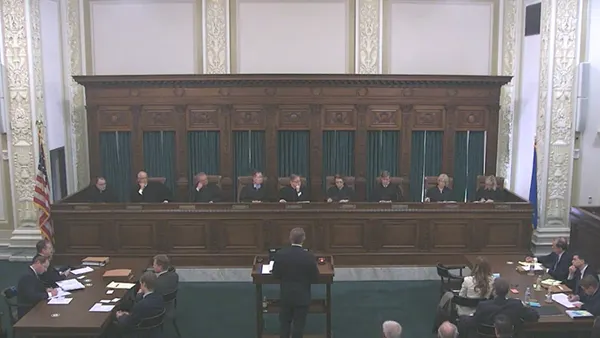
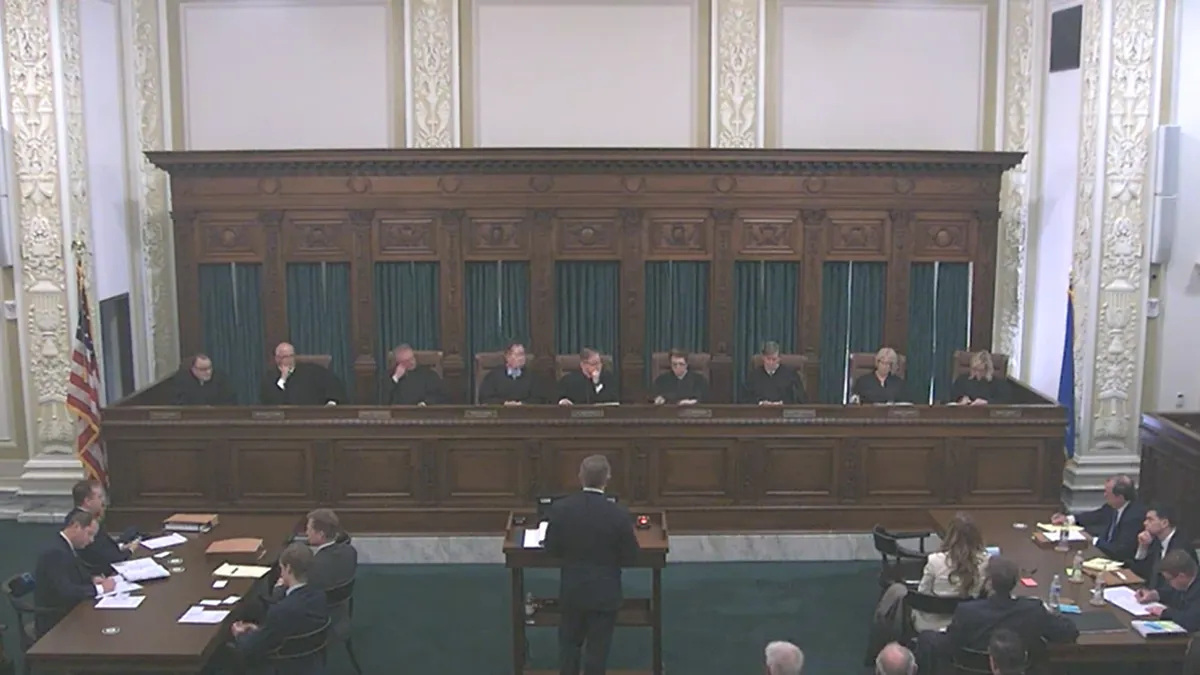
That lawsuit went to the U.S. Supreme Court that affirmed the Oklahoma Supreme Court’s ruling against the school via a deadlock due to the recusal of Justice Amy Coney Barrett. The decision temporarily settled an issue that experts predicted would later make its way back to the nation’s highest court.
Ben Gamla Charter School Foundation's applied for public charter status in December 2025, according to the lawsuit, on the heels of the Supreme Court impasse that ended St. Isidore’s bid to open.
When the Oklahoma Statewide Charter School Board rejected Ben Gamla’s application in February, the board’s chair said he hoped that it wasn't the end for the issue of religious public charters. Ben Gamla and conservative nonprofit the Becket Fund for Religious Liberty said at the time that they intended to sue over the issue.
Drummond said in his March 11 lawsuit that his claims in the latest case were separate from the St. Isidore Supreme Court decision. Instead, he seeks to bring forward all the reasons Ben Gamla's application was rejected — not just the religious ones — in case Ben Gamla sues over the religious grounds on which it was rejected.
Discrepancies in enrollment targets between Ben Gamla's November letter of intent to apply for charter status and the application it submitted in December, for example, were one potential basis for rejection raised during a March 9 meeting, according to the lawsuit.
Members only voted to reject based on religious grounds, however, and not those discrepancies.
"By deliberately limiting its rejection to the nonsectarian requirement, the Board has improperly engineered a record that omits independent bases for rejection," the lawsuit said. "To be clear, the Board's refusal to list all of the reasons for rejecting the revised application is not coincidental."
Drummond called the board's move "a deliberate decision designed to avoid issues of state law when Ben Gamla files a lawsuit" seeking to overturn the St. Isidore case's outcome.
The groundwork for both Ben Gamla's pursuit of a Jewish public school and the 2023 approval of St. Isidore's application for a Catholic public school was laid by two U.S. Supreme Court rulings: Carson v. Makin in 2022 and Espinoza v. Montana Department of Revenue in 2020.
The two cases together gave private institutions access to public funding regardless of their religious use or status, leaving the door open for the public funding of religious schools, including charters with religious instruction.





 Dive Awards