NASHVILLE — Superintendents’ roles require them to simultaneously put out fires and lead with grace, and it can sometimes become a challenge under that pressure to tap into what many describe as a valuable asset for their leadership: the human side.
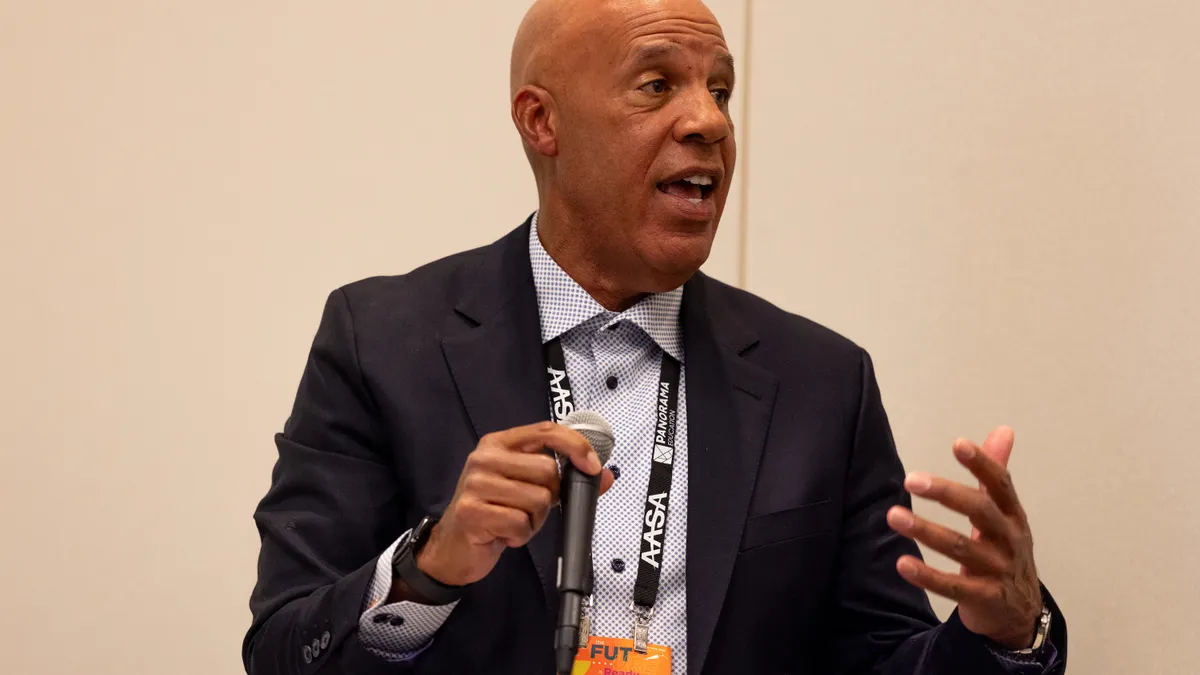
"I get vilified as 'the district,’" said Adam Clark, superintendent of California's Mt. Diablo Unified School District. "People don't understand that I attended the district. I raised children in the district."
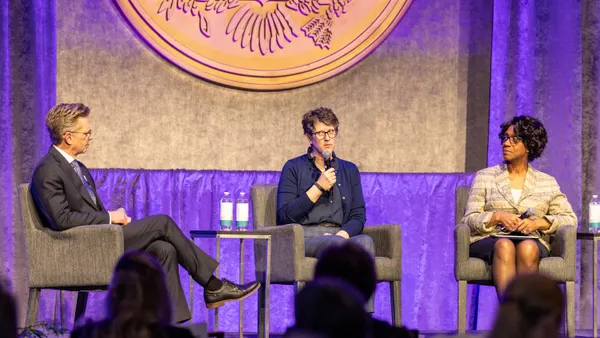
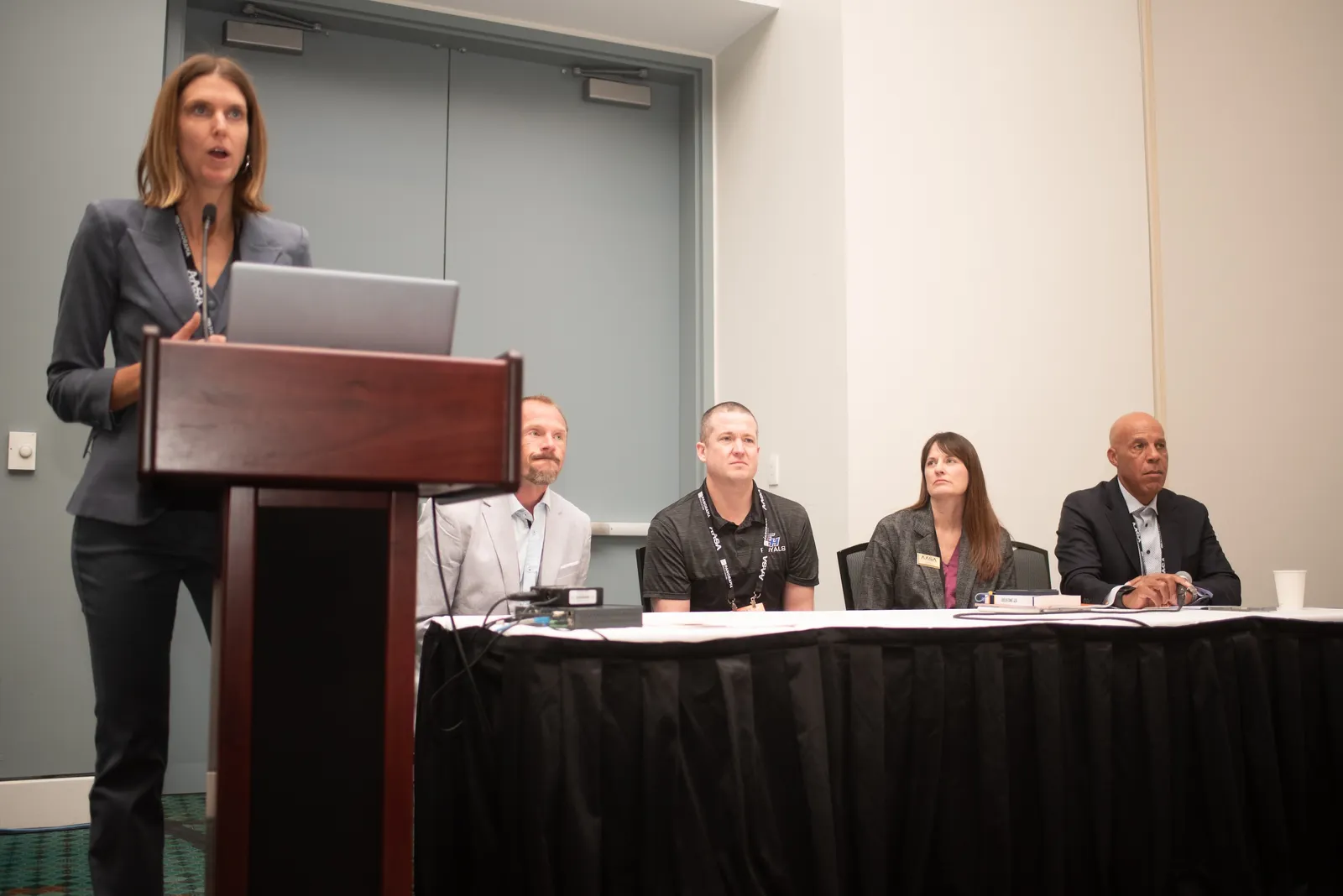
That sentiment was echoed by many others brimming in a conference room on Thursday in Nashville, Tenn., where Clark and three others shared their stories as part of the National Conference on Education hosted by AASA, The School Superintendents Association.
Leading with humanity may be all the more difficult as the superintendency becomes more political: 61% of superintendents listed the "intrusion of political issues and opinions" as one of 5 most common job stressors last year, according to an AASA survey of 208 districts.
Amid that charged backdrop, superintendents routinely answer to school board members, lawmakers, local leaders, parents and the broader community — all of whom can hold conflicting views.
"I think it's important for people to see us as humans," said George Philhower, superintendent of Eastern Hancock Schools in Indiana. "Because that's what we are."
Humility and self-reflection
First and foremost, speakers said, it's important to see yourself that way first.
"Sometimes the person we need to humanize to, is ourselves," said Philhower. "Sometimes when we're in this role, it's really easy to forget. The expectations of us creep into us."
Amid those expectations, it's never possible to please everyone, said Clark. "You're never gonna solve everything," he added. "It's inevitable when you work with people."
However, it's also important to be open to different viewpoints and admit when you don't know something or may be wrong, the superintendents said.
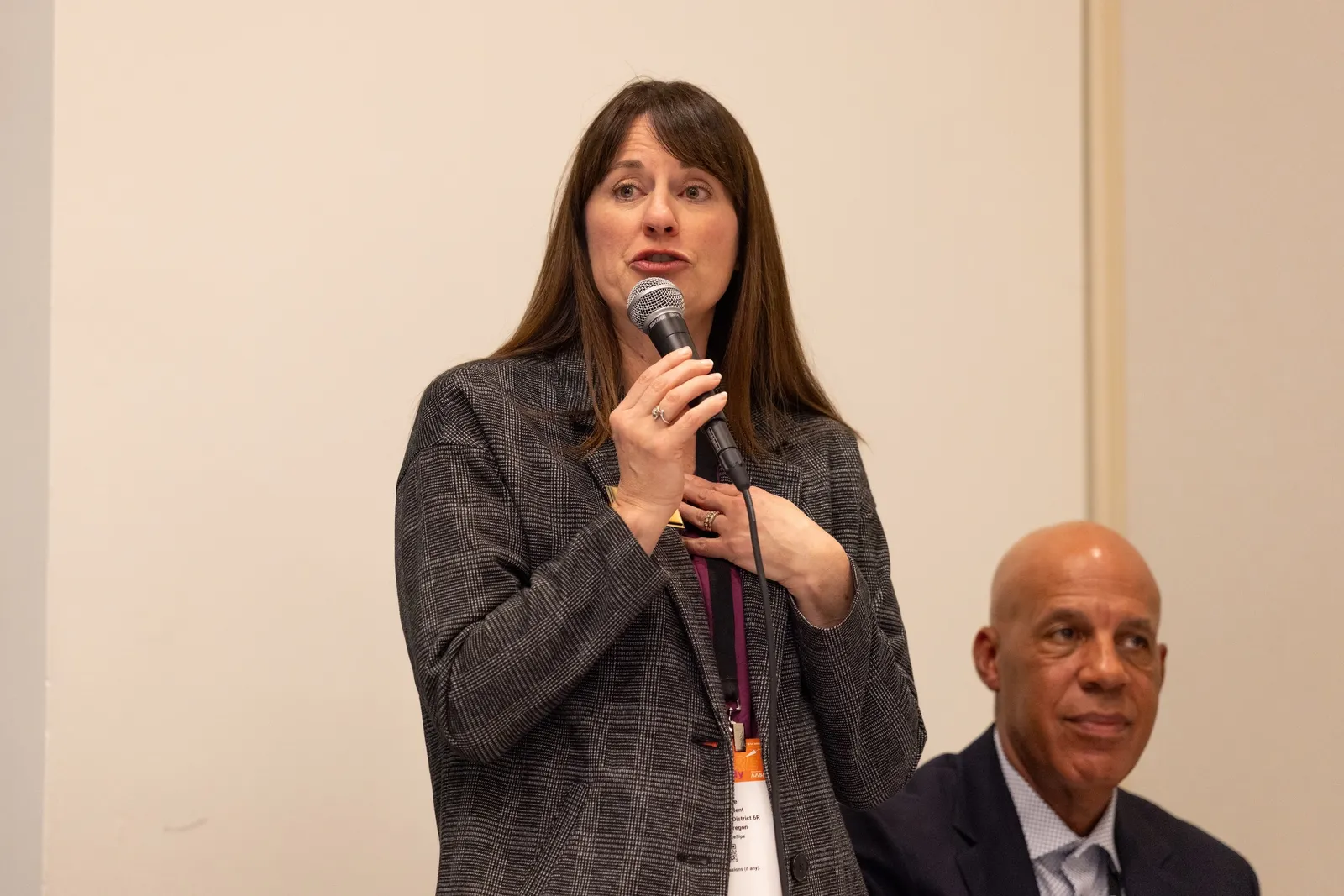
"I think it's too easy to get our egos in the way of the work," said Heidi Sipe, superintendent of Oregon's Umatilla School District. "I think we all want to think we know everything — and the reality is that's just not real."
Learn how and when to tell your story
Superintendents should also learn how to tell their district’s story in a way that appeals to the public's humanity, panelists said.
In Umatilla, for example, Sipe was able to approve a $10 million building remodeling project funded through a bond, partly by sharing stories with the community about the building's history.
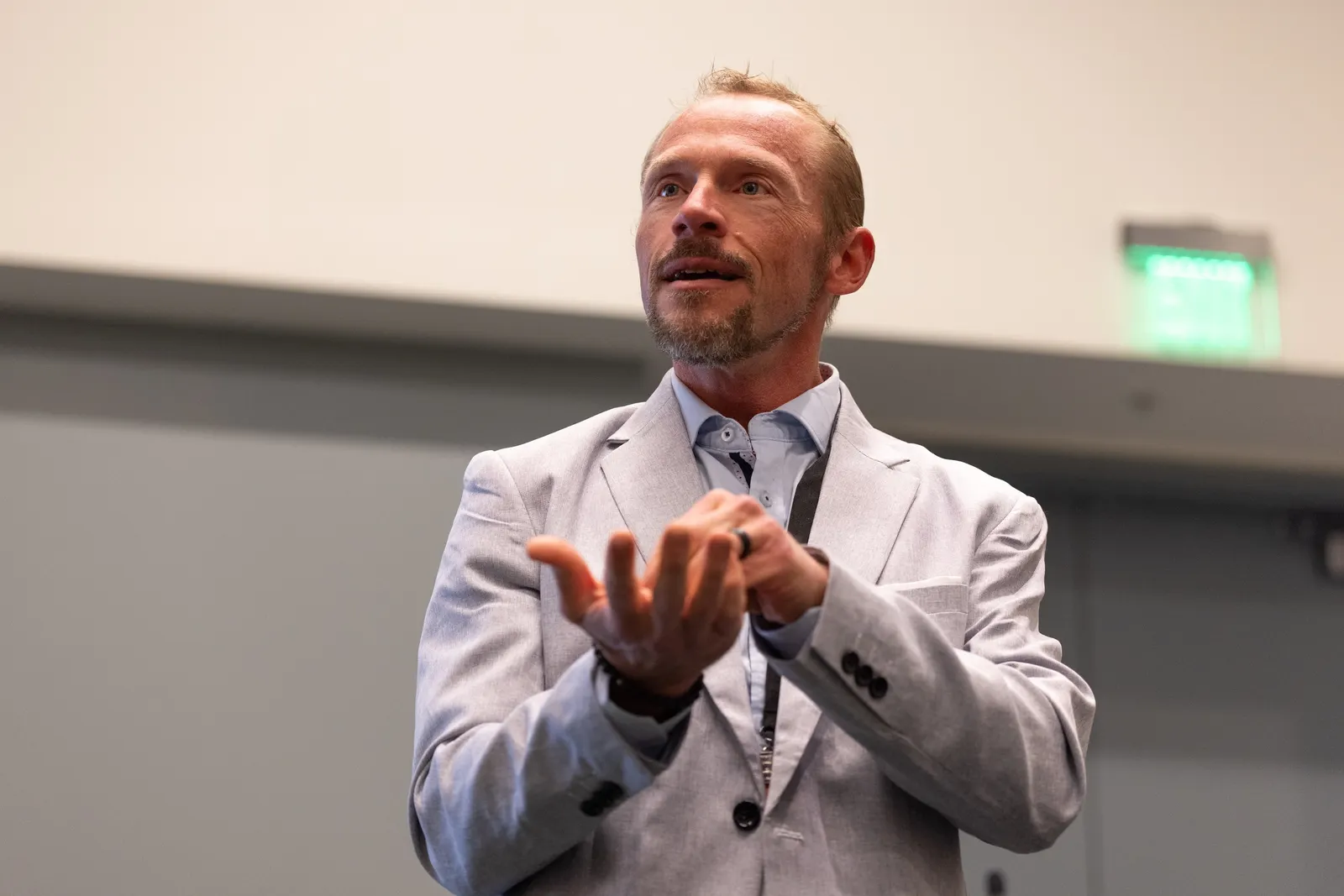
Superintendents may not always be savvy when it comes to telling stories — in fact, they're probably better at stating the facts. "We do book reports, and communities hate book reports," said Quintin Shepherd, superintendent of Pflugerville Independent School District in Texas.
"We have to be good storytellers, but we also have to read the room," said Clark. A "hot" school board meeting where a parent has questions or grievances, for example, may not be the best time to recount a childhood story, for example.
Invest time before tragedies and difficult circumstances
Ultimately, during the difficult decisions and hard times that superintendents have to navigate, it's the pre-established relationships that allow superintendents to lead with their humanity, speakers said.
Sipe said that she makes sure to reach out to community members when she knows they are going through something difficult, even if she doesn't know details, hoping that the kindness comes back around one day when she needs it.
For Shepherd, that happened during an incident that he said included his house being set on fire by another person. The first phone call he received was from a school board member, and for the next several days, his school board demanded from the local police department additional security around his house. It was "almost as if the entire community created this cocoon around my wife and I."
"All of us go through difficult times with our community," said Shepherd. "And if you are not compassionate before those hard times, then you are — your role and you — will be treated as such."