
Dive Brief:
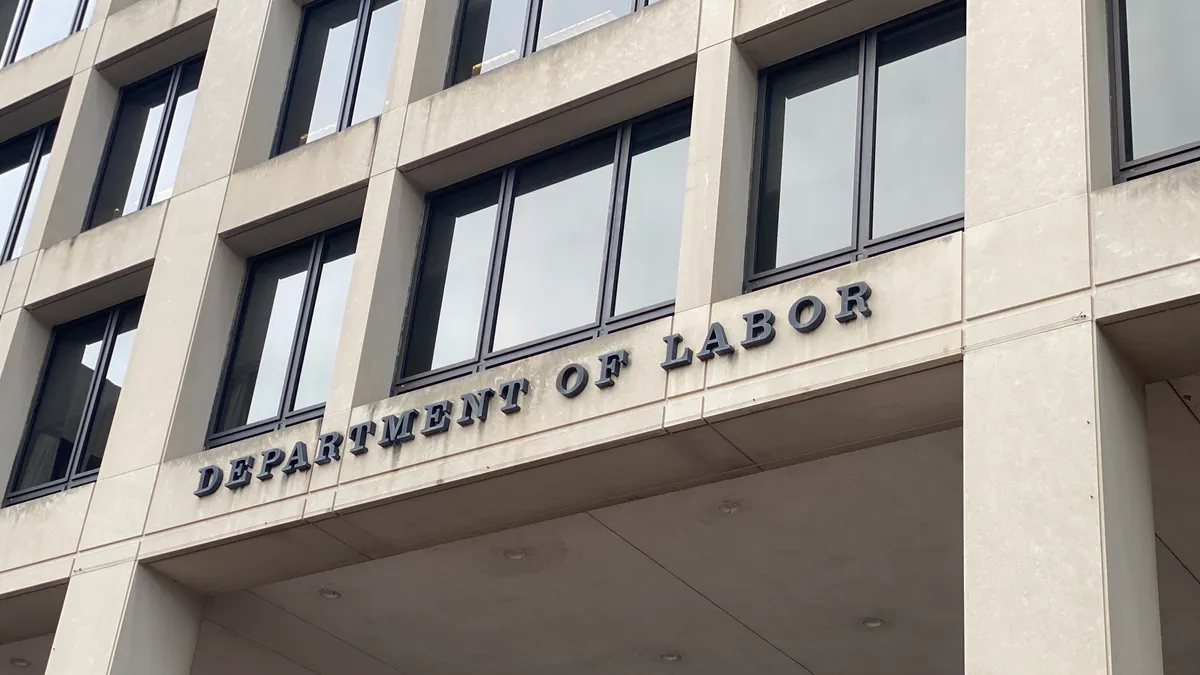
- Prevailing wage rates for H-1B visa holders and similar foreign worker classifications would increase under a proposed rule issued Thursday by the U.S. Department of Labor, reviving a previously abandoned effort initially put forth by the first Trump administration.
- The rule would raise each wage level of the four-tier system that is used by DOL to certify that an employer seeking to employ a foreign worker is offering pay that is at least equivalent to that paid to individuals with similar experience and qualifications, or the prevailing wage for the position, whichever is greater. Prevailing wage levels are represented as percentiles derived from the Occupational Employment and Wage Statistics survey.
- The proposed rule is not expected to impact schools’ ability to participate in H-1B visa programs given that salary schedules are determined for all teachers based on their experience and qualification, Tara Thomas, senior government affairs manager for AASA, The School Superintendents Association, said in a Monday email to K-12 Dive.
Dive Insight:
Under President Donald Trump, federal regulators have consistently sought to make the process of hiring skilled workers via the H-1B visa program more costly. DOL last issued — and the Biden administration would later rescind — a rule to increase prevailing wage levels in 2021.
The change is expected to cause disruption for employers, Brian Bumgardner, shareholder at Ogletree Deakins, said in an email to HR Dive.
DOL’s second attempt bears some similarities to its first, though this time around, the agency chose OEWS percentiles that are lower than those selected in the 2021 rule. But the adjustments would still result in substantial increases for employers, Bumgardner said, with tens of thousands in additional dollars expected to be paid to candidates depending on experience.
The proposal follows Trump’s proclamation last year directing the U.S. Department of Homeland Security to impose a $100,000 fee on all new H-1B visa petitions.
While the administration’s proposed rule on prevailing wage rates would likely not affect schools, Thomas said that AASA remains very concerned that the $100,000 fee is harming districts’ ability to address teacher shortages.
“This fee makes the program entirely out of reach for districts that rely on it to address staff shortages in their schools,” Thomas said. “The loss of this option will mean larger classrooms and students not having the teachers they need.”
Thomas added that districts are using “every intervention available to build a local education workforce and ensure that every classroom has highly effective educators.” That includes the recruitment of international teachers in addition to the investment in grow-your-own educator programs and strategic staffing models, she said.
Multiple stakeholders have sued the administration seeking to block the fee, challenging its legality. One of those lawsuits filed by Democratic-led states cited public schools, university-level research institutions and healthcare systems as entities whose operations are particularly under threat by the $100,000 fee.
But only one court has issued a ruling on the matter so far, and in that decision, a federal judge held that Trump did not exceed his constitutional authority in issuing the fee proclamation.
Elsewhere, DHS revived other efforts to incentivize higher pay for H-1B workers, proposing a rule last September that would adjust the agency’s lottery for selection of H-1B petitions to weight the process in favor of petitions that offer higher wages.
In a press release, DOL said the prevailing wage rule is a necessary step to modernize skilled worker visa programs. The agency claimed that prevailing wage levels have long been set too low below the market rates that American workers would receive, particularly early-career and entry-level workers.
“This proposed rule will help ensure that employers pay foreign workers wages that reflect the real market value of their labor, in addition to protecting the wages and job opportunities of American workers,” Secretary of Labor Lori Chavez-DeRemer said in the release. “The continued abuse of the H-1B program by certain bad actors will no longer be tolerated.”
The prevailing wage rule is “another brick in the wall” in terms of additional costs to employers sponsoring H-1B visas, Bumgardner said. But employers should note that the proposal would allow interested employers to use private survey wage data as an alternative to the OEWS data utilized by DOL.
“We find that data from common surveys is more precise than OEWS data, with more than four levels (often six to eight) and specific to industry,” Bumgardner said. “I am hopeful this option will remain on the table when the final rule is published.”
DOL has set a 60-day period for public comment on the proposal with a deadline of May 26, 2026.