CHICAGO — Identity. Resilience. Socialization.
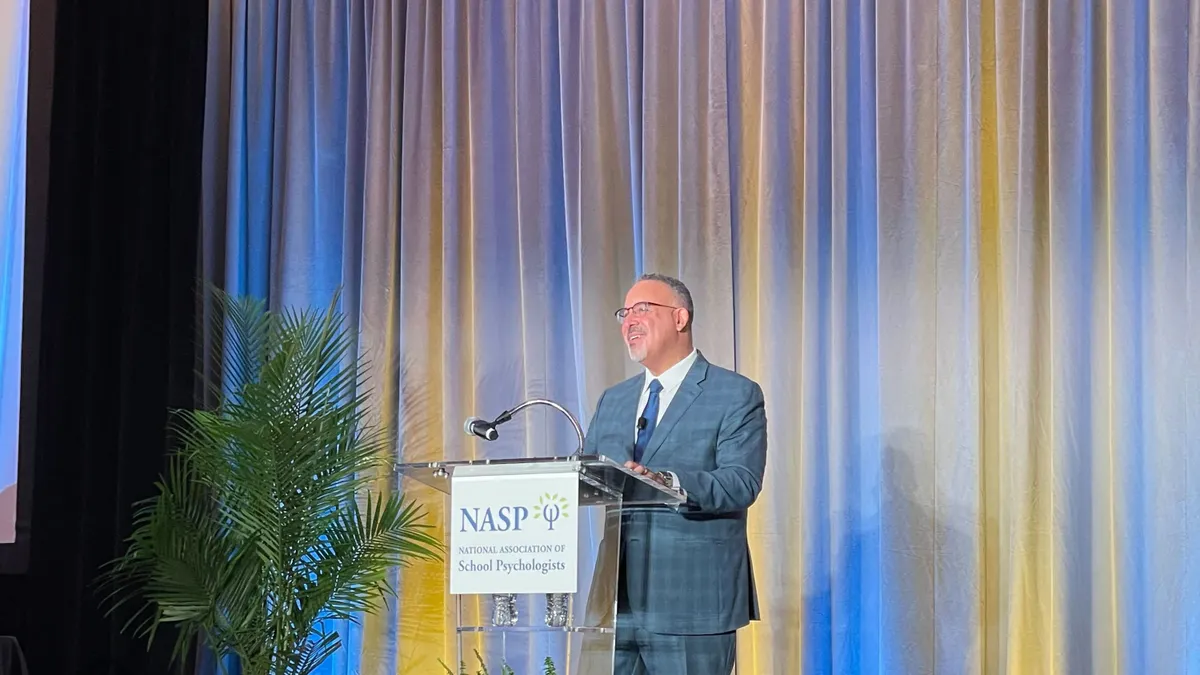
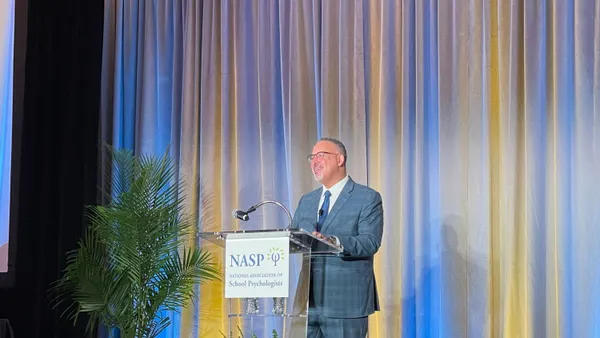
These are traits that school psychologists are focusing on in shaping culturally responsive approaches to use with students — thanks to increased racial representation in the field, attendees at the National Association of School Psychologists’ annual conference were told Thursday.
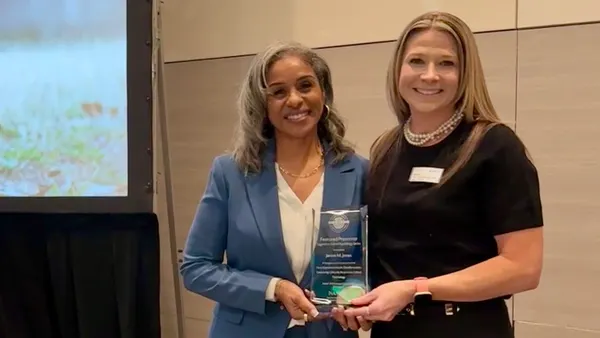
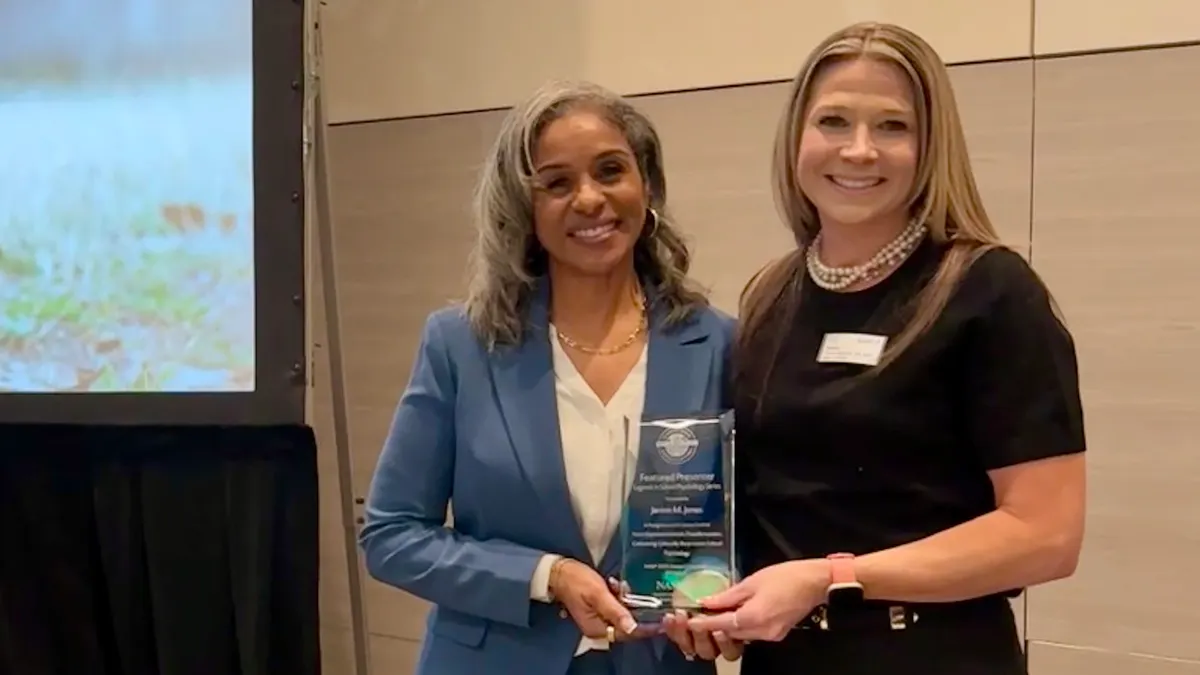
“Representation shifts what is researched, what's discussed, what's valued and what's shared,” said Janine Jones, associate vice chancellor for graduate affairs and a professor of school psychology at the University of California, Santa Barbara, who delivered the association’s 2026 Legends in School Psychology address. “And when we integrate diverse perspectives, we disrupt the norm and we create something new.”
As a result of greater diversity in both research and practice, Jones said, school psychologists have learned the following six lessons to encourage educators and psychologists consider the "whole child" that they're working with.
Family input is key
Including family members in conversations about a student is key to informing appropriate advocacy, accurate storytelling and optimal interventions, Jones said.
The broader the array of voices involved in this process, the better that psychologists and educators will understand the child.
“If you're not spending time building a relationship with those individual people who are around the child we're working with, we're missing the boat,” Jones said. “We're missing who they really are.”
Start with strengths
Beginning an intervention by measuring a child’s strengths rather than their weaknesses can give schools a head start in improving the outcomes, Jones said.
“If we start with good stuff, it means that you're leading with empowerment,” Jones said. “You are less likely to have bias infused in the interventions that you choose, and you have a higher likelihood of success.”
This can be difficult, she said, because the school psychology field tends to be deficit-focused. “When you start with that weakness, you're likely to start with a bias,” Jones said. But starting with strengths provides a foundation to build on, rather than starting with a weakness and trying to navigate backward and then figure out how to move a child forward.
Don’t underestimate implicit bias
The first step toward building healthy relationships, Jones said, is recognizing your own implicit biases.
“We all make mistakes related to implicit bias, because we are human, and we operate from a place of our own experience. We can't help it,” Jones said.
It’s crucial to recognize that people can make snap decisions in a millisecond based on their own experiences and knowledge, but that their experiences don't always match those of the person in front of them, Jones said. It’s the school psychologist’s job to get to know the student in a way that feels like connecting with that student’s true self, rather than making decisions based on a judgment that is framed by the psychologist’s experiences.
“If you don't act on any implicit bias, if you just pause, think and take in as much data as you can before you act, you're good,” she said.
Recognize the power of racial identity and socialization
Understanding how young people view their racial identities and how those identities inform how they socialize with peers can give school psychologists powerful indicators of their ability to adapt, Jones said.
This, she said, can include asking questions about how their racial identity impacts the way they connect with others or interact with the world around them.
“These are questions that people are afraid to ask, but they're critical,” Jones said. “You miss a whole aspect of who they are if you don't give them the opportunity to share.”
Likewise, she added, if a student is describing experiences with stereotyping, a school psychologist might ask how they think people are stereotyping or judging them.
Then, Jones said, “You can offer counter-narratives. “You can look at them and say, ‘That's not what I see. This is what I see in you. This is what you've told me about yourself. This is the way that I perceive you, and I think other people can perceive you that way, too.’”
Understand a cognitive assessment’s flaws
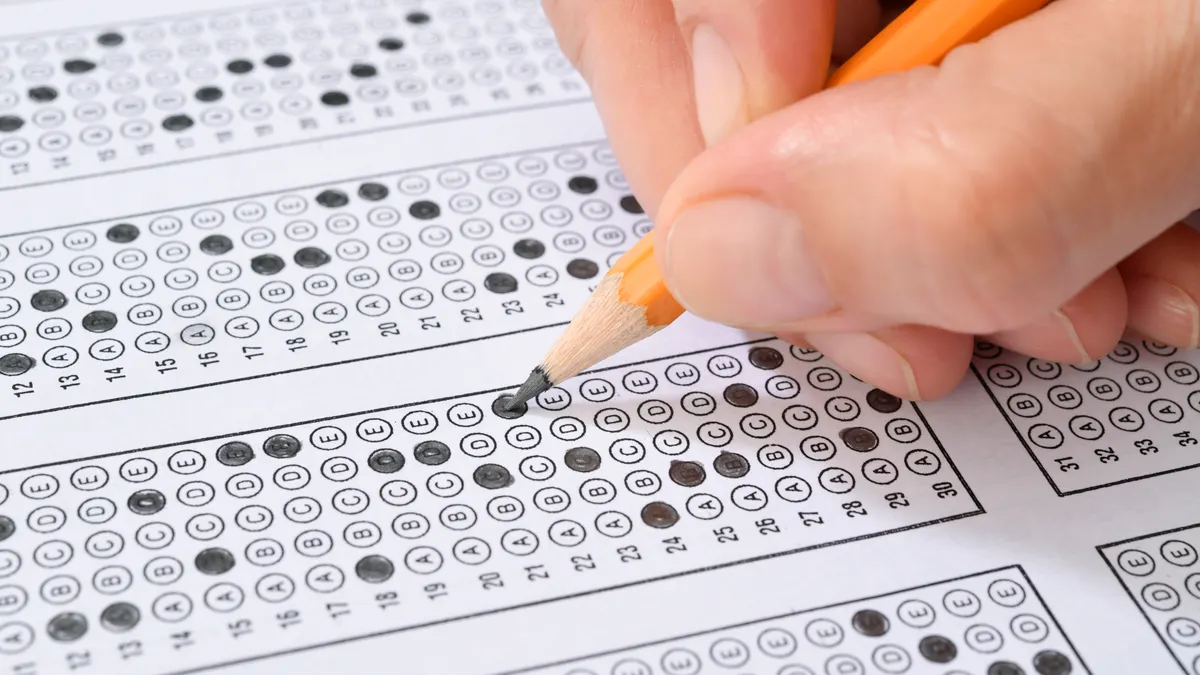
Though most school psychologists were trained that certain tests are key to getting an indicator of a student’s innate ability, these tools aren’t without their shortcomings, Jones said. “What we know is that there are big discrepancies between mean scores for subpopulations, and they have not closed the gap for some tests.”
If a gap in mean score differences for an ethnic minority group is wide on a given test, for instance, psychologists should consider the test's methodology, including its sampling.
“We have to make choices,” she said. “We have to decide what is going to give the best indicator of this person's skill set at this moment in time.”
IQ tests, for instance, represent a moment in time and aren’t permanent, Jones said.
Jones drew from her own experiences, sharing how when she was a graduate student, an instructor showed mean IQ scores for various racial populations on the board. For Black people, the mean score shown was 75.
“I was sitting there, and I was [thinking] like, ‘Everybody in here thinks my IQ is 75. What do I do? What do I say?’” Jones said.
One person in her cohort happened to work for the company that had developed the assessment being discussed and spoke up to say that the mean score differences disappeared when accounting for maternal education and socioeconomic status.
“There was beauty in the fact that someone had the confidence in that moment to stand up and say something,” Jones said. “We all need to recognize that if you were trained ‘This is the right way, this is the only way,’ just know that it's doing harm to some people, because it's not actually representing their abilities.”
Know when behaviors are reactions to stress
Research shows that recognizing why someone is behaving a certain way results in more empathy and understanding for that person, Jones said. In turn, that increases the likelihood of designing an intervention that addresses the root problem — and not just the behavior.
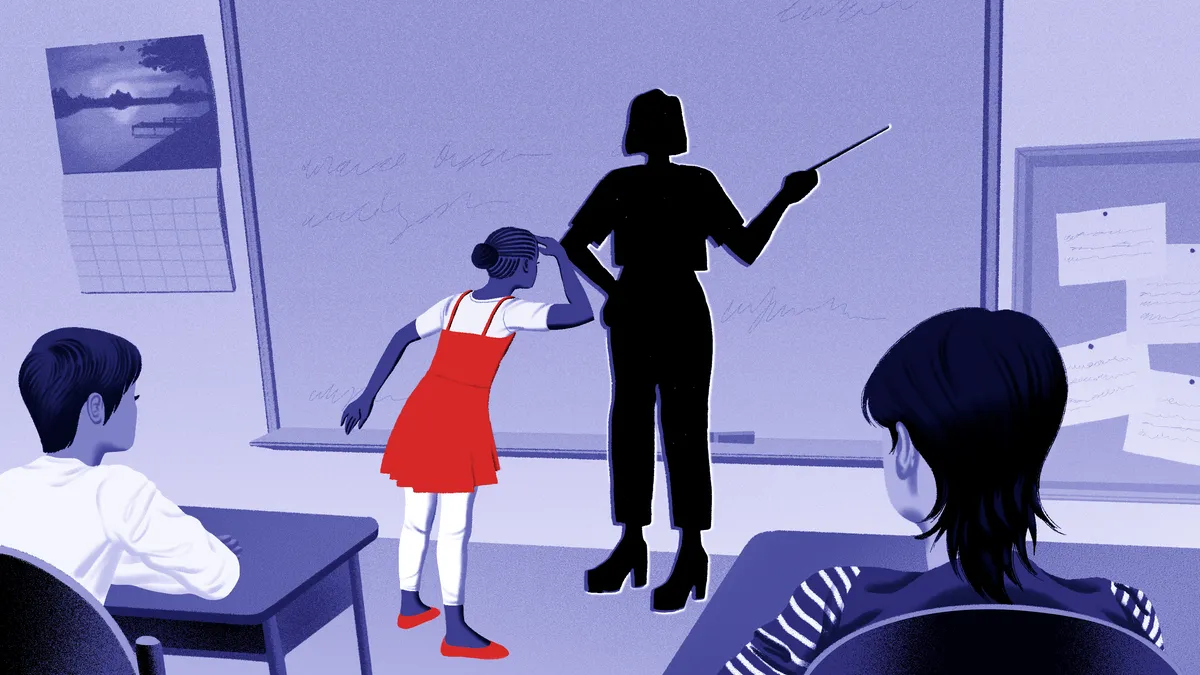
“If you think about what are the things that get kids kicked out of classrooms, kicked out of school, and you don't think about why they're doing what they're doing, you're missing it, because you're just reacting to the behavior,” Jones said.
Consider the child who is going hungry or witnesses a family member get shot and still comes to school, she said. Their behavior can be affected if they feel they have nobody to talk to and don’t know that help or support is available at school.
“They're really just unseen. They're just existing,” Jones said. “So instead they're outspoken, or they're disrupting the teacher, or they're hanging out in the hallway and not getting themselves into the room.”
Dealing with that behavior without knowing what got them there overlooks the fact that their continuing to come to school at all shows their adaptability, she said. “They need advocacy. They need support. But if we don't ask the questions and we just react to the behavior, we're never going to know.”




 Dive Awards