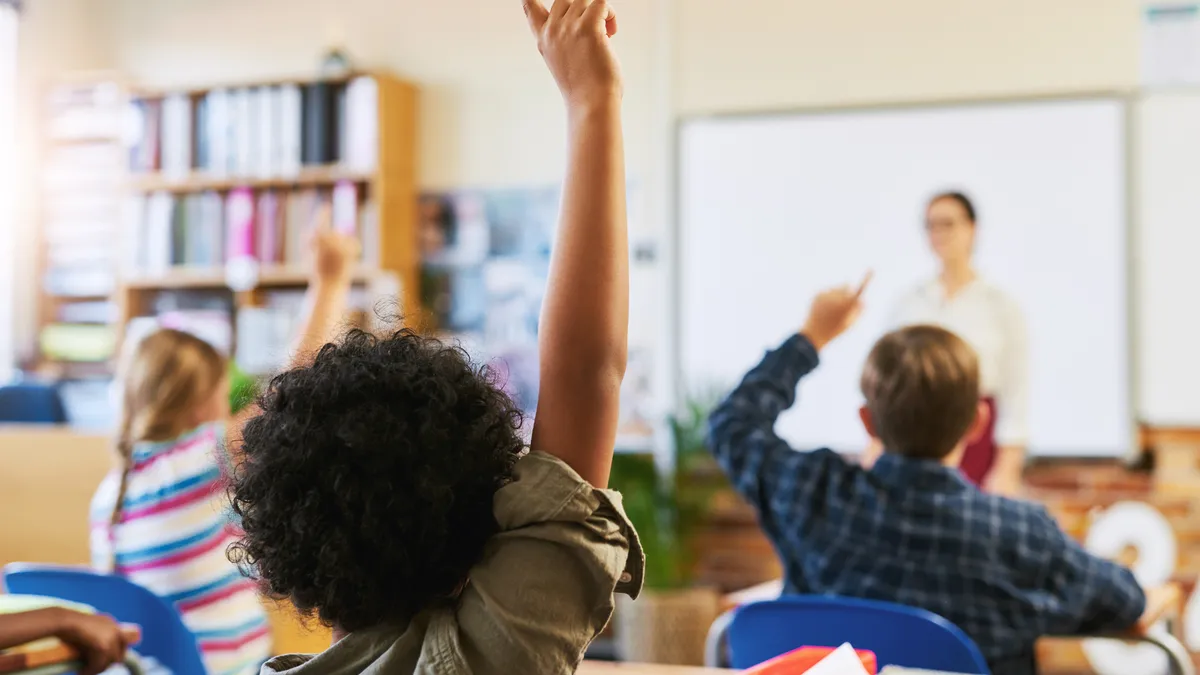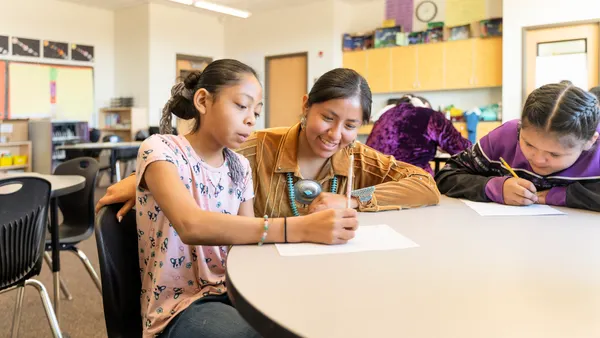

The "new early learner" arrives at school with different needs, different expectations, and greater complexity. These students will grow up in a world defined by constant change, emerging technologies, and volatile career paths. They will need to process information differently, adapt more quickly, and continuously learn throughout their lives. Their success will not depend solely on what they know, but on their ability to remain curious, resilient, creative, and adaptable in the face of uncertainty.
We are serving a new kind of learner in spaces designed for an old model. Further, the attention and investment needed to adequately support these learners has failed to match the demand for it. If we want to adequately prepare students for the future, we must rethink the environments where learning begins.
Designing for How Young Children Actually Learn
Early learners don't sit still. They learn by moving, touching, exploring, imagining, and interacting with the world around them. Every moment is an opportunity for discovery. A conversation with a classmate becomes a lesson in communication. Building a tower becomes a lesson in problem-solving. Outdoor play becomes an exercise in collaboration, risk assessment, and resilience. For young children, cognitive, social, emotional, and physical development are happening simultaneously, making the learning environment itself an active participant in the educational experience.
Yet too often, early childhood programs are placed into scaled-down versions of elementary classrooms or retrofitted spaces that prioritize convenience over experience.
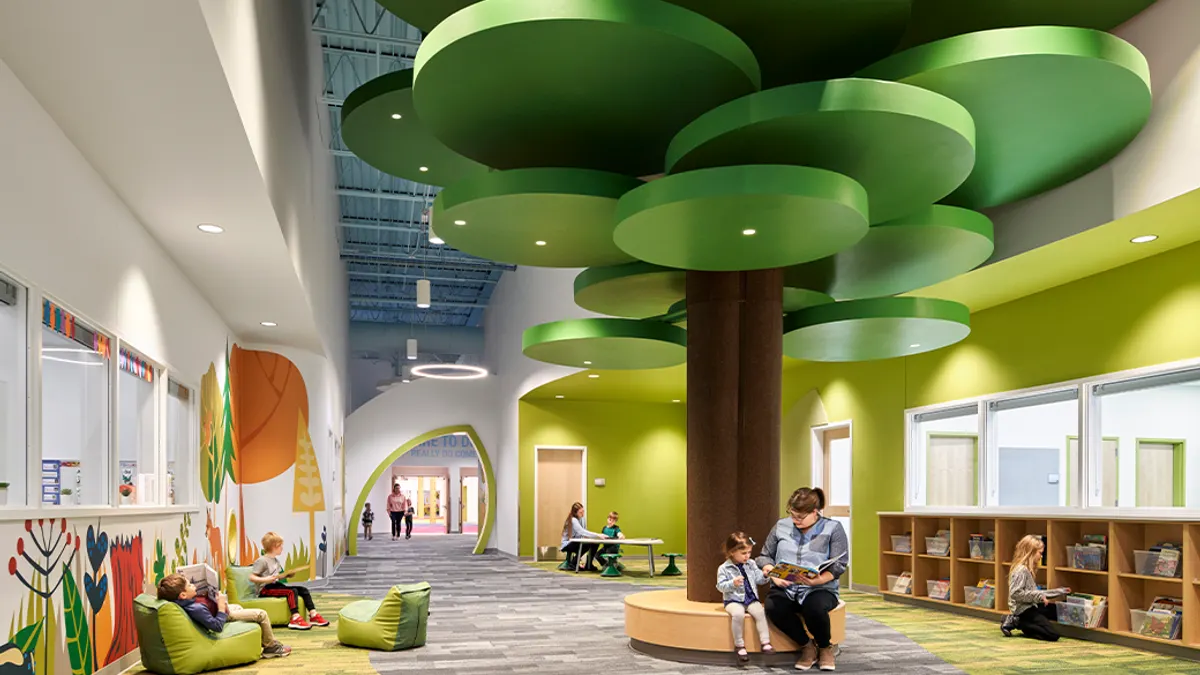
Purpose-built early learning environments are designed around the unique ways young children experience the world. Classrooms become ecosystems of discovery, offering opportunities for imaginative play, sensory exploration, storytelling, making, movement, and quiet reflection. Furniture, fixtures, makerspaces, and learning tools are scaled to the child, helping them develop confidence and independence as they navigate their environment. Access to nature, outdoor learning, and age-appropriate play-based experiences further support healthy development while fostering curiosity about the world around them.
When environments are intentionally designed to be welcoming, stimulating, and developmentally appropriate, young learners feel safe enough to explore, comfortable enough to belong, and confident enough to learn. Those early experiences help establish attitudes, behaviors, and relationships associated with learning that can last a lifetime.
Creating Learners for Life
The most important outcome of early childhood education isn't kindergarten readiness. It's creating a perpetual cycle of wonderment, inquiry, and adaptability.
Today's early learners will enter a workforce that looks dramatically different from the one we know today. Many of the jobs they will hold have not been invented yet. The industries they will lead may not exist. Twenty years ago, few students were preparing for careers centered on artificial intelligence. Today, AI is reshaping nearly every industry. The next transformation is already on the horizon.
That reality should influence how we design for our youngest learners. The goal isn't to prepare children for a specific job. It's to develop intuition, creativity, resilience, and problem-solving skills that allow them to continuously learn and adapt. Supportive early learning environments invite exploration rather than passive consumption. They encourage inquiry-based learning, providing opportunities for children to ask questions, test ideas, make mistakes, and try again. In doing so, they help shape learners who are comfortable navigating ambiguity, failure, and change.
The districts making the greatest impact understand this distinction. We are not simply designing spaces for today's curriculum. We are creating environments that help students become agile learners capable of evolving alongside a rapidly changing world. The most valuable skill we can give the next generation may not be what they learn, but their ability to keep learning.
The Opportunity We Can't Afford to Overlook
When conversations about future readiness happen in K-12 education, they often focus on high school programs, workforce development, and career pathways. Those investments matter. But the foundation for all of them is built much earlier.
The most impressionable learners in our schools are developing skills that shape how they engage with learning, navigate change, and pursue opportunities throughout their lives.
That's why early learning environments deserve the same strategic attention we give to career programs and workforce readiness initiatives. The skills required for tomorrow's careers may change, but the proficiency to learn, adapt, and grow will always matter.
If we are serious about preparing students for futures we cannot yet predict, we must start where the future starts. By prioritizing our youngest learners, we aren't simply investing in school readiness. We are investing in lifelong success.