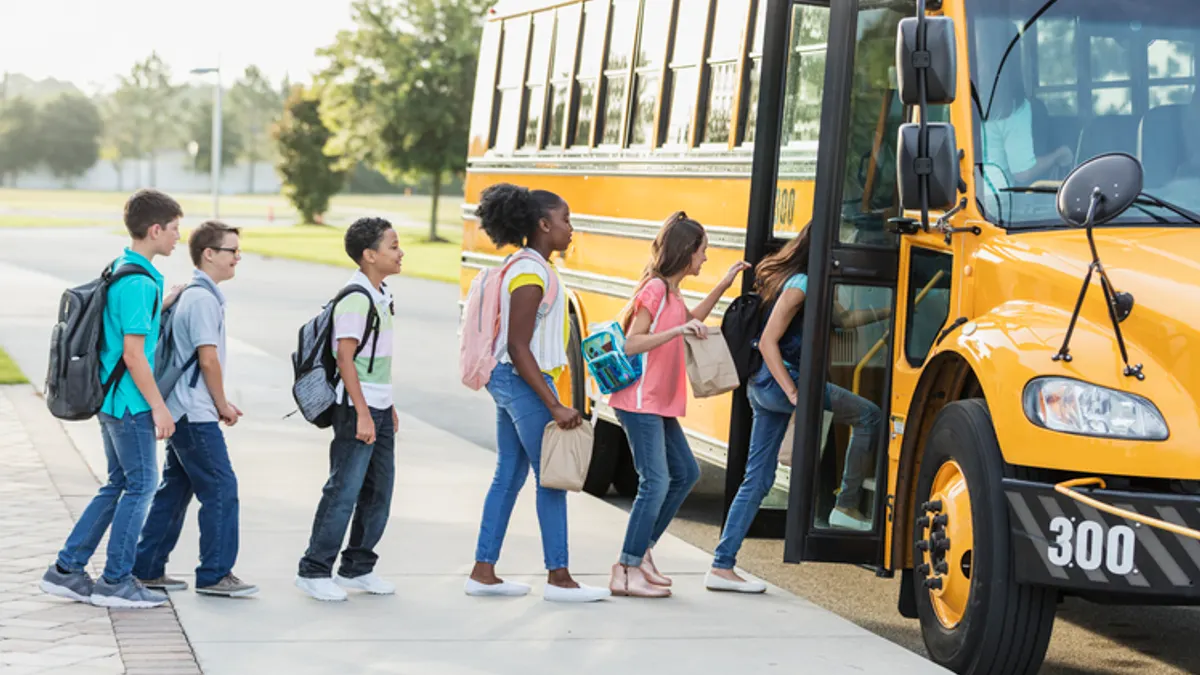

It doesn’t take much to trigger parent anxiety around school transportation. In an era when consumers can track packages, food deliveries and rideshare drivers in real time, parents expect the same visibility for their child’s school bus—and grow anxious when that’s not possible.
When districts can’t provide that visibility, transportation coordinators often face a flood of parent calls inquiring about delayed buses, confused pickup or drop-off locations, safety scares and reports of concerning behavior on the bus. Each inquiry requires minutes of investigation—time that quickly adds up and pulls staff from core responsibilities while parents wait for answers that should be instant.
In response, a growing number of districts are deploying real-time visibility into student transportation and discovering it does more than calm anxious parents. It also creates measurable operational gains.
When Districts Can’t Answer “Where’s My Child?”
The ripple effects of poor visibility reach well beyond day-to-day frustrations. When parents can’t get immediate answers about bus delays, route changes or missed stops, their concerns escalate—sometimes to social media where speculation spirals into distrust or even to local law enforcement, creating additional strain on community resources.
For transportation teams, the burden is relentless. Without real-time data, every inquiry becomes a time-consuming investigation as staff piece together information from multiple sources. Meanwhile, parents wait for answers that feel like they should be instant in an age when we can track food deliveries to the minute.
The burden often extends beyond the transportation department: Eight in 10 surveyed administrators say their staff needs to divert time from core duties to support transportation needs, with 54% doing so at least weekly. With persistent driver shortages leaving districts with fewer hands on deck, every hour spent fielding preventable inquiries compounds the strain.
A New Standard for Student Transportation
Districts that have solved these challenges share a common approach: they’ve moved beyond traditional GPS to embrace comprehensive, real-time visibility systems. Effective solutions share several core capabilities that are quickly becoming the new baseline for student transportation.
Unlike legacy systems that lag or lose signal, modern live GPS and ETA integrations deliver precise bus locations and arrival estimates directly to parent apps, eliminating guesswork and preempting anxious phone calls.
Beyond location tracking, ridership systems using contactless card readers log boarding and disembarking instantly. Parents receive confirmation that their child is safely on board, while administrators gain seamless Medicaid reporting data without manual entry.
When incidents do occur, instant video retrieval transforms response times. Administrators can access footage in seconds, closing investigations quickly and giving parents answers while concerns are fresh.
Even better than fast incident response is prevention. When risky behaviors like cell phone usage or distracted driving occur, in-cab alerts enable administrators to coach drivers and intervene before issues escalate.
Real-World Impact: Berkeley County School District
Berkeley County School District in West Virginia offers a compelling example. Transporting 17,000 students daily across 200+ school buses, the district faced a familiar problem: Parents frequently called about safety concerns and delays, with each inquiry consuming up to 15 minutes to investigate. Their existing GPS couldn’t accurately pinpoint bus locations and legacy cameras captured limited footage that took hours to review.
After deploying Samsara’s dual-facing AI dash cams and real-time GPS tracking, the results were immediate. Time spent reviewing footage dropped from hours to less than 20 minutes per inquiry. Streamlined parent communications now save administrators 10+ hours each week.
“We’ve saved so much time through Samsara’s real-time feedback and video retrieval,” said Eric Keesecker, executive director of school transportation. “Now, if we get a call from a parent about a delay, we can go into Samsara and tell them exactly where the bus is.”
Vetting Potential Solutions: What to Ask Before You Buy
When evaluating potential technologies, knowing what questions to ask helps steer you toward your best-fit solution. Successful implementations begin by identifying which capabilities matter most to parents and administrators, such as real-time location accuracy, student boarding confirmation, rapid video access and proactive driver safety features.
Ask vendors how their solution handles GPS accuracy and addresses limitations like signal delays. Request demonstrations showing how quickly staff can retrieve footage—seconds versus minutes matter when managing multiple inquiries.
Just as important, consider integration with existing parent apps, support for compliance needs like Medicaid reporting and the level of training and post-sale support provided. Finally, request references from districts with similar size and transportation challenges and ask specifically how the vendor’s solution helped those districts solve problems like yours.
Moving Forward
Districts that excel at student transportation safety understand that real-time visibility is now a fundamental requirement. When parents can track their child’s bus as easily as they track a package, anxiety decreases and trust builds. And when administrators can answer questions in seconds, they reclaim time for higher-impact activities.
The technology exists, implementation models are proven and its impact is measurable. What remains is a straightforward decision: Modernize transportation visibility sooner or spend another year managing preventable crises.
Discover how Samsara provides schools with real-time data for smarter, safer and more efficient transportation.