This audio is auto-generated. Please let us know if you have feedback.
Most clicked story of the week:
A U.S. Department of Education negotiating committee agreed to a proposal last month that excludes education — among other programs — from being considered a “professional degree,” according to the National Association of Student Financial Aid Administrators. The lack of that designation would mean a lowered cap on federal student loans available to certain graduate students, as approved in the “One Big, Beautiful Bill.” The definition as it applies to those federal loan limits is not final and will be open for discussion and public comment when a proposed rule is published in the Federal Register as the agency finalizes the regulation early next year, according to the department.
Number of the week:
59%
The percentage of superintendents who plan to remain in the superintendency in the next five years, according to a mid-decade survey of superintendents conducted by AASA, The School Superintendents Association. That’s up from 51% in 2010. Additionally, some 89% of superintendents said they were currently satisfied or very satisfied in their job, down slightly from 92% in 2020.
Schools face tech challenges on several fronts
- In a Dec. 2 hearing, the House Commerce, Manufacturing and Trade subcommittee discussed nearly 20 bills seeking to address the harm that social media poses to children and teens. Legislators and witnesses stressed the urgent need for Congress to solve this issue, calling attention to various pieces of legislation on updated federal protections for children and teens online that have been pending for years.
- The Federal Trade Commission announced Dec. 1 that it will require Illuminate Education to implement a data security program to settle allegations that the ed tech company failed to protect student data, leading to a December 2021 breach that exposed personal information of over 10 million students.
- How soon should students be learning how artificial intelligence works and how to use those tools? Some experts say as early as kindergarten or 1st grade. Even in kindergarten, “students are starting to recognize patterns,” said Jake Baskin, executive director of the Computer Science Teachers Association. “Machines are looking at and recognizing patterns to make their decisions. … By 1st grade, students are investigating how patterns can be used by people.”
Federal education policy in the spotlight
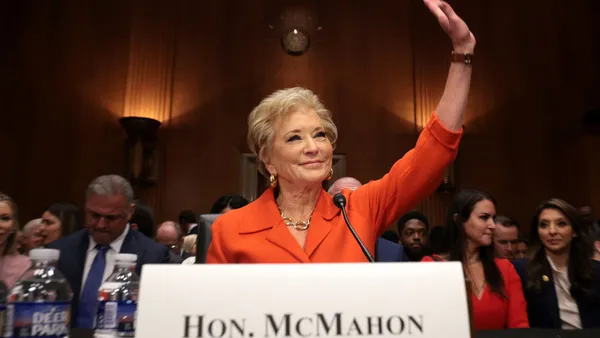
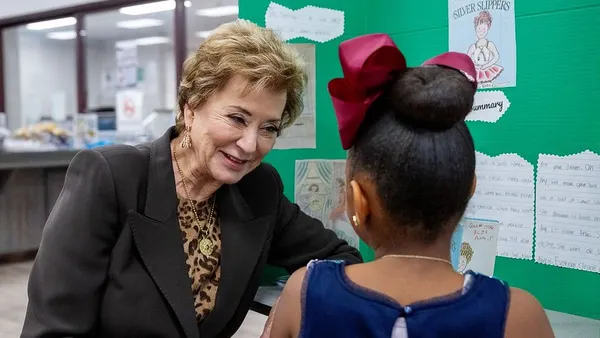
- U.S. Education Secretary Linda McMahon and Virginia Gov. Glenn Youngkin marked the 50th anniversary of the Individuals with Disabilities Education Act in a Dec. 1 visit to Winding Creek Elementary School in Stafford, Va., touting accomplishments in special education programs across the nation and in the state. “I offer a special thank you to everyone here today, teachers, leaders, parents — so important, our parents — and especially students, for showing the whole country how IDEA has helped students learn, grow and be successful,” McMahon said of the law signed Nov. 29, 1975.
- The U.S. Department of Treasury and Internal Revenue Service are collecting comments from the public on a new federal school choice tax credit program that will provide funds for K-12 services, including private school tuition, according to a Nov. 25 announcement by the IRS. The public comment period, which precedes the formal rulemaking process, will end Dec. 26 and seeks input on factors such as policies and procedures guiding the scholarship-granting organizations that will distribute the funds.




 Dive Awards