This audio is auto-generated. Please let us know if you have feedback.
Most clicked story of the week:
At least five states are considering legislation to limit or ban ed tech to some extent in classrooms, going beyond existing pushes to bar students from using personal devices during the school day.
Those states include Kansas, Missouri, Tennessee, Virginia and West Virginia. In Tennessee, for instance, HB 2393 would ban public school districts and charter schools from allowing students in grades K-5 to access digital devices during the school day and would prohibit employees from using digital devices for instruction in those grades.
Number of the week:
372
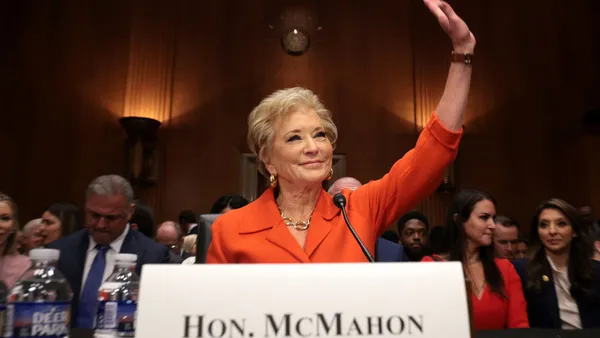
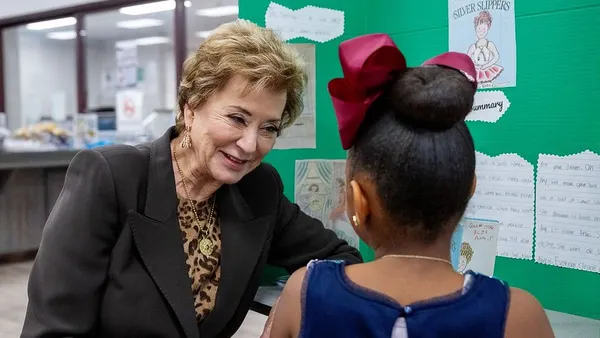
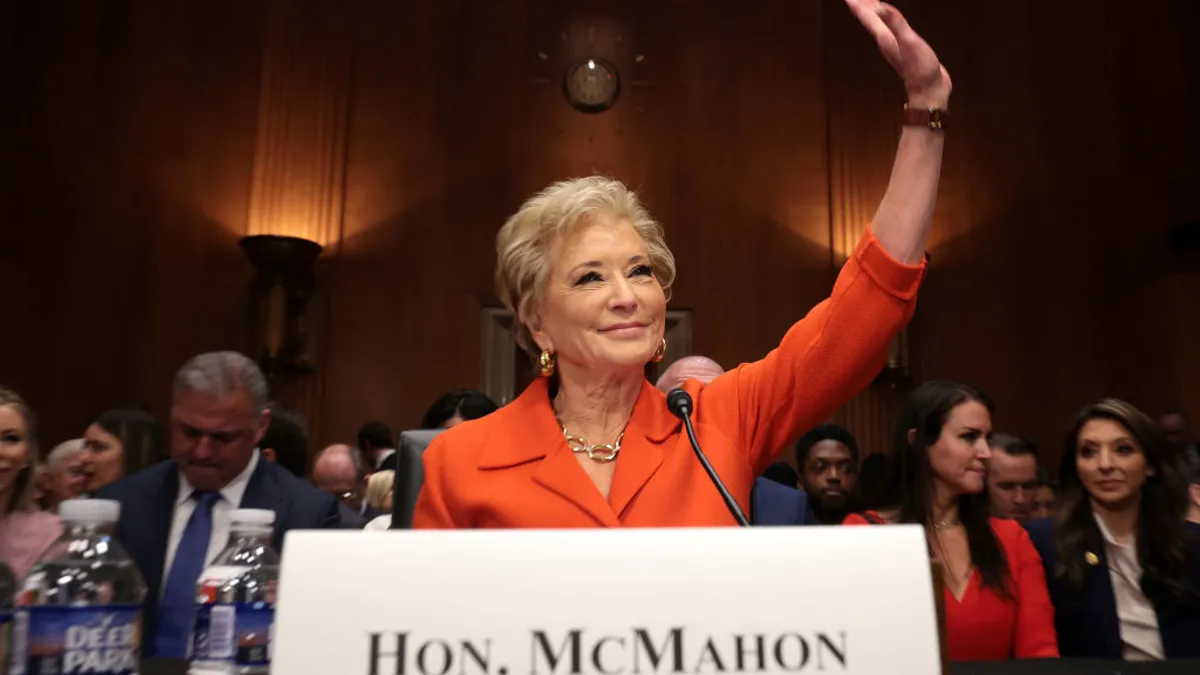
The number of days since U.S. Secretary of Education Linda McMahon was sworn into office. In an exclusive interview with K-12 Dive marking her first year in office, McMahon shared her thoughts on the agency’s Title IX enforcement in girls’ and women’s sports, efforts to improve literacy, and what she considers the biggest obstacles and successes thus far.
Education in the courts
- The U.S. Supreme Court on March 2 sided with parents who objected to California state policies that prevent schools from sharing students’ LGBTQ+ identities with their parents. The decision in Mirabelli v. Bonta came without oral arguments as part of the court’s shadow, or emergency, docket. The court, in an unsigned opinion, wrote that the policies “cut out the primary protectors of children’s best interests: their parents.”
- The 9th U.S. Circuit Court of Appeals in late February blocked the U.S. Department of Education’s push to cancel mental health funds for schools, securing another victory for 16 states that sued the department in 2025 to reinstate the funding. The 9th Circuit said in its decision last week that the department “failed to make a strong showing that it engaged in the reasoned decision-making required” to, among other things, notify recipients why their multi-year grants were being discontinued.
Interagency agreements and data collections fuel debates
- As the Education Department continues to offload many of its responsibilities to other federal agencies, advocates and lawmakers are pleading for special education services to remain under its jurisdiction. On March 5, several special education administrative and advocacy organizations led a National Call-in Day aimed at pressuring federal lawmakers to oppose the possible transfer of special education and civil rights responsibilities out of the Education Department.
- Determining whether a provision in federal COVID-19 relief funds for schools succeeded in preventing states and districts from cutting funds to high-poverty districts has been difficult due to “incomplete and unreliable” data, a U.S. Government Accountability Office report found. While districts in six states that researchers examined generally identified their poorest schools, GAO found the Education Department had insufficient data for how states used maintenance of equity requirements to identify their poorest districts. The provision was in place for fiscal years 2022 and 2023.
- Data collections for student statistics, educator workforce and high school outcomes are among those being reviewed or on the chopping block as the Education Department considers overhauling the Institute for Education Sciences. An internal 95-page report provided to McMahon last week recommends “six big shifts” within IES, including for the National Center for Education Statistics.