
Dive Brief:
- The Trump administration announced Wednesday the release of the 2025-2030 Dietary Guidelines for Americans that will inform — and change — federal nutrition requirements for school meals nationwide.
- The new guidelines stress avoiding highly processed foods and added sugars while emphasizing the need for nutrient-dense proteins and vegetables in every meal. An FAQ describes the guidelines as a “flexible framework” with a single core goal of eating whole or minimally processed food most of the time.
- Schools will now await regulations from the U.S. Department of Agriculture on how their meals will have to align with the overhauled guidelines. This comes as they were already working to limit added sugars and sodium and offer more whole-grain foods based on Biden administration rules issued in 2024.
Dive Insight:
The updates to the dietary guidelines are “the most significant reset of federal nutrition policy in history” and part of the Trump administration’s “Make America Healthy Again” campaign, said U.S. Secretary of Health and Human Services Robert F. Kennedy Jr. during a White House press conference on Wednesday.
Some of the key changes include:
- A strict limit on added sugars, with only up to 10 grams per meal.
- A higher priority on protein and saturated fats from meats, poultry and eggs.
- A recommendation to drink full-fat dairy — in contrast to previous advice to consume skim and low-fat dairy options.
- Inverting the food pyramid from the 1990s, with broader emphasis on proteins, dairy, vegetables and fruits at the top and diminished focus on whole grains at the bottom.
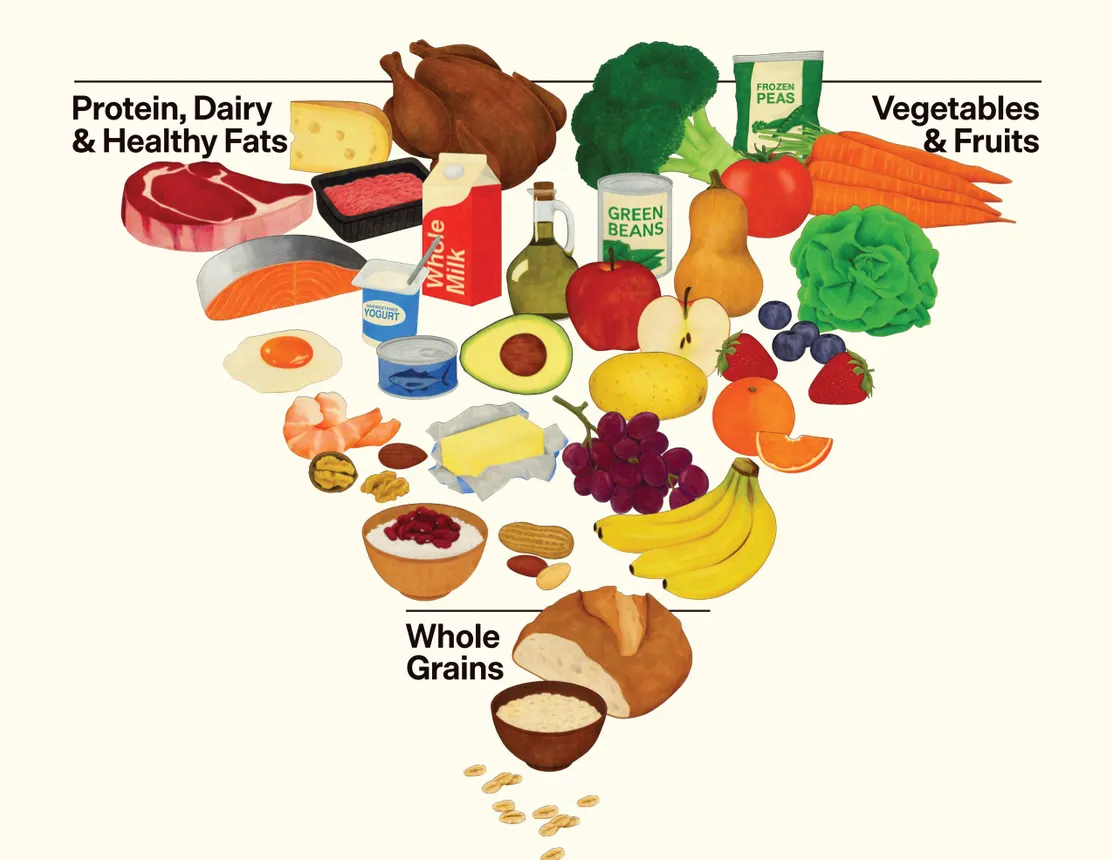
Federal leaders from the U.S. Department of Health and Human Services and USDA told the press conference that the new guidelines will help reduce healthcare costs in the long run.
Marty Makary, commissioner of food and drugs, said 40% of children currently have a chronic health condition. He also cited a 2021 study published by JAMA that found a majority of U.S. children and teens’ caloric intake came from ultra-processed foods between 1999 and 2018 — increasing from 61% to 67% during that period.
“That’s an epidemic,” Makary told the news conference. “We now have a generation of kids addicted to refined carbohydrates low in protein.”
Still, school nutrition program operators say they’ll need more resources and support from Congress to successfully carry out the new dietary guidelines, especially when it comes to increasing scratch cooking in efforts to reduce reliance on ultra-processed foods.
“School nutrition programs are where the vision of the DGAs becomes reality for the 30 million children eating school meals each day,” said Stephanie Dillard, president of the School Nutrition Association, in a Wednesday statement. “Congress has a tremendous opportunity to improve the health of America by investing resources to help schools expand scratch cooking, serve more fresh, local foods and further positive momentum in cafeterias.”
A recent SNA survey of school nutrition directors from over 1,200 districts found 71% reported already offering scratch-prepared entrees daily or weekly. SNA said in a position paper on Tuesday that school meals are the “healthiest” ones that Americans eat under current federal nutrition standards limiting calories, sodium and added sugars.
“Schools are simply not equipped to scratch prepare all menu items — more than 93% cited the need for more staff, culinary training, equipment and infrastructure to reduce reliance" on ultra-processed foods, the SNA paper stated.
Meanwhile, in December, Congress passed a bipartisan bill that would allow schools to offer whole milk and nondairy beverage options. President Donald Trump has yet to sign the bill into law.




 Dive Awards