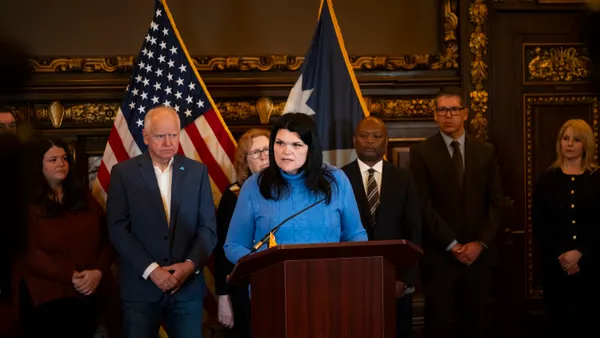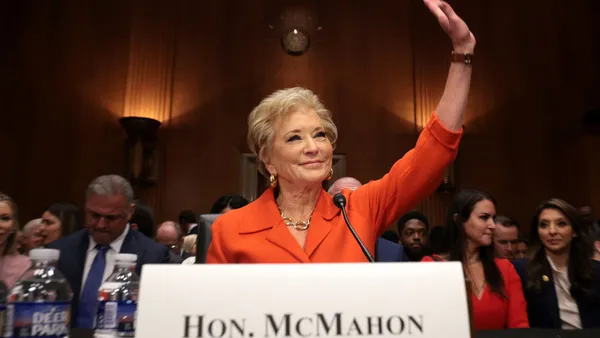
STAFFORD, Va. — In the sun-filled library of Winding Creek Elementary School, U.S. Education Secretary Linda McMahon and Virginia Gov. Glenn Youngkin marked the 50th anniversary of the Individuals with Disabilities Education Act on Monday by touting accomplishments in special education programs across the nation and in the state.
"I offer a special thank you to everyone here today, teachers, leaders, parents — so important, our parents — and especially students, for showing the whole country how IDEA has helped students learn, grow and be successful," McMahon said of the law that was signed Nov. 29, 1975.
Joining the event with Youngkin and McMahon were officials from the U.S. Department of Education, Virginia government, local leaders, teachers and about a dozen of the school's students.
Youngkin, whose four-year governorship ends in January, said the IDEA anniversary is an opportunity to reflect on the progress made by special education programs over the past five decades, including more recent accomplishments such as those at Winding Creek.
About 12.5% of the 841 students who attend the school, located about one hour south of Washington, D.C., qualify for special education services. Over the past three years, students with disabilities at the school have been improving their academic performances, with scores that exceed state performances for students with disabilities in reading, science and history for the past three years and are on-par with state math performance for this student population.
Michelle Matthews and Victor Horne's daughter, Sydney Horne, a 5th grader, began receiving special education support at Winding Creek Elementary last school year. Now, "doing her work is fun for her," said Victor Horne.
Youngkin said that statewide in 2013, only 55% of students with disabilities graduated with a standard or advanced diploma. That has improved to an 82% graduation rate, he said.
Where once it was behind, Virginia now leads "in one of the most important areas that we could possibly dream of: making sure that every student — every student — has a customized pathway to a great future," Youngkin said.
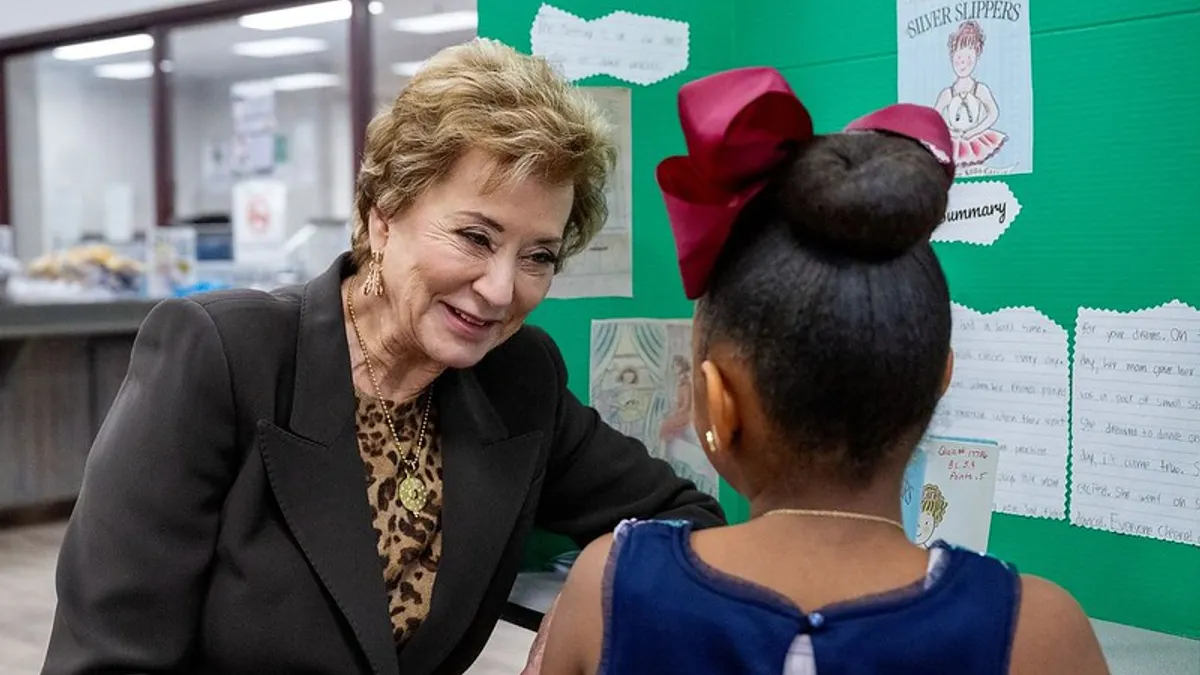
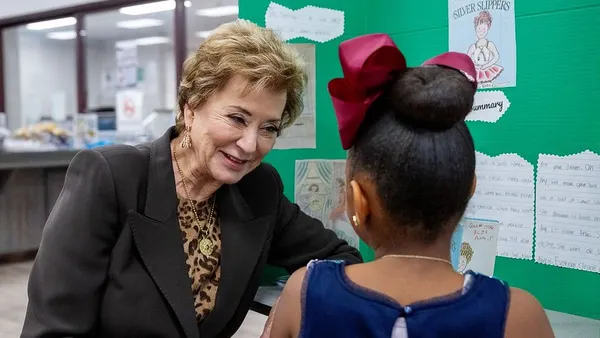
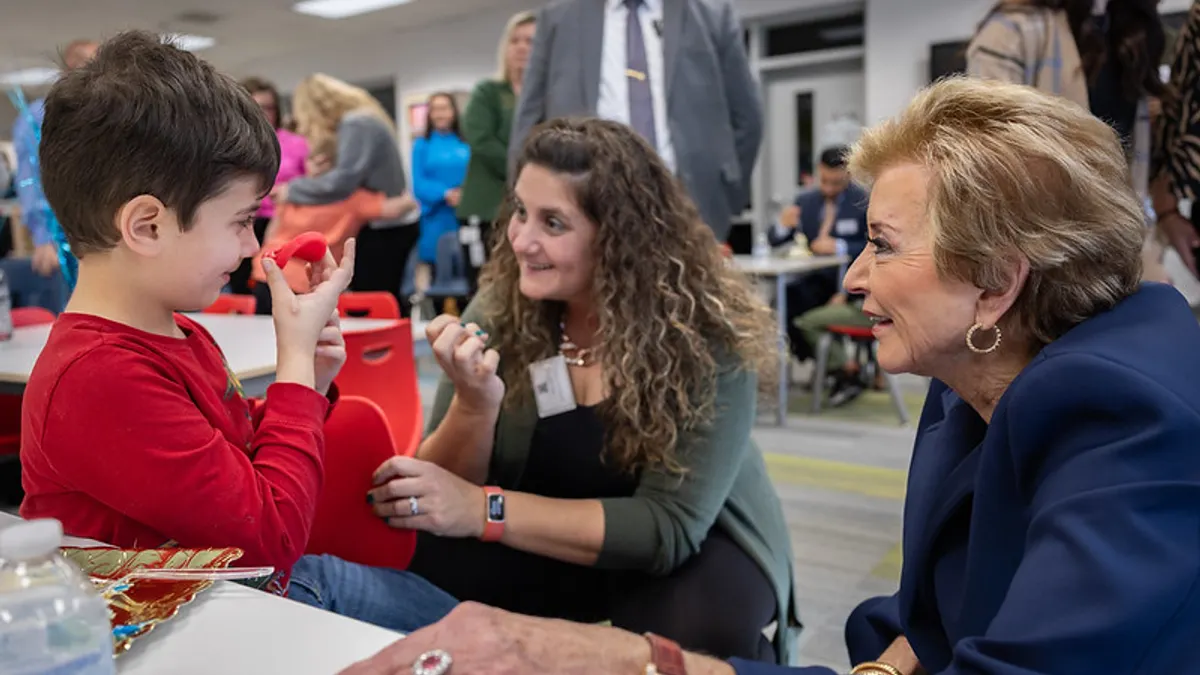
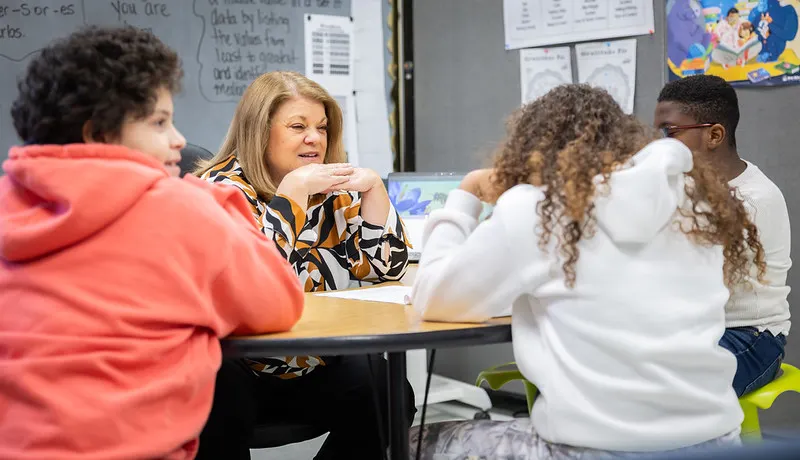
After Youngkin and McMahon led the students in a cake cutting, McMahon and other officials toured four classrooms that included small student groups receiving individualized supports and classroom-wide reading and math lessons where general and special education teachers worked together to offer lessons and provide 1-to-1 guidance to students. In one classroom, 5th grade teacher Lysbeth Wilson worked with a group of three students, demonstrating strategies to spell words ending in s, x, ch and sh.
Wilson said most of her students who qualify for IDEA services spend more than 60% of their school day in general education classrooms, learning alongside peers without disabilities. She's been teaching at Winding Creek for 13 years. She said developing a relationship with students is how she builds trust with students and their families.
Once students trust her, she said, they will tell her what type of support they need and want, and she works to help them succeed. Relationships with educators are "so beneficial for the child and they can accomplish so much," Wilson said. Seeing students meet their learning goals brings her "a lot of joy."
Addressing federal concerns
The IDEA anniversary comes at a time when the Trump administration has promised to downsize and eventually eliminate the federal Education Department in an effort it says is meant to reduce federal red tape and give more flexibility to states to make spending decisions.
Already this year, the agency’s staff has been reduced by half. At the agency's Office of Special Education and Rehabilitative Services, 121 out of 135 employees received reduction-in-force notices on Oct. 10. Additionally, the Education Department is moving management of several offices to other agencies and is seeking opportunities to partner with another federal agency to manage special education programming.
All these changes and potential responsibility shifts are making special education and disability rights advocates run defense, saying they are concerned the federal government is walking away from the promise of IDEA and its role in holding states and districts accountable for meeting the law's requirements.
"I think what's important to emphasize, especially right now, as we reflect on the 50th anniversary of IDEA, is that the law is not going anywhere," Kimberly Richey, the Education Department's assistant secretary for civil rights, told K-12 Dive at the Monday event. Richey is also the acting assistant secretary of OSERS, and said she reads statements and messages from critics of the agency's actions.
"Its promises are not going anywhere," Richey said of the special education law. "The promise of FAPE [free and appropriate public education] in the least restrictive environment is not going anywhere."
Still, she confirms that the Education Department under McMahon and President Donald Trump is looking for efficiencies in how OSERS operates while still prioritizing transparency and accountability.
For example, Richey wants to examine the federal special education compliance and monitoring guides to ensure "that we're asking the right questions when we visit with states, when we monitor states," said Richey, adding "all of my priorities right now are really centered around that compliance and monitoring component."
When asked how OSERS and its Office of Special Education Programs can have a strong monitoring presence if the Trump administration's goal is to shut down the Education Department, Richey said what needs to be emphasized right now is "the fact that IDEA is the law. Nothing can change that."
She added that IDEA has a clear framework that states are responsible for ensuring FAPE in the least restrictive environment and that schools are responsible for delivering on IDEA's requirements.
McMahon, Richey said, supports IDEA's requirements and accountability for compliance. What McMahon is interested in, according to Richey, is: "Where can this office continue its purpose with its staff and continue its mission outside of the Department of Education if the department does not exist?"
But, Richey adds, "there has never been any question about OSEP taking its foot off of the gas pedal and slowing down on compliance or on monitoring.”