Some 1,400 school districts across the country have sued social media companies in the past few years, claiming the companies' apps harmed student mental well-being and, in turn, put financial burdens on schools as they had to hire additional counselors and staff to address bullying, depression and school security concerns.
These lawsuits have been consolidated into what is known as a multidistrict litigation. Of the school district cases in the litigation, six have been designated as "bellwether" cases with the potential of forecasting outcomes for the other lawsuits.
The first bellwether case against social media giants Meta, Snap Inc., YouTube and TikTok was expected to go to trial last month in federal district court, but instead was dismissed as the companies settled with Kentucky's Breathitt County Schools in May for a reported $27 million. The payout eclipsed the six-school district's $22 million budget for fiscal year 2025.
The next bellwether school district cases are scheduled for trial on Feb. 8, 2027, and involve Arizona's Tucson Unified School District and South Carolina's Charleston County School District, said Previn Warren, co-lead counsel for the personal injury and school district plaintiffs.
So, it could be awhile before other plaintiff school districts see any payouts from the social media litigation — if they indeed win or settle their cases.
K-12 Dive reached out multiple times to the defendant social media companies but did not get responses by our publication deadline.
As the legal battle plays out, however, some districts are already cultivating community partnerships and expanding after-school and student engagement programs aimed at keeping children and youth safe, mentally healthy — and off devices.
Money from any future potential payout could boost and sustain these efforts, districts and partnering organizations said.
Engaging without screens
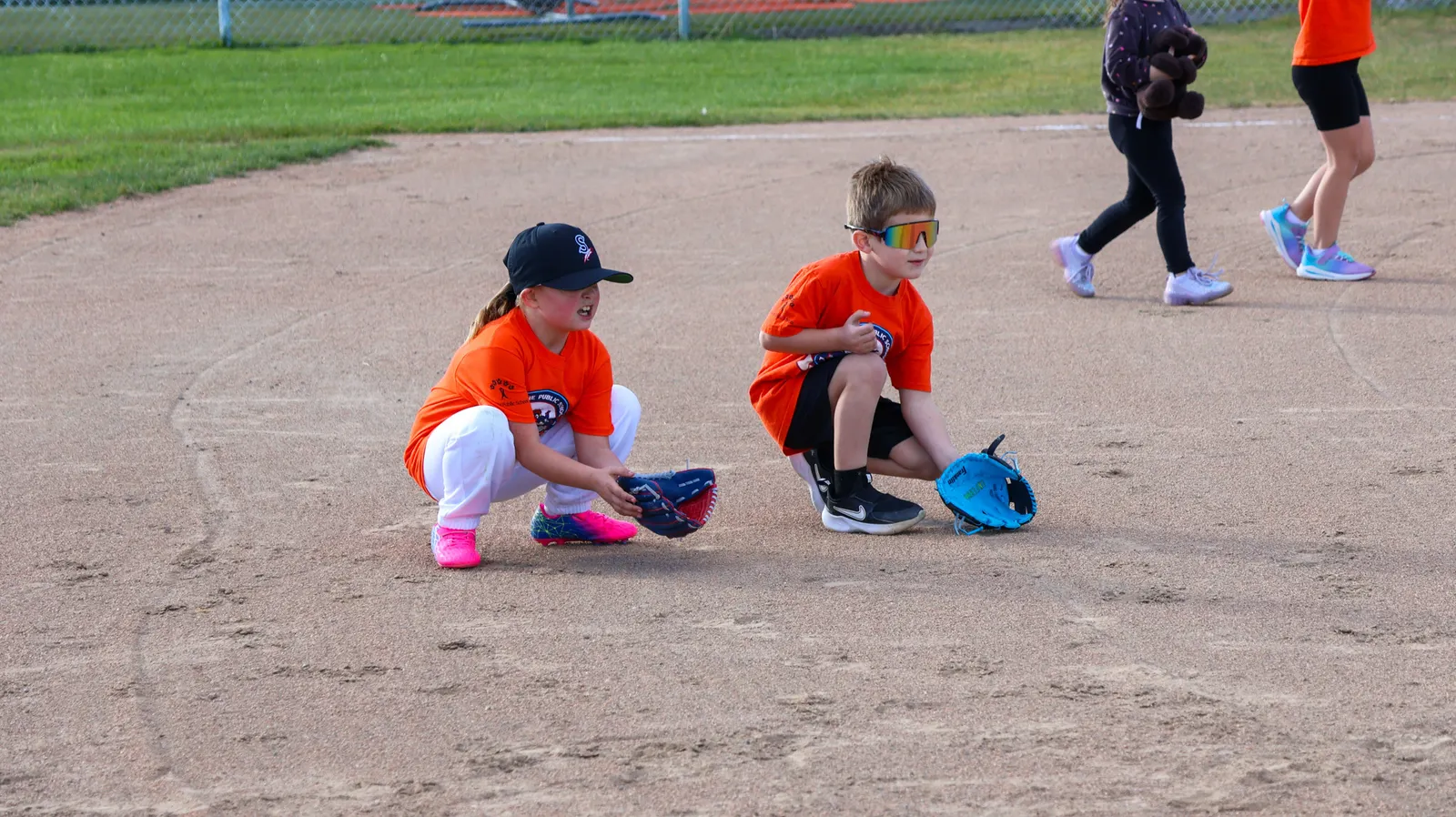
Spokane Public Schools in Washington is a case in point. With district and community funds, it launched an Engage in Real Life initiative aimed at getting 75% of its 29,000 pre-K-12 grade students involved with at least one after-school activity by 2028. The district is one plaintiff among the 1,400 school districts with claims in the multidistrict litigation. Its case has not yet gone to trial or been settled.
During the 2025-26 school year, 65% of Spokane Public Schools' students participated in at least one of 284 after-school activities offered by the school system or a community partner, said Superintendent Adam Swinyard.
"Our approach has been: We want to shrink the amount of unstructured time that kids have after school that they're currently spending on devices," Swinyard said.
Having structured activities with positive peer and adult relationships creates a "powerful sense of belonging" for students," Swinyard said.
To boost participation in after-school activities, Swinyard said, the district has already undertaken key efforts including:
- Building community awareness. The district communicated with parents about the harms wrought by too much screen time. It held a community book club on "The Anxious Generation," a nonfiction book describing how smartphones and social media have fueled youth anxiety and depression.
- Instituting a school cellphone policy. Spokane Public Schools became one of the first large districts in Washington to implement a restrictive cellphone policy. The policy, which began in the 2024-25 school year, requires elementary and middle schools to be cellphone-free and high schools to prohibit cellphone use in classrooms.
- Developing the Engage in Real Life program. Since the initiative launched in 2024 to boost student engagement and after-school activity options, the district has seen higher reading and math proficiencies for participating students compared to those who aren't involved. These students also show lower levels of chronic absenteeism.
The after-school activities in Spokane — many of which were suggested by students — include sports, clubs and academic support programs. There's a Cheese Club for students who want to eat cheese and learn about French culture. The Play Club organizes games or individual activities. The district no longer cuts students during tryouts for athletic teams and instead hosts as many sub-varsity teams as needed to accommodate everyone who wants to play, as long as there is facility space.
As of June 3, volleyball was the most popular activity — with 1,900 participants.
The district and its partners maintain a website where families can search for activities by age, location, cost and time. The district and its community partners are also trying to make participation more equitable by offering many free activities and reducing fees for others, the superintendent said.
In addition, the district and its partners are working to solve transportation barriers and have "engagement navigators" who assist students and families with their challenges to participation.
The antidote to the social media harm is really getting kids into real life and real life relationships.

Ben Small
Executive director of Launch NW
The initiative has become part of the community culture, Swinyard said — so much so that pediatricians and others often ask children which after-school activities they are involved in.
"We're not having to bug people into this," Swinyard said. "This has been about saying, 'Hey, this is what we should do as a community.'"
The district spent $600,000 in the 2024-25 school year to expand after-school, athletics and other programming. In the 2025-26 school year, it dedicated another $500,000 to increase access to various clubs, according to the district.
Promoting children's well-being
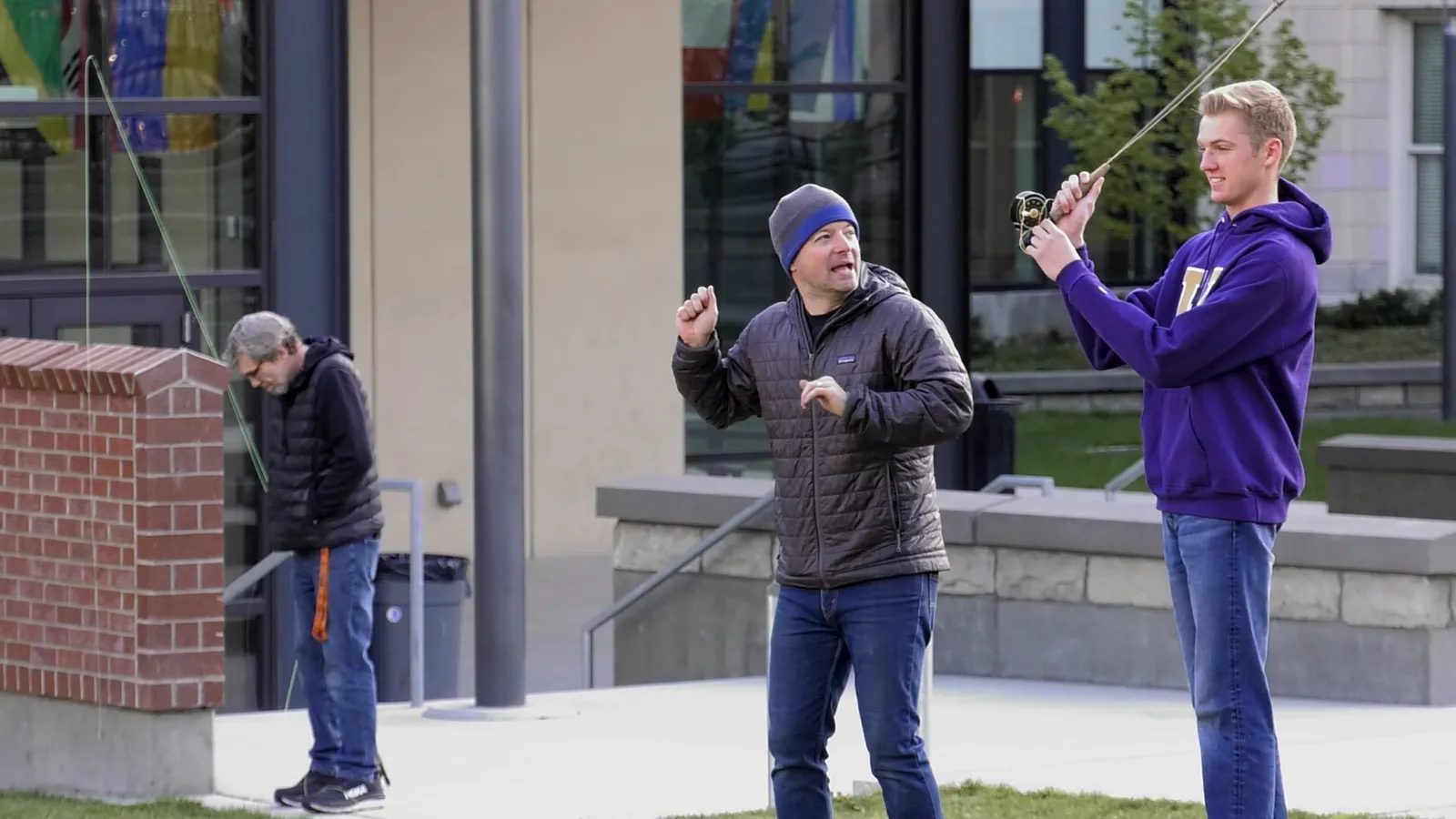
The nonprofit Launch NW is working with Spokane Public Schools and several other Washington and Idaho school districts to boost the variety and access to activities for children ages birth to young adult. In Spokane, Launch NW teamed up with the school district, local governments and community partners to develop the Engage in Real Life initiative.
To help start that initiative in 2024, Spokane city and county governments used funds from federal American Rescue Plan allocations provided for COVID-19 recovery. Launch NW's goal is to use any social media lawsuit settlement funds to enhance and sustain the after-school programs, reduce screen time and foster real-life interactions for students, said Ben Small, executive director of Launch NW.
"The antidote to the social media harm is really getting kids into real life and real life relationships," said Small.
The positive connections students make with adults outside of the classroom "are so critically important to the learning environment," said Small, a former principal and middle school teacher who served as superintendent of Washington's Central Valley School District for 14 years until 2022.
Launch NW's work in Washington caught the attention of the Children's Funding Project, a national nonprofit that helps communities expand equitable opportunities for children through public financing. The group's Fund In Real Life initiative aims to help communities invest payouts from social media litigation into activities that promote children's well-being.
According to the group, the gap is great between what is currently spent on after-school programming and what is needed.
It would take $480 billion to provide high-quality programming for at least three quarters of youth ages 10-20 years old, compared to the less than $24 billion currently spent on summer activities, mental health supports, mentoring and other opportunities, said Elizabeth Gaines, founder and CEO of the Children's Funding Project.
Payouts from the social media litigation could be "once-in-a-generation funding" for programs and services that improve youth well-being and prevent harm, according to Fund IRL.
"When corporations do things to harm young people, and they have to then pay into the public good, we want to make sure those dollars go back to the thing that they were intended to be for, right?" said Gaines. Schools, community-based organizations and their partners, she said, also have to "step up our game" to make sure young people aren't distracted or harmed by social media.
Likewise, Small said that any social media litigation payouts received by communities should be used to fund and sustain supports for children and families that have been put in place in Spokane and elsewhere.
Strengthening connections among families, schools and after-school providers is the goal, Small said. "We're not just providing more after-school activities," he added. "We're providing the way for families to engage and make sure their children are engaged."

Tracking the litigation
The multidistrict litigation includes the six school district bellwether cases that will be tried to give parties an indication of how future cases would be decided, according to Lexi Hazam, co-lead counsel for the personal injury and school district plaintiffs in the litigation.
The bellwether cases were chosen through input from both plaintiffs’ and defendants’ counsel, with each side identifying cases they considered appropriate for trial preparation and evaluation. The U.S. District Court for the Northern District of California narrowed the pool and selected the order of the cases to be tried.
The benefit of the bellwether process is that it makes the legal process more efficient, as witnesses might only need to be deposed once instead of for each case, said Hazam. If every school district case were tried separately, she said, it would take "a very long time."
"The bellwethers are selected in the hope that the outcomes will help inform the parties in assessing the overall litigation, and perhaps reaching a resolution of it so that each case does not have to actually be tried," Hazam said.
Hazam and co-lead counsel Warren said school districts can still join the multidistrict litigation if they have felt the negative impact of social media in their district. Boston Public Schools in fact became one of the latest school systems to join it, according to an announcement by Mayor Michelle Wu on July 8.
In addition to the school district cases, about 1,000 personal injury cases and 29 state attorneys general cases are included in the multidistrict litigation.
In an amended master complaint for the school district and local government cases filed March 27, 2024, the plaintiffs wrote, "School districts and local governments are on the front lines of redressing the damage caused by Defendants’ deliberate choice to design, develop, operate, promote, distribute, and market their social media platforms to attract and addict youth."
As part of the litigation, experts on the plaintiff side are analyzing social media addiction and possible harms to school systems, Hazam said.
These experts are looking at the historical impacts of students' mental health challenges, including lost instructional time and the need for increased staff to support mental health well-being. The experts are also forecasting the investments required to ameliorate the problems to help estimate monetary damages for districts, Hazam said.
It's worth noting, however, that there are other sides to the social media question. Some research has shown positive impacts on youth from using social media, such as making connections with friends and communities, encouraging creative expression, and fueling exploration of interests.
In addition, school districts use social media platforms to communicate with families and the public. And some educators use social media apps like YouTube in class lessons.
Social media companies have added additional tools and resources in recent years to support youth well-being. Children need to be at least 13 years old in most of the U.S. to create a social media account, according to the American Academy of Pediatric's Center of Excellence on Social Media and Youth Mental Health.
Meanwhile, as the litigation continues to play out, the Spokane Public Schools superintendent said, community efforts to connect students to after-school and summer activities have been "super exciting."
And regardless of the litigation's outcome, the district intends to continue to support its Engage IRL initiative.
"I think in our community this has given us a lot of hope, because there are some practical things" that can be done to move students in positive directions, Swinyard said.