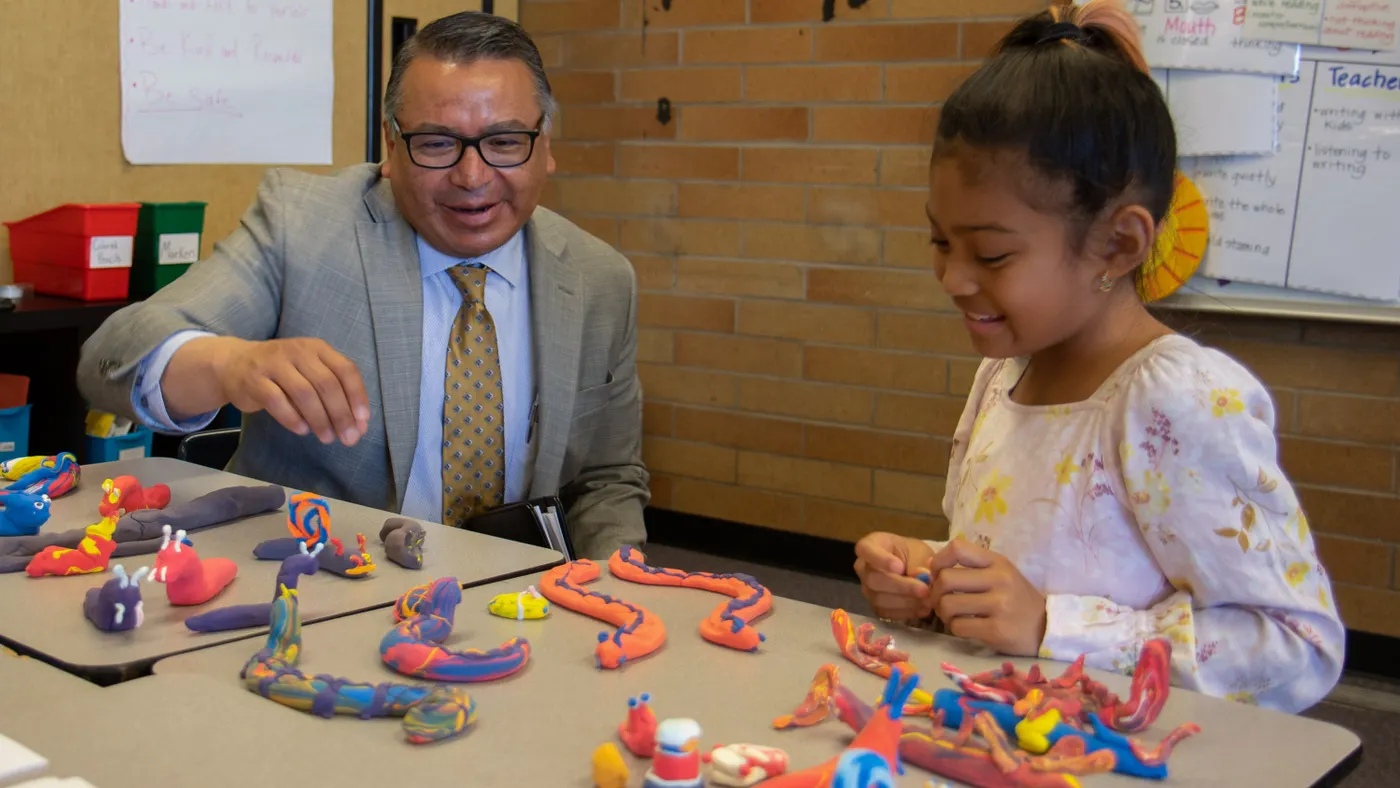
Beaverton School District Superintendent Gustavo Balderas says he's not a micromanager. Instead, he provides staff with high-level guidance aligned with district goals and expectations. Then he gives them the flexibility to innovate and problem-solve.
"The moment we have the right systems in place, I think there always has to be some level of flexibility," Balderas says. "I think that's the way education needs to run, where not every school looks the same, and so not every school needs exactly the same thing."
Leaders at the Oregon district credit this approach for systemwide successes in both academics and operations. From expanded pre-K and dual language offerings to a growing fleet of electric school buses and a $723 million bond fueling school and bus upgrades, the district has a lot to boast about.
The Beaverton School District also has not shied away from challenges and traumatic events.
When parents Jon and Jennifer Epstein—whose son Cal died at age 18 in 2020 after unsuspectingly taking a fentanyl-laced pill—asked the district to warn other teens about the dangers of fake pills, the district did so by launching an ongoing fentanyl awareness campaign in 2021.
As part of the campaign, Beaverton provides yearly fentanyl prevention lessons to middle and high school students and publicly shares these curricula for use by any school system. These initiatives, along with the work of advocacy groups, have inspired state and federal legislation for fentanyl awareness education.
The district "saw a problem and tackled it head-on," says Jennifer Epstein, who is the director of strategic programs for Song for Charlie, a nonprofit started by another set of parents to educate youth and parents about illicit fentanyl. Although the community's fentanyl awareness campaign came too late to save her son, she says, "I know in my heart BSD’s strong response saved countless families in the Beaverton community and beyond from experiencing the same loss as our family."
Regarding the importance of initiating the fentanyl awareness campaign, the superintendent says school and district leaders "need to take the lead when it's impacting our youth and our students as best we can, and be really out in front to support our kids, so our kids see the system making a difference for them."
Balderas, who has led Beaverton since July 2022 and was named Superintendent of the Year in 2020 by AASA, The School Superintendents Association, is leaving the 37,500-student district next summer. He will take the helm of Washington state's Puget Sound Educational Service District, a regional service center in the Seattle metro area that supports 35 school districts and just over 425,000 students.
While he's excited about the work ahead in his new role, he says, he will miss the students, families and staff in the Beaverton School District. "I have the very best team — one of the very best teams in the country — here in Beaverton."
The district is currently conducting a superintendent search for its next leader.

Expanding educational opportunities
The district, located near Portland, has 54 traditional and two charter schools. About 5,000 people work for the district.
Among the student population, 29% are current or former English learners, 14% are students with disabilities and 22% are in families experiencing poverty. Additionally, 40% of students are White, 28% are Hispanic or Latino, 9% are multiracial and 4% are Black, according to state data.
Balderas, whose family migrated from Mexico and was himself an English learner as a child in rural Oregon, says he is grateful for "seeing kids that look like me in our public schools."
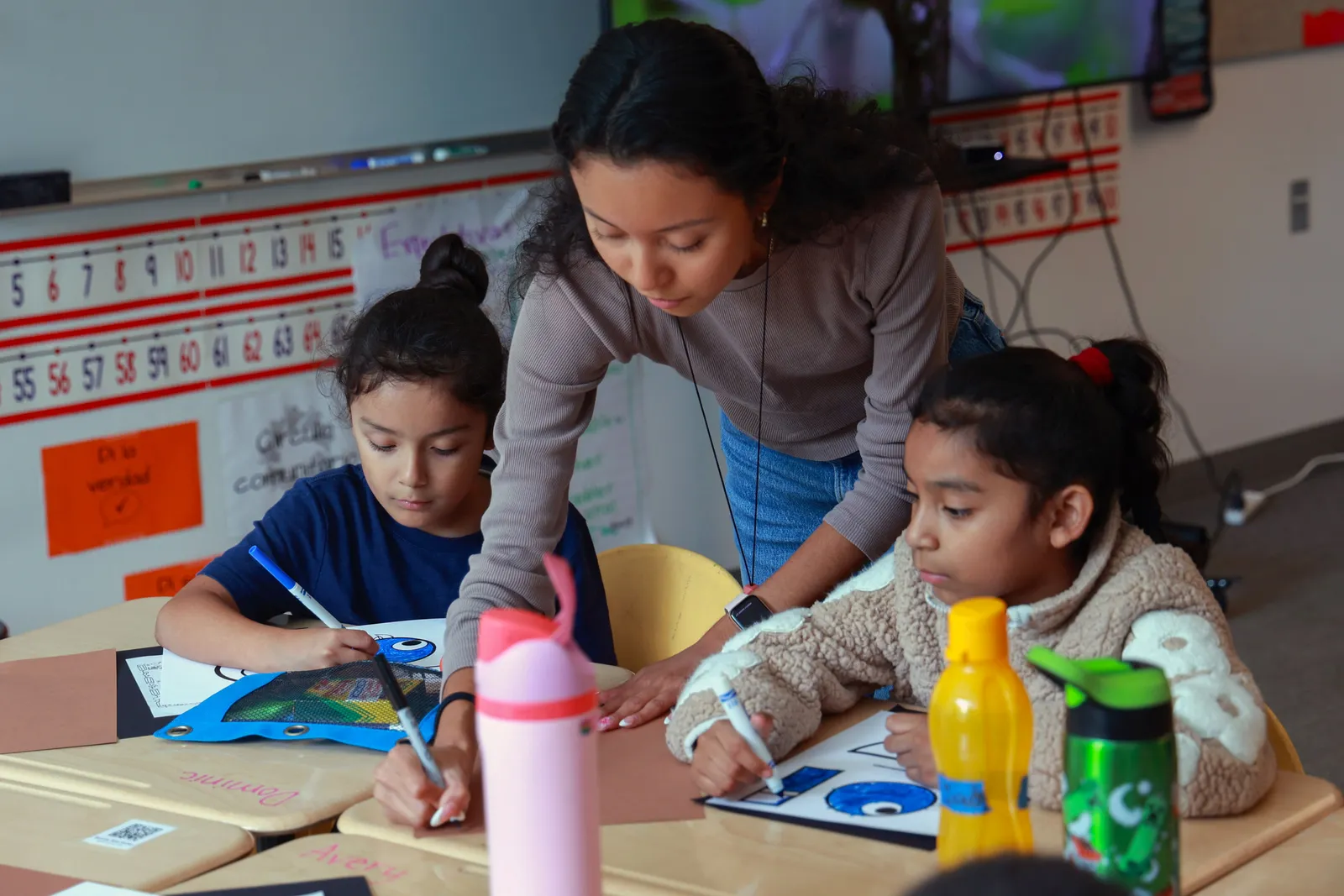
Acknowledging its growing multiculturalism and a desire to provide rigorous, culturally inclusive education, the district sought community input in 2023 when planning to expand its dual language offerings. Beaverton School District is aiming to offer all students a high level of bilingualism and biliteracy in two or more languages. Nearly 100 languages are spoken in the district, according to state data.
Currently, Beaverton offers Spanish-English dual language programs at five elementary schools, one K-8 school, two middle schools and three high schools. It also has a Mandarin Chinese-English dual language program at one elementary school.
The district wants to have dual language classes composed of:
- One-third students whose home language is English.
- One-third students whose home language is Spanish or Mandarin Chinese.
- One-third students who speak two languages at home, English and another language.
And in the upper grades, the school system has grown its career and technical education programming to provide an expanded choice of career studies, as well as internships and real-world professional experiences. The district offers 33 CTE programs and plans to add a program next school year on home electrical wiring.

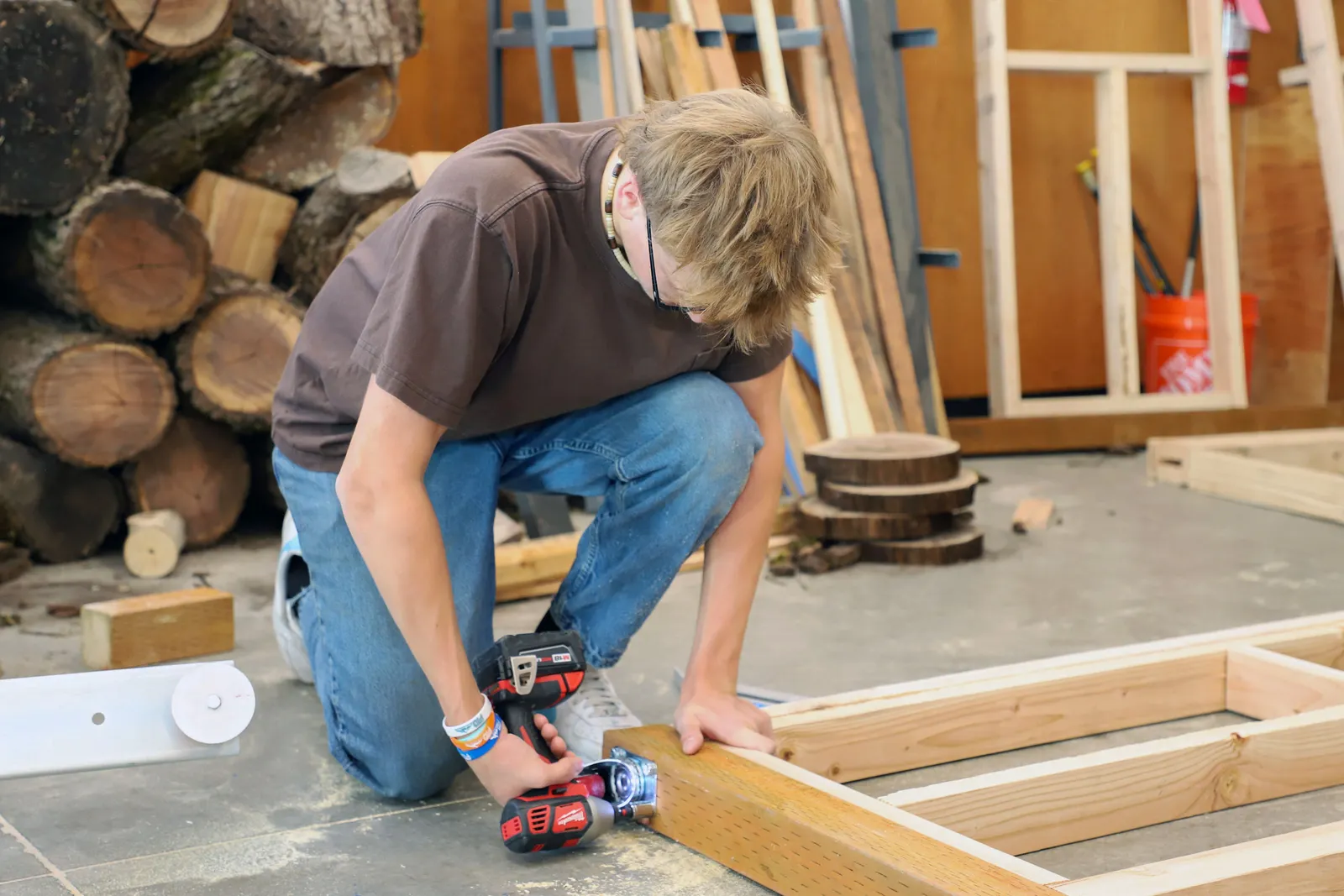
Stafford Boyd, administrator for curriculum, instruction and assessment, says the residential electrical program will be housed at the new Beaverton High School set to open next school year. That building, which replaces one built in 1916, will accommodate 1,500 students.
Boyd says an exciting aspect of the $253 million rebuild is that the school could be designed with CTE programs as a main learning focus rather than an afterthought. The residential electrical classroom, for instance, will have the frame of an interior room of a house, so students can practice adding wiring and circuitry to the walls.
"The classroom is going to feel like the real world, as if they're actually out on a home build," says Boyd, who is in his second year at the district and has been both a teacher and principal during his career.
This school year, the district launched a behavioral health course with about 50 students taught by educators who are also school social workers. Boyd says the district hopes the course generates student interest in behavioral health, as these professionals are lacking in both the Portland area and across the state.
In addition, Boyd says, "The behavioral health industry needs workers that are not only responsive to, but reflect our communities, our diverse communities."
The district has had a health careers program since 1971, that includes skills development in nursing and medical assistance, but that program's student participation has not aligned with the diversity of the student body over the years, Boyd says. "Creating this—a new program—also allows us, from the beginning of design, to try to reverse those trends."
All of the CTE programs allow students to earn certifications "that will give them a leg up in employment immediately after high school," says Boyd, adding that the district strives to provide modernized CTE offerings that support students' college and career paths, as well as their life readiness skills.
In overall academics, meanwhile, the district posts a strong showing.
Its students routinely score above state averages and have a higher on-time graduation rate — 88% for those graduating in 2023-24 — compared to the state average of 82%. And this year, 14 of the state's 28 National Merit Scholars came from the Beaverton district.
A growing electric bus fleet
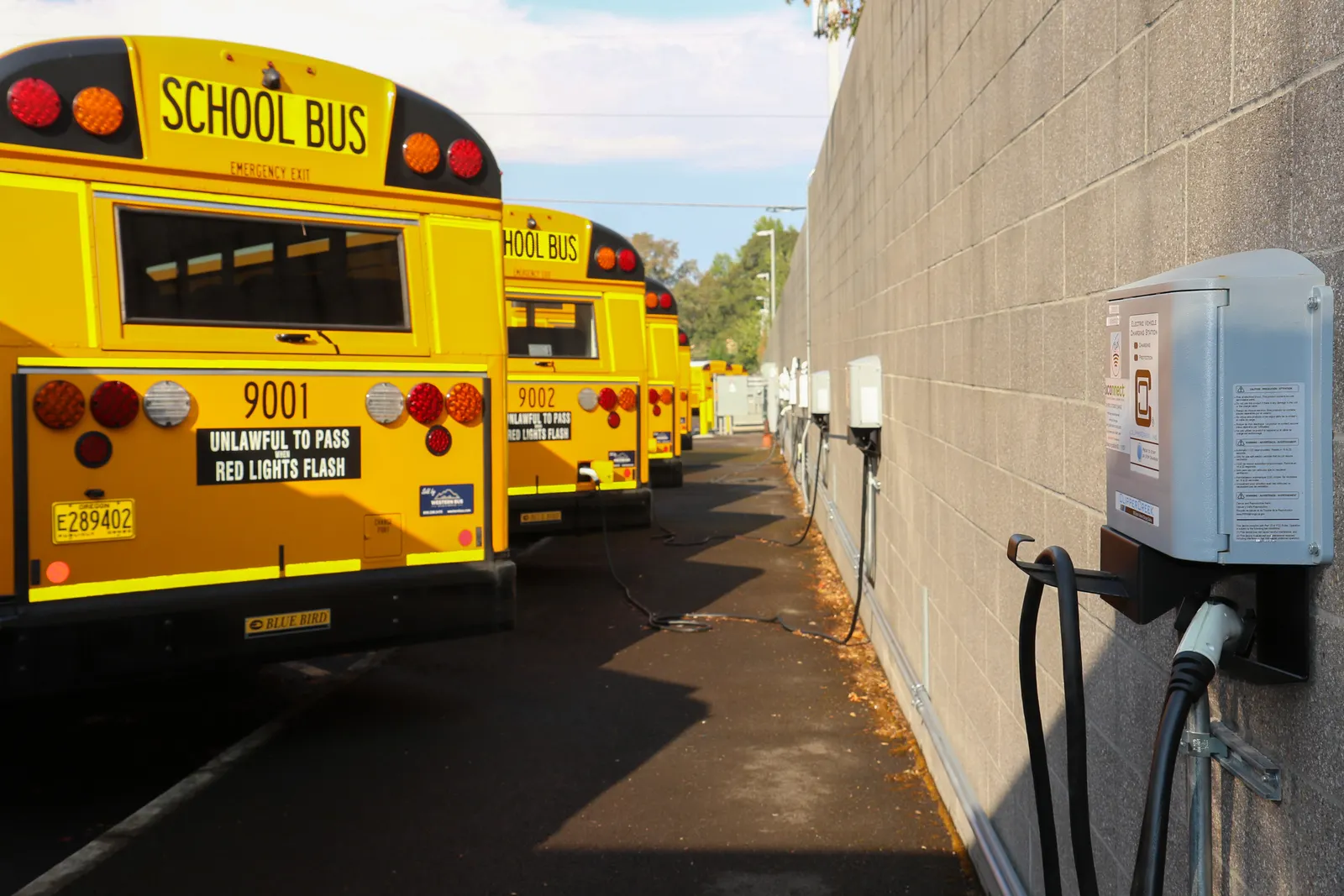
Four years ago, the Beaverton School District also became the first district in the state to use an electric school bus, according to the district. Since then, it has added electric buses every year. By April 2026, it expects to operate 100 electric buses, making it the third-largest electric school bus fleet in the nation.
The district transports 25,000 students daily across 55 schools and covers about 3 million miles each year.
Craig Beaver, the district's administrator for transportation for the past 10 years, touts the clean transportation initiatives for reducing noise and air pollution and saving the school system money.
Beaver, who has 42 years of transportation experience and was named the 2024 Transportation Director of the Year by School Transportation News, has the statistics to back this up. Last school year, the district removed 622 tons of carbon dioxide and 3,838 pounds of nitrogen oxides from the environment through its use of electric buses.
While it costs about $900 a month for fuel and maintenance to operate one diesel bus, an electric bus costs just about $300 a month. That equates to about 80 cents per mile versus 32 cents per mile, Beaver says. A propane school bus costs about 44 cents a mile to operate.
"It's a tremendous, tremendous savings" to have clean buses, he says, adding that the district uses renewable diesel and propane. "We're not using any petroleum-based products anymore in any of our buses. So we're pretty proud of that."
The bus initiatives include making the electric fleet available to all Title I schools. The transportation work also includes being nimble to quickly adjust bus routes as needed for students with disabilities, Beaver says.
But even with all the accomplishments the transportation department has made, Beaver says there is always room for improvement.
"I know that in our department area, we're looking to get better every day."
Visuals Editor Shaun Lucas contributed to this story.