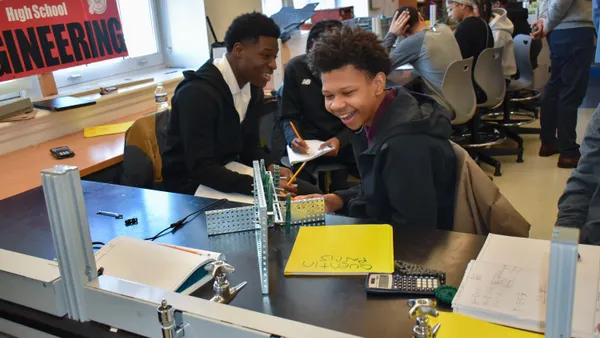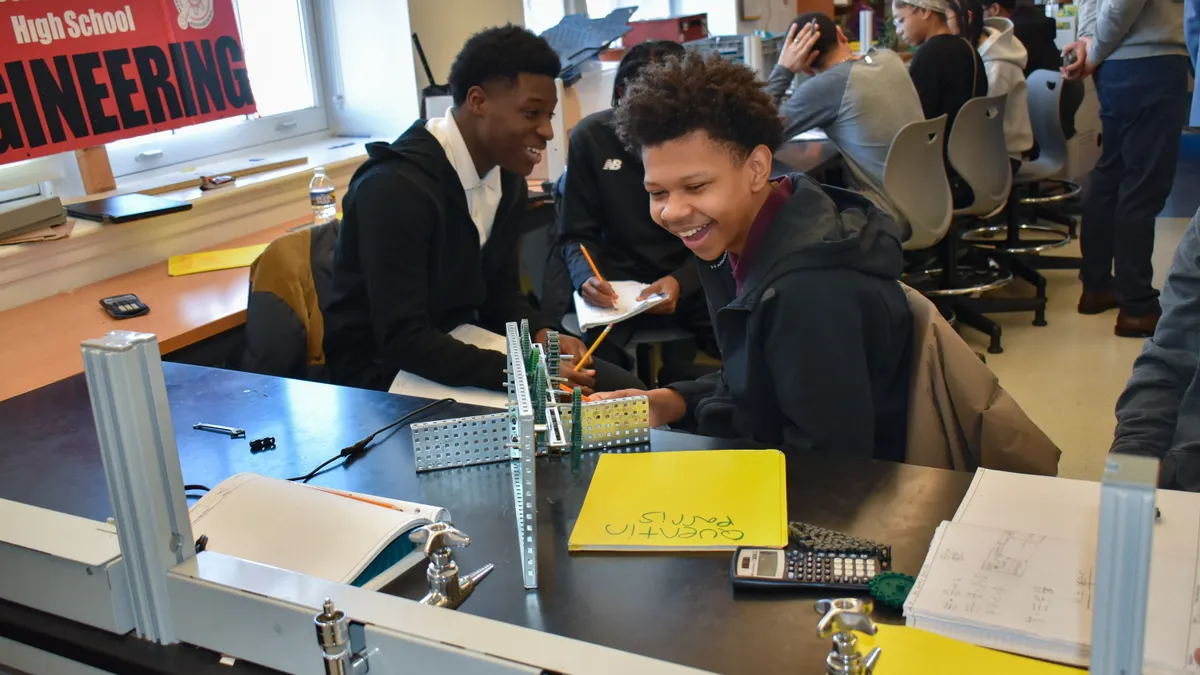
WASHINGTON — When Xavier Brown's 12th grade group project to build a trash bin prototype that automatically distinguishes trash from recyclables wasn't operating as planned, the group had to keep recoding the machine's program so it could recognize the variety of items that can be recycled.
The group could have grown more frustrated with each unsuccessful attempt. But Brown, who is studying engineering at McKinley Technology High School in Washington, D.C., instead learned a valuable lesson — that it's OK to fail.
"As an engineer, you're going to fail a lot of times," said Brown, who spoke during a Feb. 24 event at the school to mark Career and Technical Education month. "There's no exact time where you create something and it's perfect the first time."
Logan Arthur, an 11th grade biotechnology student at McKinley Tech, also faced setbacks in her work. She described the "tedious" trial and error process of researching proteins from salmon, spinach and other foods during a summer internship. But the experience of finally succeeding after failing and trying again gave her an adrenaline rush, she said.
"I was just riding it up, and I was like, 'Yes, I did it, and you guys can't stop me from doing that.' It was really beautiful," Arthur said.
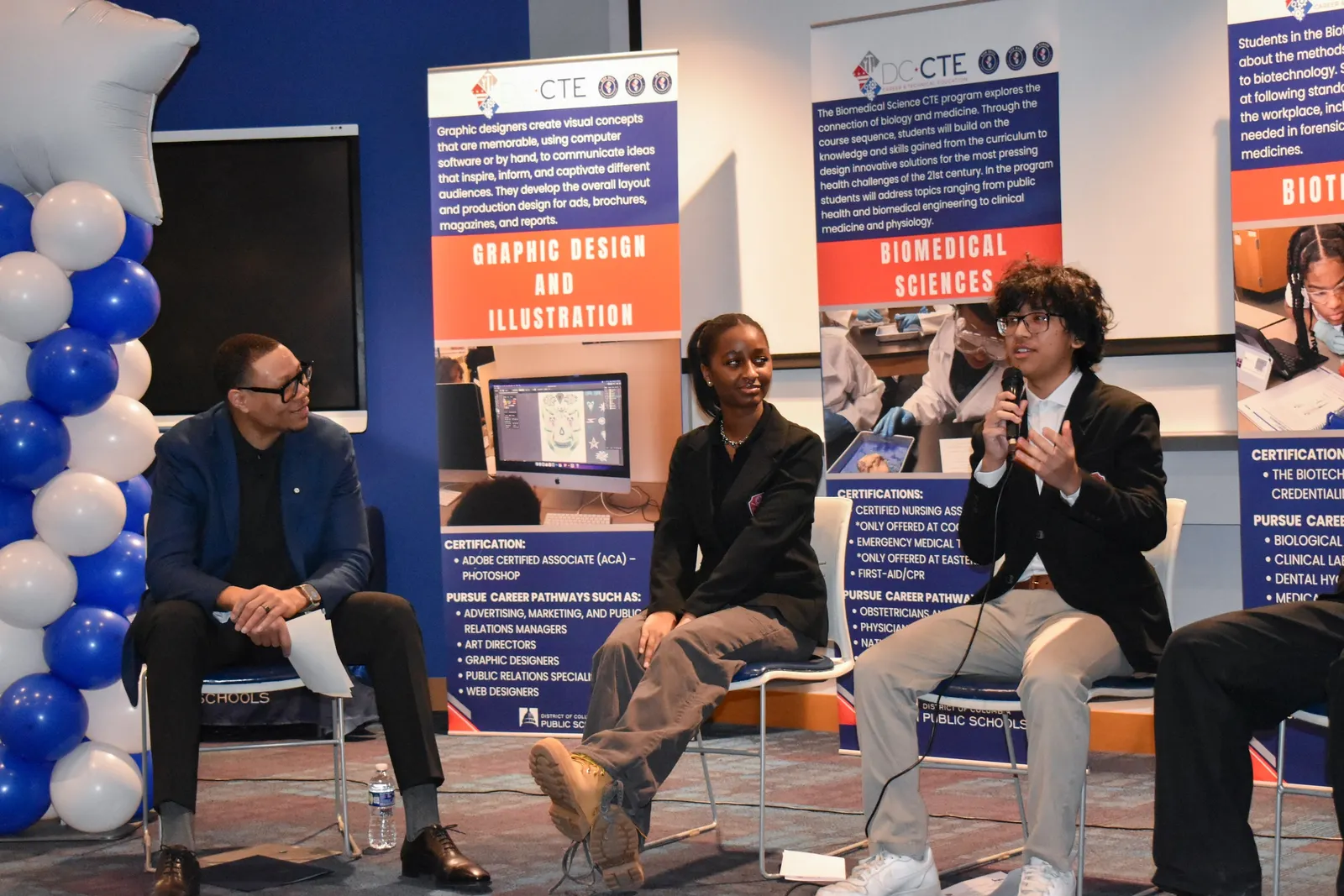
During the event co-hosted by the Association for Career and Technical Education, Lewis Ferebee, chancellor of District of Columbia Public Schools, held a panel discussion with Arthur, Brown and 12th graders Waiyun Aung, who is studying graphic design, and Joshua Mitchell, who is learning about computer science.
"I love the way you all are embracing failure," Ferebee told the students. "It is truly life lessons."
Ken Lesley, director of the McKinley Tech engineering academy, had worked as a mechanical engineer for 25 years before becoming an educator. Engineers know they have to "iterate, fail, change, fail, change until you get it right," he said.
The McKinley Tech CTE program helps students acquire academic knowledge and real-life, hands-on experiences for career exploration, Lesley said. "This is the opportunity the kids get to see what their careers could be."
Passion and preparation for careers
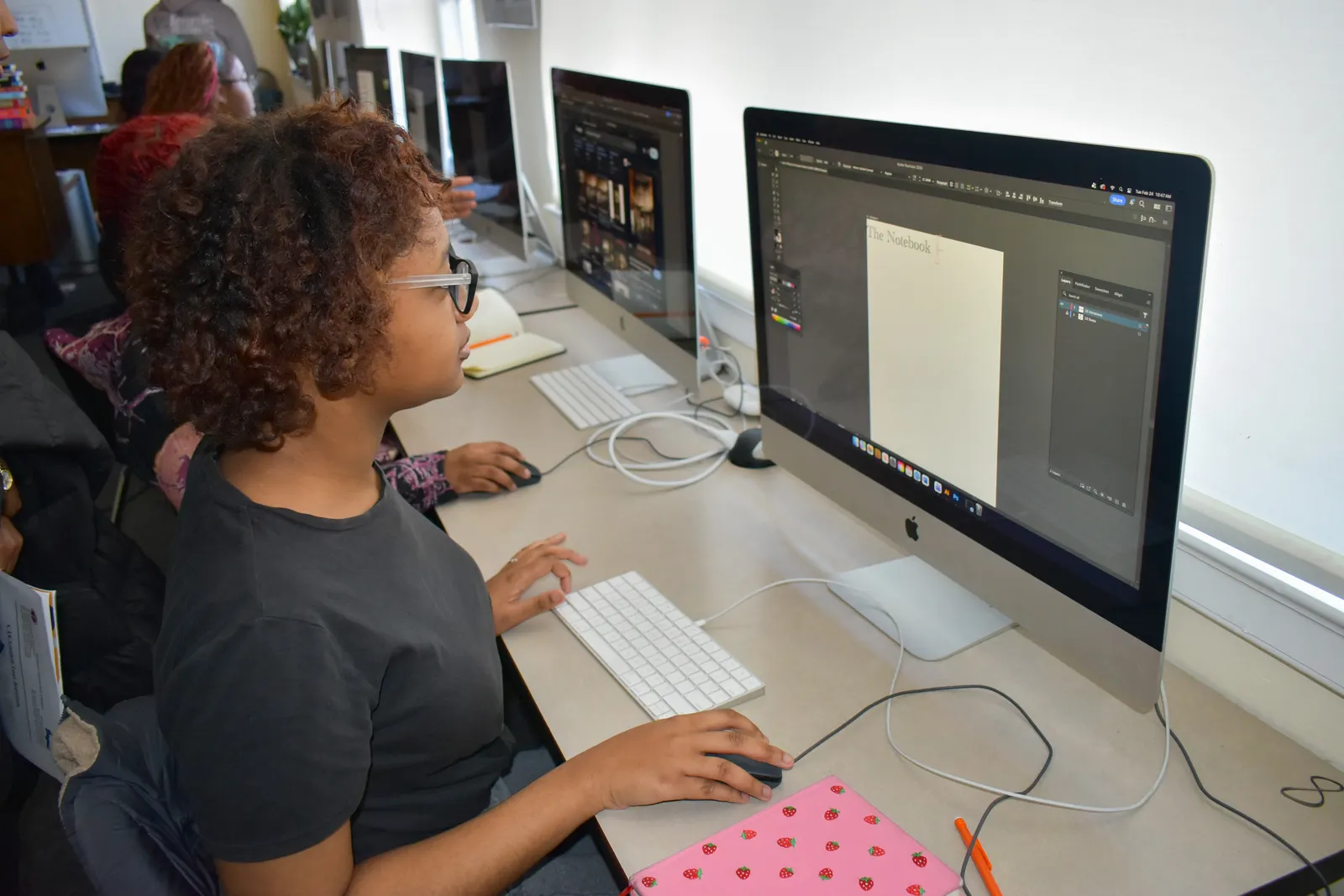
In addition to the engineering career pathway, McKinley Tech offers CTE courses in biotechnology, computer science, graphic design, IT Networking, and Junior Reserve Officers' Training Corps. At the 723-student school, all 10th-12th graders take courses in one of the CTE programs of study. The school's 9th graders get an overview of the career pathway options.
Throughout DCPS, 43% of high school students have experience with CTE coursework and the district offers 17 CTE courses. Additionally, more than 500 students have earned industry certifications, Ferebee said. "We're excited about where we are, but we know we have a lot more work to do," he added.
LeAnn Curry, executive director of the Association for Career and Technical Education, said at the event that as the association celebrates its 100th anniversary this year, it understands that the need for skilled workers in business and critical industries continues to grow rapidly.
"Meeting this demand requires strong, high quality CTE programs in every community," Curry said. "We must work to ensure students are aware of the rewarding and lucrative career opportunities unlocked by CTE."
Ferebee, who said that when he was a high schooler he thought about becoming a pharmacist or an insurance agent when he grew up, asked the students how McKinley Tech's CTE courses have prepared them for their futures.
Brown said that during his college visits, he's learned that several of the engineering skills being taught in higher education are lessons he's already had at McKinley Tech. "I realized that everything in this world that I want, I've got at Tech because it's a school that prepares you," said Brown, who has been accepted to all the colleges he applied to.
Arthur said participating in the CTE program has fueled her passion for a future career as an intellectual property attorney, which she explained requires a law degree and a STEM background. Being passionate about a profession is "the most important part of having a career," she said.
"I want to truly go to bed at the end of the day and then realize I'm doing my thing, and that might not be what everybody else is doing," she said. "But as long as I'm happy with the work that I'm producing and then pouring back into my community, that is what matters the most.”