Dive Brief:
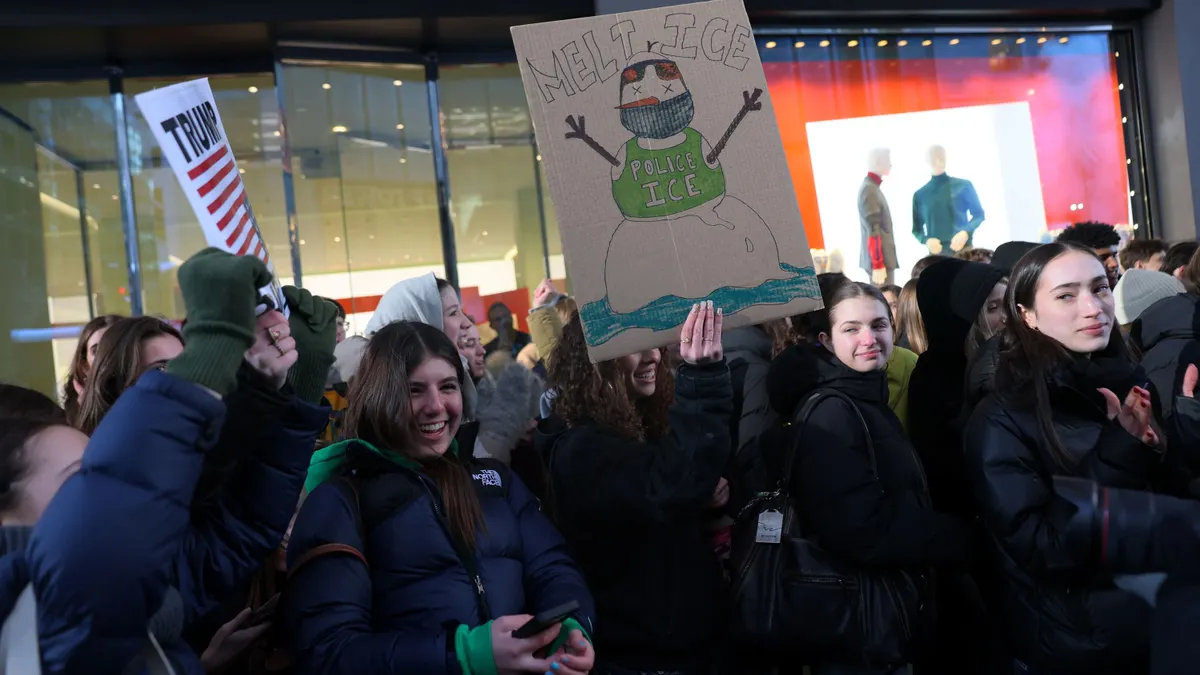
- Students in some areas are organizing to walk out of school on Friday as part of a “national shutdown” in protest of violent U.S. Immigration and Customs Enforcement actions, including the fatal shootings of Alex Pretti and Renee Good in Minneapolis this month.
- Student walkouts are set to take place from the Atlanta metro area to Sacramento, Calif., and Reno, Nev. Organizers of the national shutdown also encourage people to not go to work or shop on Friday.
- Districts’ responses to the planned walkouts have varied: Georgia’s Cobb County School District warned students in a Tuesday statement that they could face consequences in line with district policies, including out-of-school suspension, for participating. In Nevada, Washoe County School District said in a Wednesday statement that students who walk out of school on Friday will be marked with an unexcused absence in accordance with state laws.
Dive Insight:
Minnetonka Public Schools — located near Minneapolis — has seen student walkouts in both its middle and high schools for the last three weeks in response to the recent surge in federal immigration enforcement in the area, said David Law, the district’s superintendent. He is also president of AASA, The School Superintendents Association.
Throughout his education career, Law said he’s witnessed and navigated many student walkouts, including during the aftermath of George Floyd’s murder by a police officer in Minneapolis in 2020.
Right now, Law said, emotions are “very, very high” in his school community, and it’s been difficult to operate schools normally. Minnetonka Public Schools is currently open for in-person and virtual instruction.
While riding in school buses, for instance, Minnesota students have seen federal immigration enforcement officers tackle people and drag them out of cars in the middle of the street, Law said. “That’s super traumatic.”
In the case of student walkouts, Law said, it’s important for school leaders to meet with student organizers beforehand. Schools do not coordinate walkouts, but they should be responsible in ensuring there’s no disruption to the educational setting of other students who are not participating in walkouts, he said.
“Kids have free speech rights at school,” Law emphasized.
Organizers of the “national shutdown” created a student walkout guide for Friday that includes advice for outreach in developing flyers and coordinating with other students, as well as walkout preparations like meeting with a school administrator ahead of time. The guide also encourages students to recruit “the largest number of students and teachers possible” to expand impact.
The student walkout guide notes that the Friday event is also occurring as Congress debates the fiscal year 2026 funding bill for the U.S. Department of Homeland Security, including money for ICE. A partial federal government shutdown could occur if Congress does not agree to several unresolved budget measures by Friday.
When K-12 leaders speak with student organizers before a walkout, Law advises principals and superintendents to ask students about the purpose of the walkout and if they intend to be disruptive. School and district officials should also make sure students are aware of potential negative attention they may receive from the public or their peers who don’t support their message, he said.
The district should inform parents when a walkout is being planned and summarize in a message to them what happened after it occurred, Law said. During a walkout, students should also be reminded that they cannot be disruptive or violate school rules.
Additionally, schools can partner with local law enforcement to monitor students and ensure they are safe if they walk off campus in a large group, Law said.
Preparation and response to student walkouts by district and school leaders can vary depending on their local culture and state laws, said Ronn Nozoe, CEO of the National Association of Secondary School Principals.
Conversations with students before walkouts can also be a “great learning experience,” Nozoe said. “At least people are in the know [as] to what they're doing and what the potential challenges could be and what potential backlash or opposition they could face and or how their actions might be received by others.”



 Dive Awards