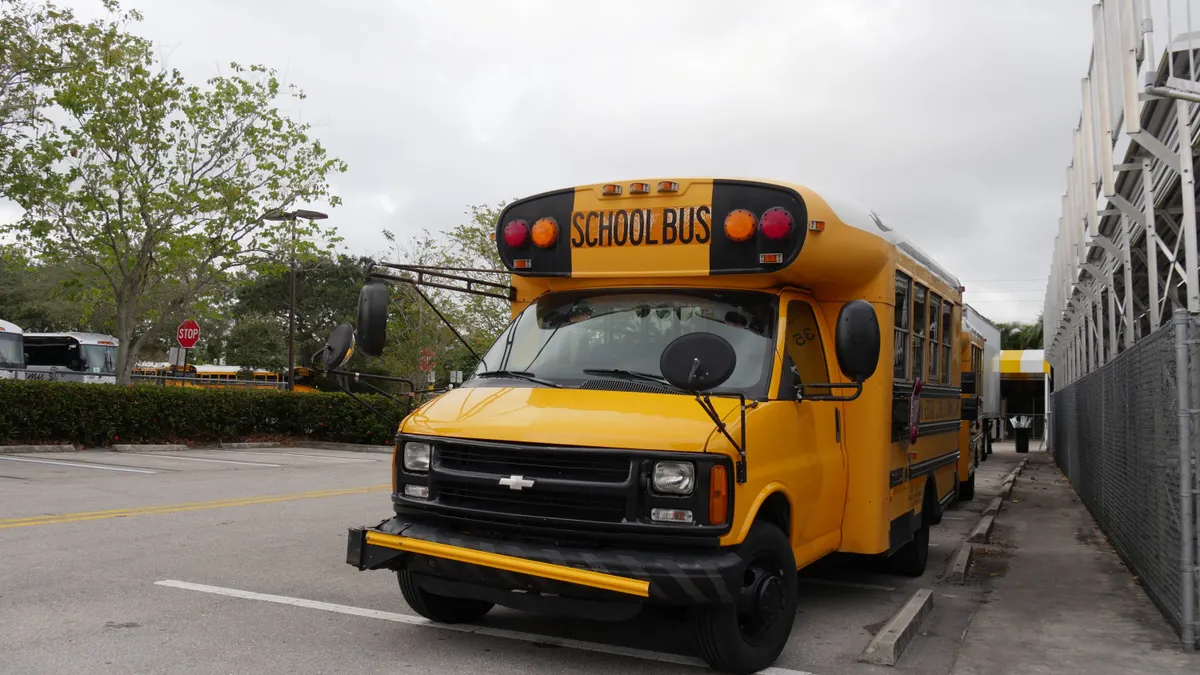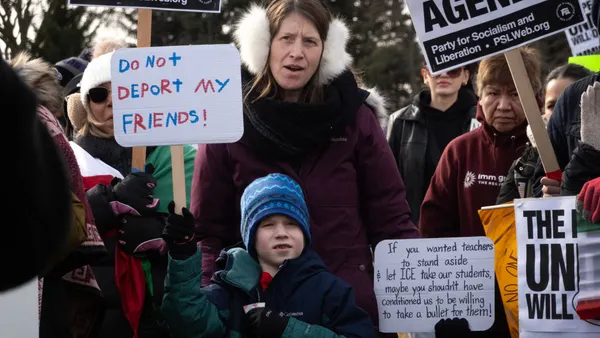
School district leaders being followed. Masked men circling preschools. Chemical weapons being deployed on students who threw snowballs. School vans pulled over by federal immigration agents. Parents detained at bus stops.
These are just some of the incidents from the past month alone that are detailed in a lawsuit filed Wednesday by two Minnesota school districts against the U.S. Department of Homeland Security over its recent immigration enforcement operations.
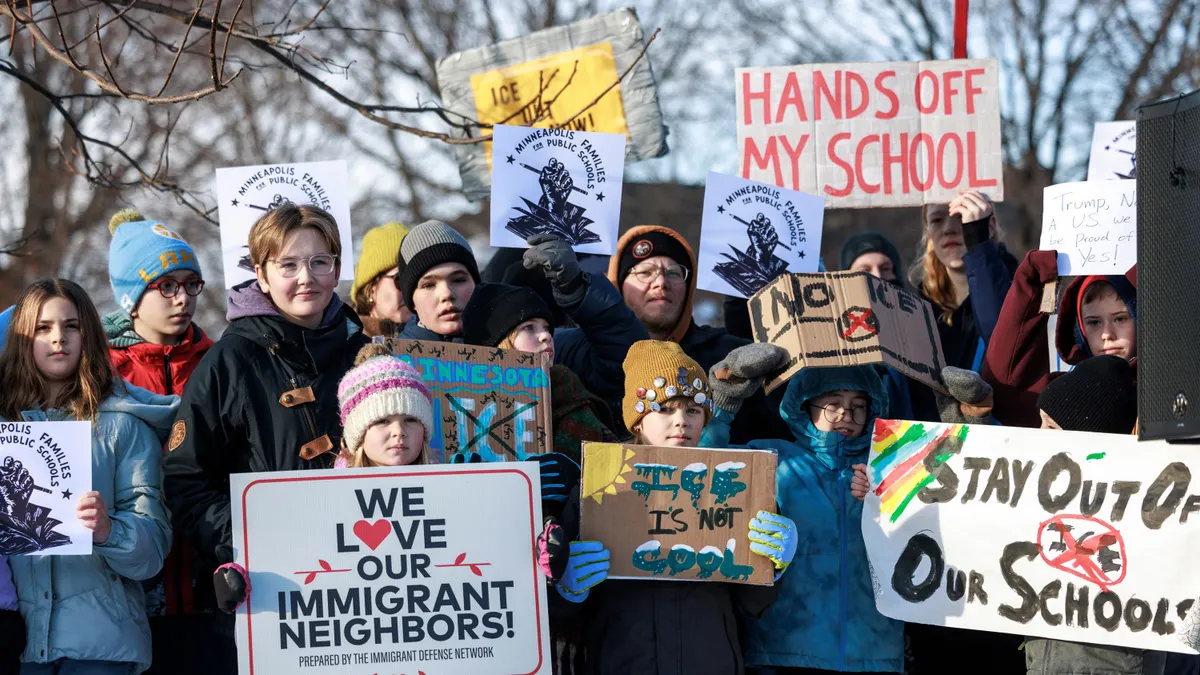
The school districts, joined by the state's educators union, alleged that the deployment of up to 3,000 DHS agents as part of "Operation Metro Surge" in the Twin Cities Metro Area has significantly impacted student attendance rates, made employees feel unsafe and interfered with the districts' abilities to provide a safe learning environment. In addition, the lawsuit said, schools have had to deploy extra security measures.
"DHS’s presence in and near school property has created an atmosphere of fear, for native-born citizens, naturalized citizens, and legally present immigrants alike," the lawsuit, filed by Fridley Public School District and Duluth Public School District, said. "Parents across the state are afraid to send their children to school, and schools have had to adjust their programs."
A principal at one elementary school where three students and at least 25 parents were detained "spends each school morning and dismissal checking the perimeter for DHS agents," according to the lawsuit, and the superintendent of Fridley Public Schools "now spends each afternoon patrolling, looking for DHS agents near schools and bus stops."
DHS did not respond to requests for comment on the lawsuit on Wednesday.
Attendance concerns, operational changes and trauma
Plaintiffs in the lawsuit, which was filed in U.S. District Court in the District of Minnesota, seek to overturn the Trump administration's policy allowing immigration enforcement actions on school grounds, bus stops and other locations previously deemed "sensitive." The policy change — which the lawsuit said was made without following proper procedures — was issued immediately after Trump entered office for his second term and promptly undid the decades-long practice of protecting schools from immigration enforcement activities.
While DHS maintained that ICE activity on school grounds would be "extremely rare," reports of such activity have surfaced in lawsuits, local reports and other publicly available information in the last few months.
The 2025 policy change triggered a handful of lawsuits against DHS by parents, schools and others who said ICE operations impacted their communities, affecting students and their learning. However, the challenge filed Wednesday is among the first known lawsuits from school districts following a surge in enforcement activity nationwide in the past few months.
In that period of time, schools in at least Minnesota, Maine, Illinois and California have had to close for periods of time, consider or implement remote learning days, or change their day-to-day operations as a result of ICE activity on or near school grounds and during school dropoff hours. Those changes include organizing "walking school buses" to ensure students were safely escorted to and from school.
The Minnesota lawsuit details another such change: School social workers "are now focused on acquiring and delivering food to families who are too nervous to go grocery shopping," which "diverts their time from their normal work" and "puts their personal safety at risk, as DHS agents have been seen following them while they make deliveries."
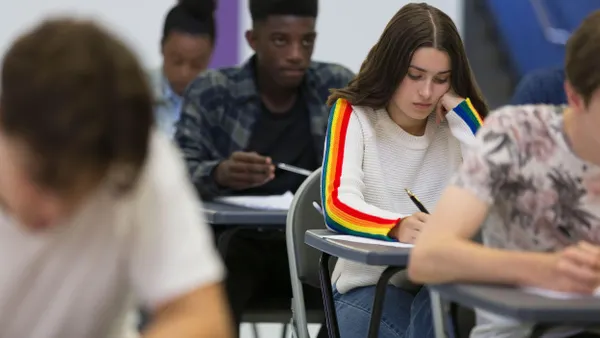
In the wake of immigration enforcement activity, school districts nationwide have also reported significant drops in attendance rates.
One study observed school absences in five California school districts affected by unexpected raids, looking specifically at the 2022-23 and 2023-24 school years and the 2024-25 school year through February 2025.
The study, conducted by researcher Thomas Dee of Stanford University, found that raids under the second Trump administration coincided with a 22% increase in daily student absences, with the youngest students most likely to be absent.
The Minnesota lawsuit recounts anecdotal evidence suggesting similar results. On Jan. 9 — two days following the killing of Renee Good by ICE agents in Minneapolis — half of nearby St. Paul Public Schools’ Spanish-speaking students and a quarter of its Somali students were absent, the lawsuit said.
Fridley Public Schools, a party in the lawsuit, said its attendance rate has dropped nearly a third during Operation Metro Surge and that 400 of its families have chosen remote learning, which the district expects will lead to poorer academic outcomes and an increase in district resources spent on remediation.
“The trauma being inflicted on children in America by this president is horrific and must end," said Skye Perryman, president and CEO of Democracy Forward, which filed the lawsuit on behalf of the districts, in a statement on Wednesday.
“We are in court because children should never have to look over their shoulders at school or worry that their loved ones could be taken away at the schoolhouse gate, and because the government cannot undermine decades of settled policy without regard for students, educators, or the law," Perryman said.