K-12: Page
-
Deep Dive
Games help educators, communities tackle difficult budget, policy decisions
While game-based learning is used in classrooms, district leaders say such simulations can also garner multiple perspectives on district-level decisions when the pressure’s really on.
By Linda Jacobson • Feb. 12, 2019 -
Detroit partnership allows high school students to earn college credit as early as freshman year
The expanded partnership between the district and a local community college would allow students to earn six to eight credits per year at no cost to them.
By Shawna De La Rosa • Feb. 12, 2019 -
Trendline
Curriculum
Educators are exploring a variety of strategies to improve students’ learning experiences while continuing to navigate ongoing political disputes.
By K-12 Dive staff -
Sponsored by Stronger Than Hate Challenge
Education is stronger than hate
Ready to tackle the rising tide of intolerance and injustice? Discover how the first step can start in your classroom.
Feb. 12, 2019 -
Data show inequity in who takes dual enrollment classes
Lower participation among black and Hispanic students and those whose parents didn't go to college, highlights concerns for such programs.
By James Paterson • Feb. 12, 2019 -
Input from teachers, students critical in effective media center overhauls
Aside from community input, schools can seek ideas from PTAs and grant-makers whose funds may be used to implement the changes.
By Amelia Harper • Feb. 12, 2019 -
To better meet students' needs, ask them what they need to succeed
A former Georgia high school principal is sharing her experience using student voice to develop wraparound services via a seven-step model.
By Amelia Harper • Feb. 12, 2019 -
Opinion
Portfolios boost assessment relevancy for truly transformative learning
The coordinator for innovative and digital learning at Eanes Innovative School District in Austin, Texas, writes that a portfolio approach to measuring student progress provides a more equitable, real-world experience.
By Brianna Hodges • Feb. 11, 2019 -
4 best practices for implementing adaptive assessments
As schools seek to better personalize learning, some are embracing a growing trend toward adaptive tools that measure student progress.
By Jessica Leigh Brown • Feb. 11, 2019 -
Deep Dive
Georgia moves game-based assessment beyond pilot phase
While the use of games for formative assessment is likely to grow, the field still faces a number of challenges, including cost and data reliability.
By Linda Jacobson • Feb. 11, 2019 -
Schools up student power in directing course of education
One Pennsylvania high school gives students a greater say by letting them take up to 20 AP exams, waive prerequisites and choose their teachers.
By Amelia Harper • Feb. 11, 2019 -
 Courtesy of Allison Shelley/The Verbatim Agency for American Education: Images of Teachers and Students in Action
Is it time to remake middle school?
Educators, policymakers and others will gather in Washington, D.C., this week to discuss ways to reshape the perception of early adolescence as a time of risk to one that focuses more on positive opportunities.
By Linda Jacobson • Feb. 11, 2019 -
 Elizabeth Regan/K-12 Dive
122 K-12 cybersecurity threats reported last year
However, the report's author believes up to 20 times that number of incidents may have gone unreported — and it's only expected to grow.
By Amelia Harper • Feb. 11, 2019 -
Trainings help educators respond to immigrant families' deportation concerns
In New Mexico, lawyers host "know your rights" sessions to teach educators what they can and can't do if immigration officials come knocking.
By Shawna De La Rosa • Feb. 10, 2019 -
NYC's higher grad rates raise questions about changing requirements
While the city's graduation rate increased by 1.7% last year, 1.2% of that is because more students are using alternative pathways to graduation.
By Shawna De La Rosa • Feb. 8, 2019 -
Column
Pre-to-3: Place-based early literacy initiatives giving families a sense of community pride
Two Brooklyn, New York, nonprofits hope to "change the narrative" of a lower-income urban neighborhood by implementing a successful Tennessee model.
By Linda Jacobson • Feb. 8, 2019 -
Research review finds students who improve after school closure are 'more exception than rule'
A review of 17 studies finds displaced students’ graduation and college enrollment rates typically drop, and those in schools that get an influx of displaced students also face negative impacts.
By Shawna De La Rosa • Feb. 8, 2019 -
Decades of studies paint complex portrait of vouchers' value
Debate over these programs' success is very much alive, with concerns on both sides of the public-private divide as research shows mixed results.
By Amelia Harper • Feb. 8, 2019 -
Local businesses, nonprofits team up to combat chronic absenteeism
New Orleans public schools are partnering with over 30 organizations, from local businesses to the mayor's office, to find ways to boost attendance rates, including mentoring at-risk students.
By Amelia Harper • Feb. 8, 2019 -
New research centers to focus on rural schools, high school writing
The University of Missouri, Harvard University and the University of California, Irvine, will receive a combined total of $25 million for research and practice efforts in these two areas.
By Linda Jacobson • Feb. 7, 2019 -
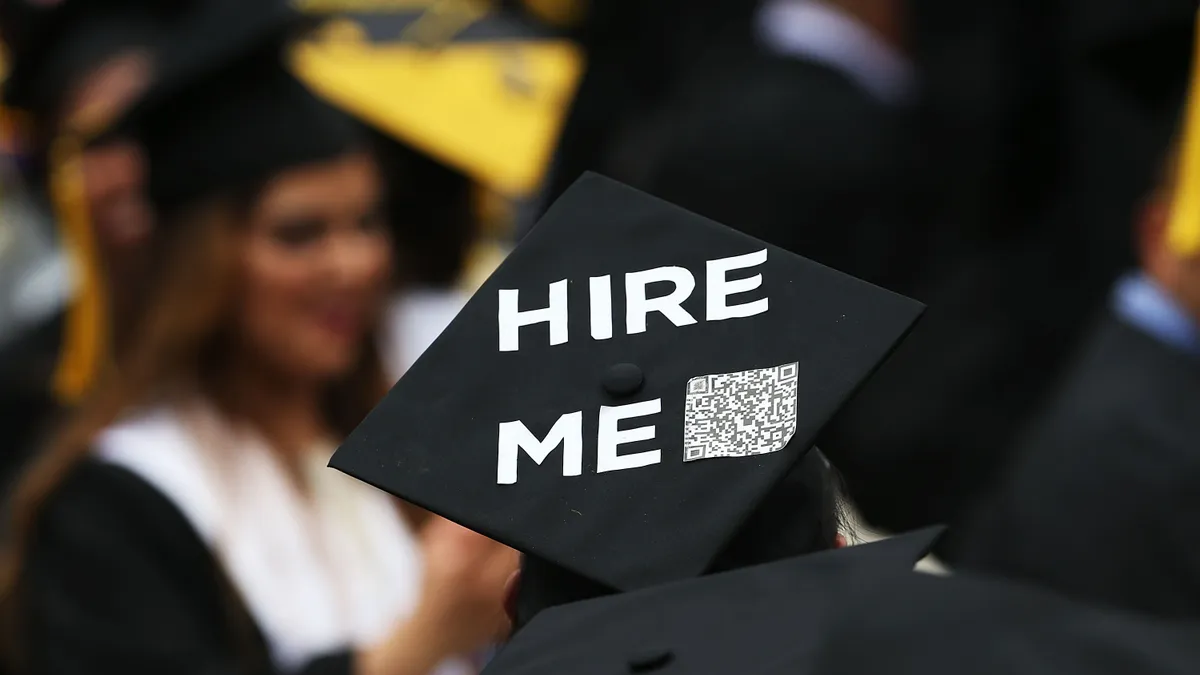 Spencer Platt / Staff via Getty Images
States vary in defining college and career readiness metrics
While 44 states include the popular education accountability indicator in their ESSA plans or school rating systems, not everyone agrees on what it means for a student to be prepared for college or career.
By Amelia Harper • Feb. 7, 2019 -
Study: Teaching noncognitive skills can spur better long-term student outcomes
Teachers who help students grow skills like self-regulation boost attendance, grades and graduation rates, compared to those who just raise test scores.
By Amelia Harper • Feb. 7, 2019 -
Sponsored by Build Your Future
3 Reasons why a 4-year degree isn't always worth it
The desire for job and financial security often drives career choices, but only 33% of jobs need a four-year degree.
Feb. 7, 2019 -
Seeing tangible outcomes builds deeper student STEM engagement
Schools in San Francisco are using SoftBank Group's Pepper robots to allow students to bring their coding skills to life.
By Lauren Barack • Feb. 6, 2019 -
Deep Dive
Amid push for STEM education, arts instructors stress value of theater
As schools continue to expand science, technology, engineering and math opportunities, theater programs are proving beneficial in fostering soft skills and enhancing academics.
By Lauren Barack • Feb. 6, 2019 -
Give students lessons with a 'why'
A Wisconsin high school English teacher says when students get context for how lessons apply to the real world, they're engaged with a greater sense of purpose.
By Lauren Barack • Feb. 6, 2019

 Previous