Winter break can lead to as much of a cognitive break for students as summer break, experts say, which means educators need to design January lessons with the same intentionality.
This can begin by doubling down on the concept of “connection before content” in which students become reacquainted through classroom activities like asking one another what their favorite thing was about winter break or what they’re looking forward to during the second semester, said Nick Haisman-Smith, executive director and cofounder of the Institute for Social and Emotional Learning.
Pamela Randall, senior staff advisor for the Collaborating Districts Initiative at CASEL, said educators need to think about how to get students reacclimated to classroom and school routines, reinvigorated about learning, and ready to participate.
She suggests incorporating signature practices to do so, such as an inclusive welcome, a strategy for reengagement, and an intentional close.
In an elementary school, for example, the inclusive welcome might look like an activity in which students turn to their “elbow partner” and describe their holiday break in three words, said Randall, a former high school principal and teacher.
“It’s quick, simple and doesn’t take more than five minutes,” she said.
Building that into a broader strategy for reengagement could, at a middle school level, mean rewinding to shared classroom agreements from the beginning of the school year and taking time to reflect on the first semester, Randall said.
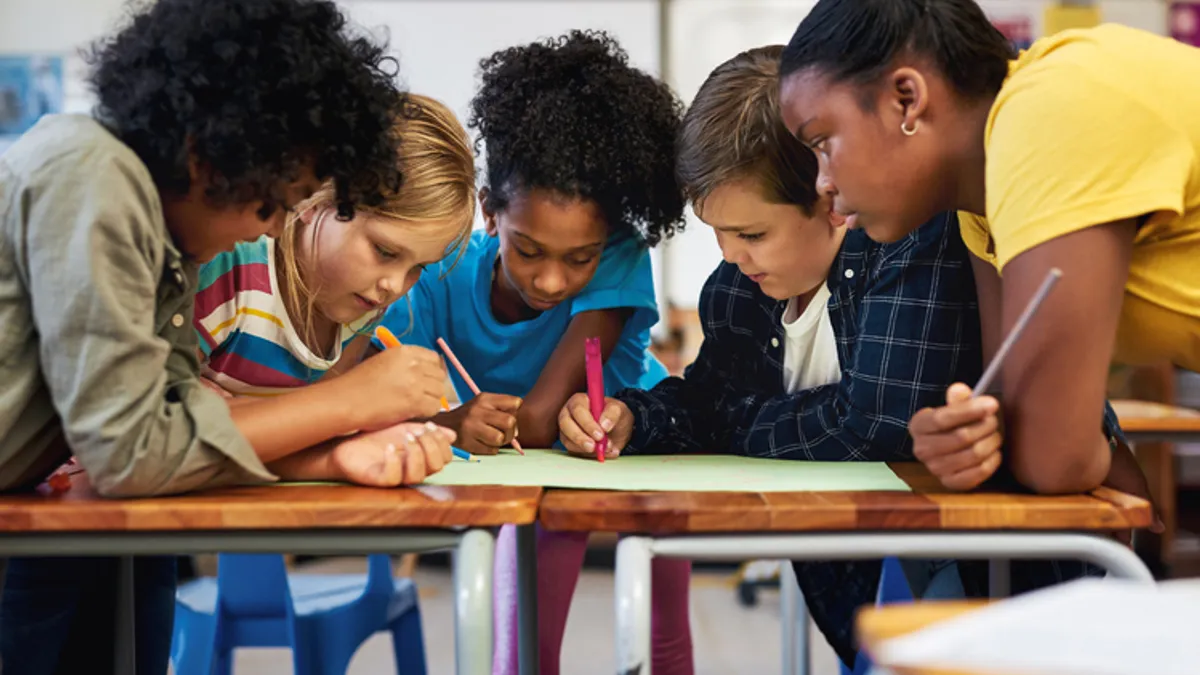
Finally, the intentional close might amount to creating a new poster that reflects revisions to classroom rules that all students could sign and fingerprint, Randall said.
“It’s a way to bridge what we did today to what we’re going to do next,” she said. “I want to stress that these three signature practices can be done at any level. … The main focus is getting them excited about being back at school, getting them into the routine, and getting them excited about learning and ready to act on those learnings.”
Haisman-Smith agreed that revisiting classroom agreements or expectations is a great idea for early January.
“How are we doing with these agreements? Are we sticking to them? Should we edit them? Add anything?” he said. “It has to be intentionally done. Belonging becomes behavior. When you allow kids to feel like they belong, behavior shifts. Co-creating agreements is part of that.”
The new semester also provides the opportunity to introduce new rituals, particularly around transition moments like students arriving in the morning or coming in from recess, Haisman-Smith said.
“The kids have grown, they’ve developed, and we can hopefully tap into that growth and maturity and community-mindedness,” he said. “Do we have Friday shout-outs? Do we have end of week or start of week activities that are special for that class?”
Haisman-Smith also suggests returning to the goal-setting exercise students would have undertaken at the beginning of the school year — whether academic, social or personal — and reflecting on progress.
January provides an opportunity for students to journal, reflect, pair up with a classmate and talk about how they are doing, he said. “Do they want to add a goal or edit a goal?”
Finally, educators need to use this month to reinforce the culture of care and well-being for themselves, Haisman-Smith said.
“Many teachers, in my experience, get to winter break kind of on their knees, and come up for air, and rest and recover,” he said. “January provides that nice opportunity for us, individually and collectively as teachers, to say, ‘Hey, we’re going to support each other to stay well.’ … We want school systems to build a culture of communal care. We belong to each other, in education. That’s really important to build that sense of teacher well-being.”