Dive Brief:
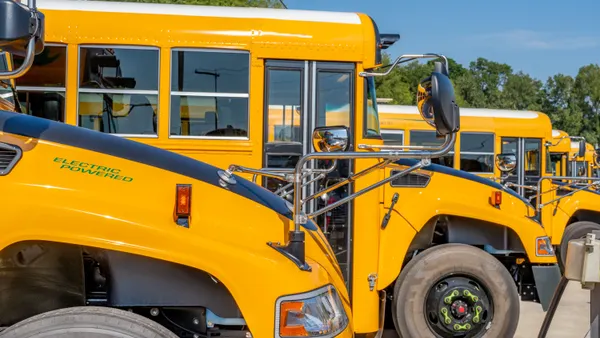
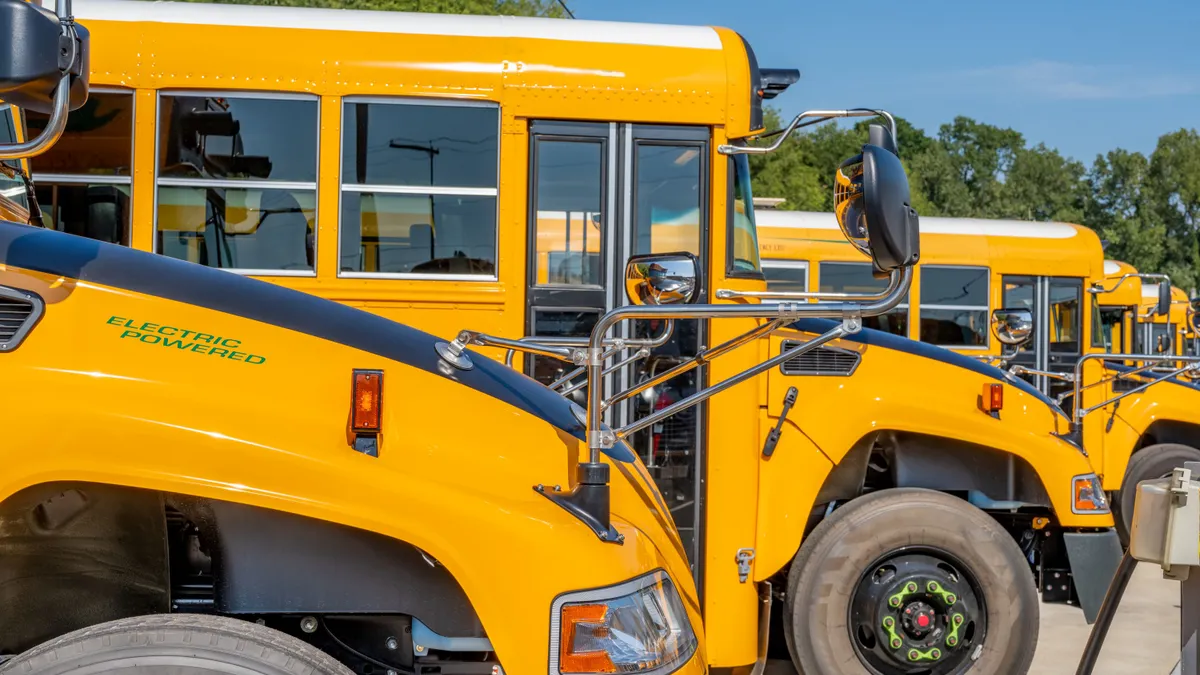
- As the U.S. Environmental Protection Agency moves to revamp the Clean School Bus Program, the agency has completed or is actively addressing 11 recommendations its Office of Inspector General made to improve implementation and oversight of the $5 billion in grants aimed at helping school districts purchase eco-friendly buses.
- The office’s latest findings follow a review of five of its previous reports investigating challenges with the Clean School Bus Program — in which two key issues identified were EPA’s application and selection process for grants as well as how those funds were managed. A 2024 OIG memo said there was “potential fraud, waste and abuse” in the program.
- Some $2.37 billion remained to be spent through the Clean School Bus Program at the beginning of fiscal year 2026, according to OIG. In February, EPA announced it will relaunch the grant program this year as it collects public comment on the fuel options school buses can use with the funds.
Dive Insight:
The bipartisan Infrastructure Investment and Jobs Act, signed into law in 2021, provided $5 billion to the EPA to carry out the Clean School Bus Program between FY 2022 and 2026. The EPA has already awarded $2.62 billion in grants across 1,143 school districts, helping to replace 8,223 buses.
One of OIG’s concerns with the Clean School Bus Program included that the EPA did not implement sufficient requirements to verify the identities of applicants or accuracy of information they submitted in 2022.
Additionally, OIG said the EPA did not adequately monitor the program’s performance, such as school bus deployment status and recipients’ use of funds. “By not implementing monitoring procedures, the EPA cannot adequately gauge program performance and protect taxpayer funds,” OIG wrote.
The OIG’s findings this month looked at its five reports about the program issued between 2023 and 2024.
Some of the corrective actions EPA has taken since the original OIG reports were released include:
- Requiring all grant applicants to verify that their school boards have been notified of the district’s interest in participating in the Clean School Bus Program.
- Ensuring that grant recipients’ awarded funds do not accrue interest, are put in separate accounts and can only be used for eligible expenses.
- Issuing guidance to program applicants on the types of documentation needed to prove their current school buses are eligible for replacement.
- Developing guidance to ensure any new or modified programs implement proper accounting treatments and financial management principles.
Under the Trump administration, the EPA announced in February that it is collecting public feedback on alternative school bus fuels and technologies after “the Biden-era program has forced unsafe and unreliable electric buses onto American schools.”
The EPA added that it is not awarding funds from the 2024 Clean School Bus Rebate Program.
EPA said it aims to give districts more options with the grant funds to ensure they can buy the school buses that best meet their specific needs.
“These fuel options include biofuels, compressed natural gas, liquified natural gas, and hydrogen,” the EPA said in its February announcement. “While the law has always allowed for these fuel options, the Biden Administration intentionally limited their availability to push the use of government subsidized electric buses.”
Advocates pushing to replace diesel school buses with electric vehicles have said the change can help improve the health of students and the environment, which in turn, they say, can also boost student attendance.
Research has also shown that school districts can save an average of $7,000 annually in operational expenses when switching to an electric school bus from a diesel-fueled one, according to the World Resources Institute’s Electric School Bus Initiative.


 Dive Awards